
Northumberland is England’s northernmost county, bordering Scotland to the north and west. Over much of history the English and the Scots were adversaries, and as a result many ruined castles dot the countryside. Northumberland’s coastline consists mainly of sandy beaches backed by dunes. Castles and beaches – taken together, this makes for an attractive hiking destination.
We spent a week hiking the Northumberland coast in late June of 2026, at a time when a heatwave enveloped much of Europe. Being this far north meant that we were not directly underneath the heat dome, but we sure enjoyed some fine weather. We based ourselves in the coastal town of Amble, using buses and Uber-taxis to access the coastal path. If we were to do this again, We’d probably base ourselves in the market town of Alnwick because it has better transport connections.
Amble to Druridge Bay
From our base at Amble we hiked both to the north and the south. Let me begin with our hike south, to Druridge Bay. Here we are heading out, with the town of Amble behind us.
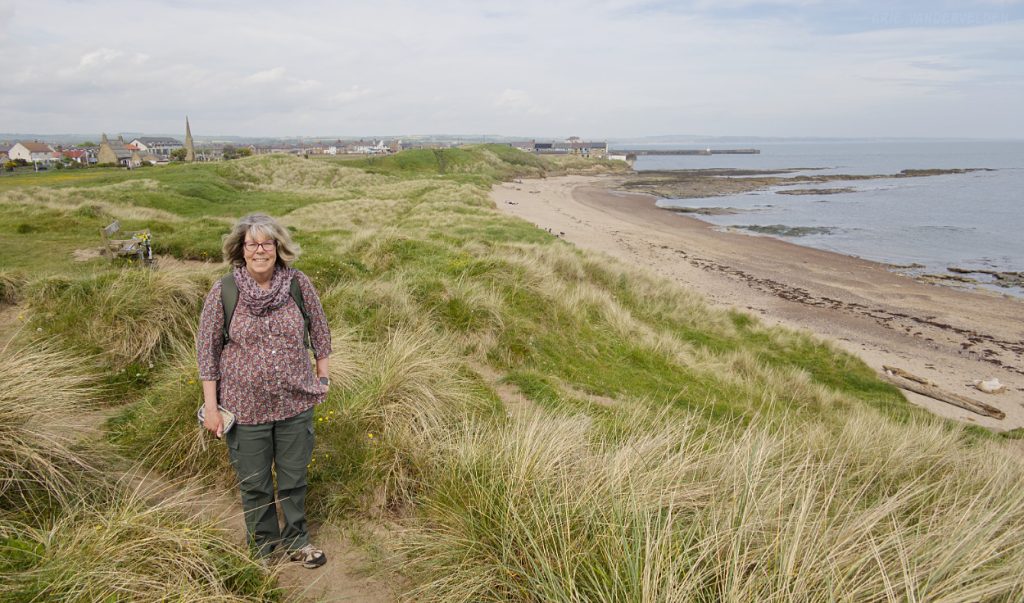
Just offshore of Amble is Coquet Island.

Between Amble and the village of Low Hauxley, the trail passes several small beaches. After Low Hauxley the beaches get bigger.
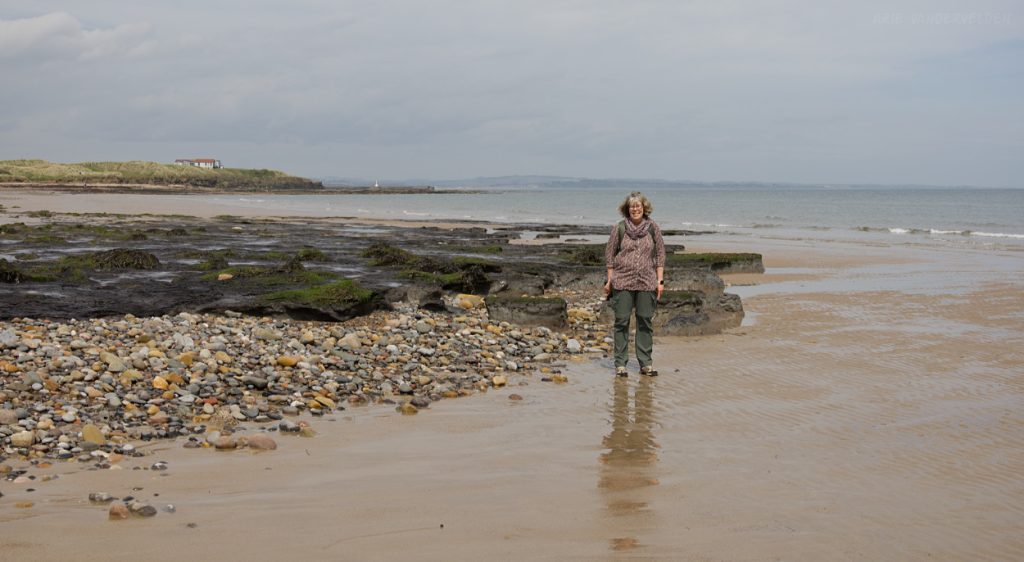

The biggest beach of all is Druridge Bay Beach, which goes on for mile after mile. We climbed up the dunes to get a view.
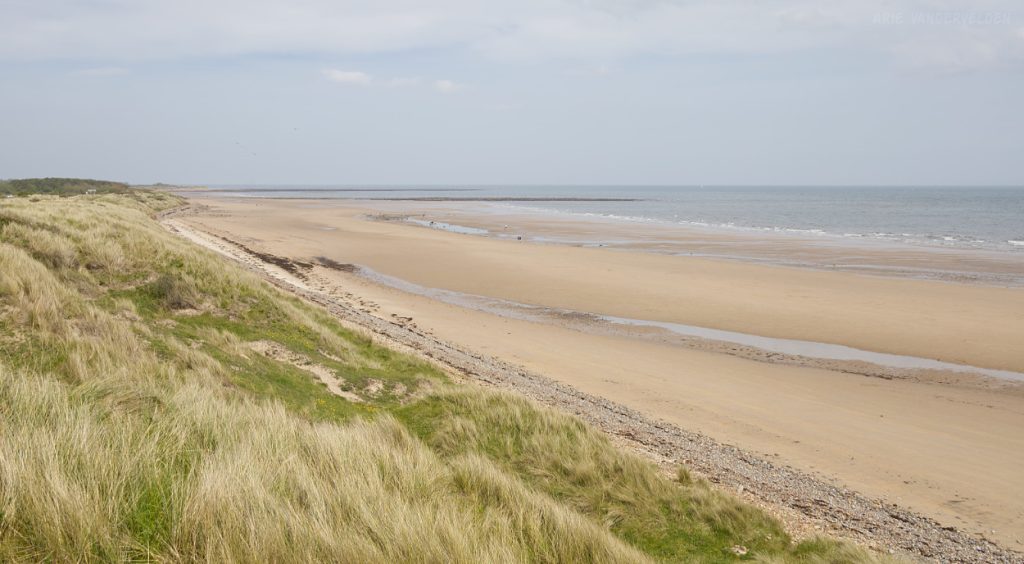

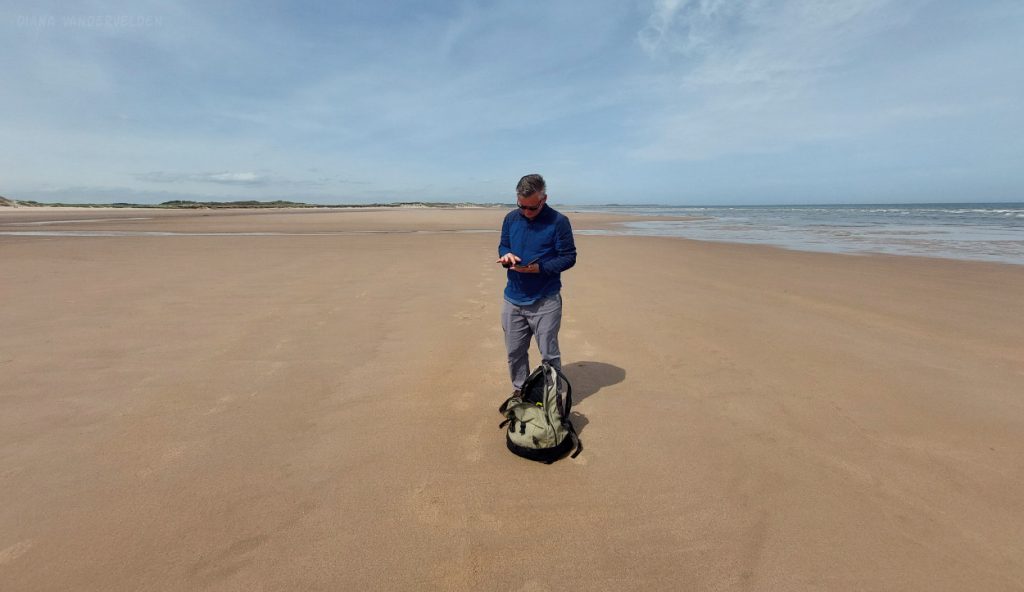
Druridge Bay Beach is a vast and featureless expanse of sand, especially at low tide. Here I am checking our position. We could have hiked all the way to the end of the beach to Cresswell, but instead we decided to call it a day at Druridge Bay. Either option involves hiking inland for 1.5 miles along country roads to catch the bus back to Amble. What I did not know at the time is that the Cresswell to Ellington road has a sidewalk, while the Druridge Bay to Widdrington road does not have a shoulder at all. In hindsight it may have been worthwhile to hike on for a few more miles to Cresswell.
Amble to Alnmouth
We spent the majority of our time in Northumberland hiking towards the north of Amble. While the hike to Druridge bay follows a series of beaches, the hike north of Amble follows the Coquet River inland.
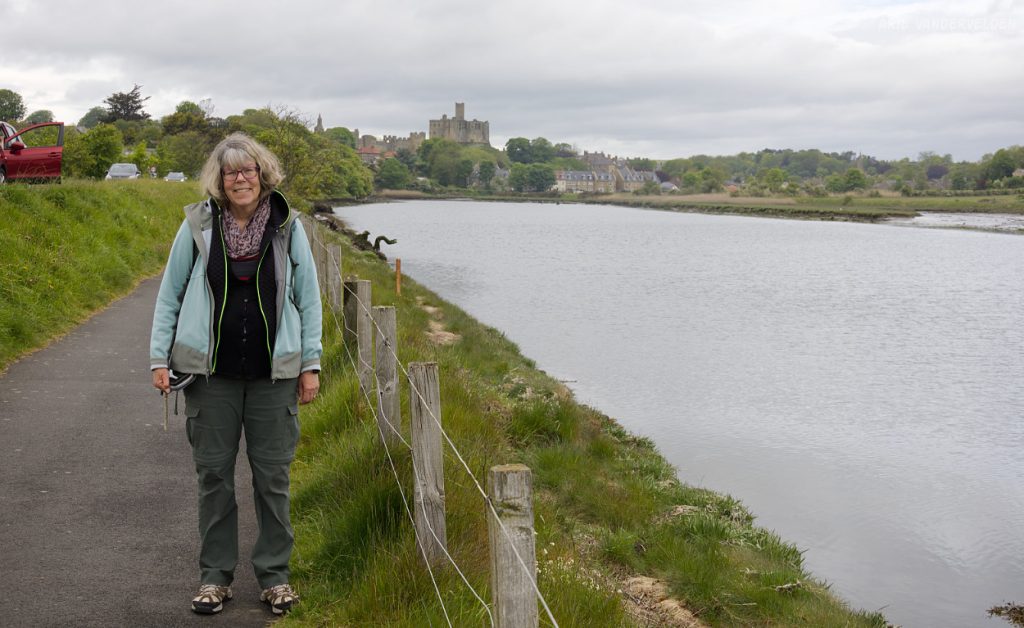
The Coquet River leads to the village of Warkworth, which is dominated by Warkworth Castle.
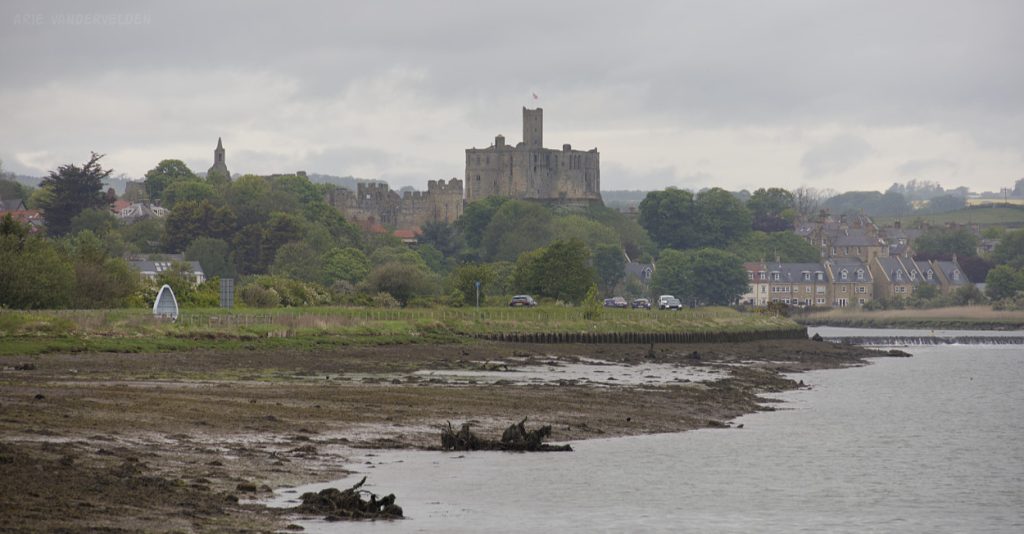
We had a look around the outside of Warkworth Castle, but we did not go inside.

Warkworth Castle was once the seat of the Percy family. These days, the Percys live in nearby Alnwick Castle, which I’ll show later on in this blog post.
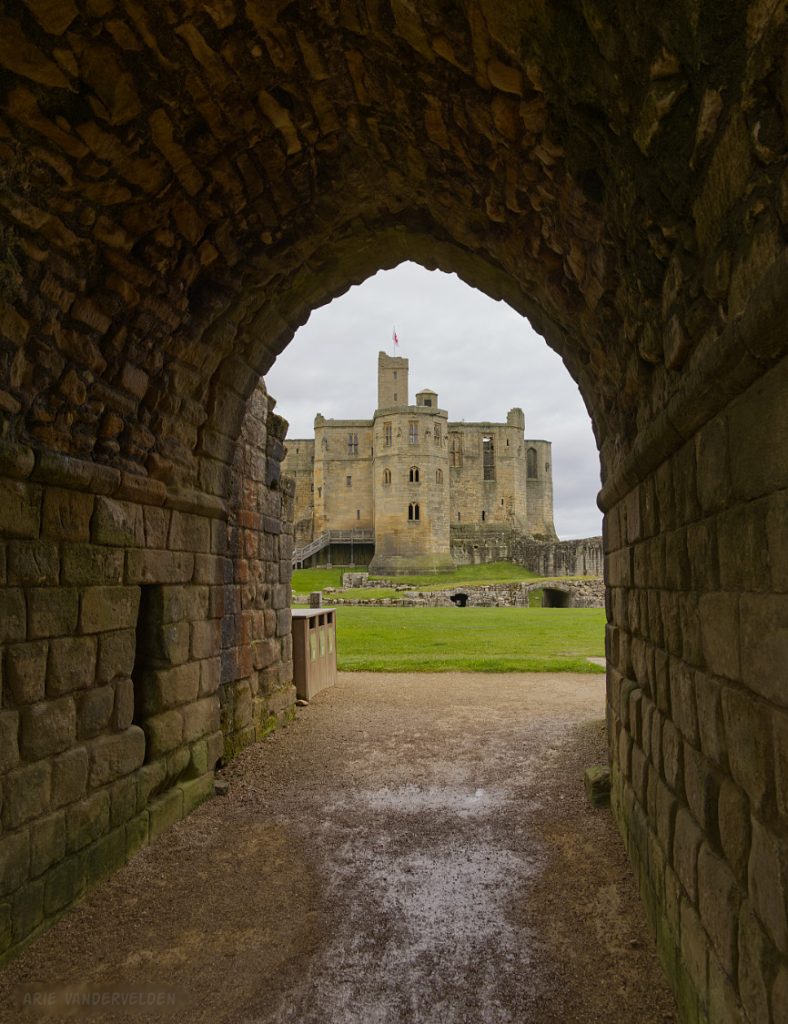
Here I am walking along the Coquet River in Warkworth.
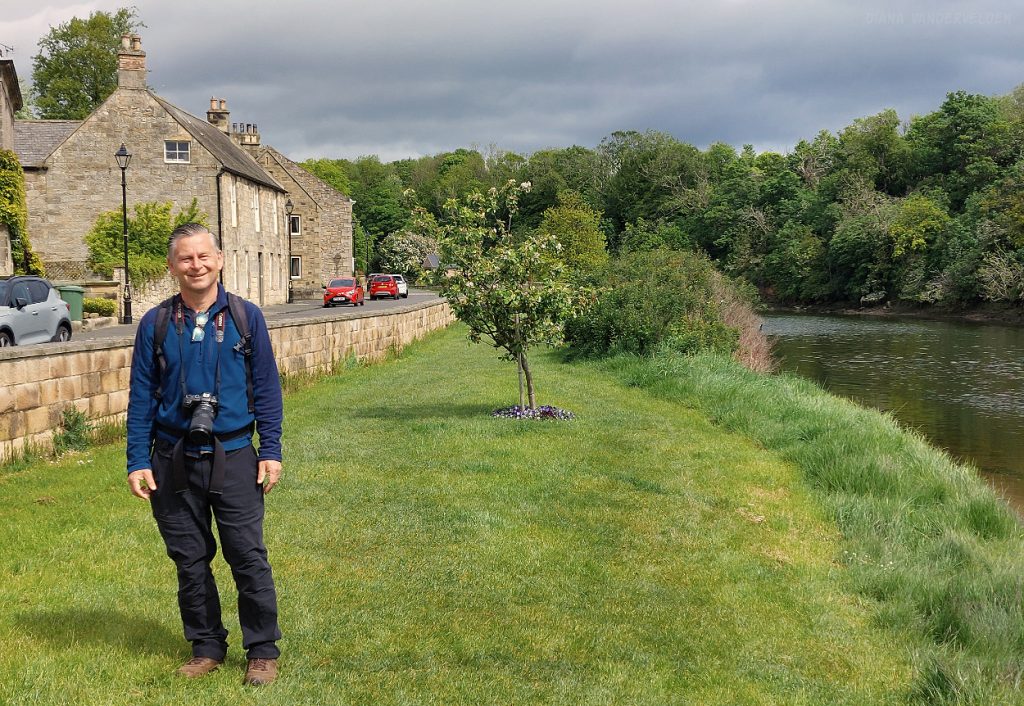
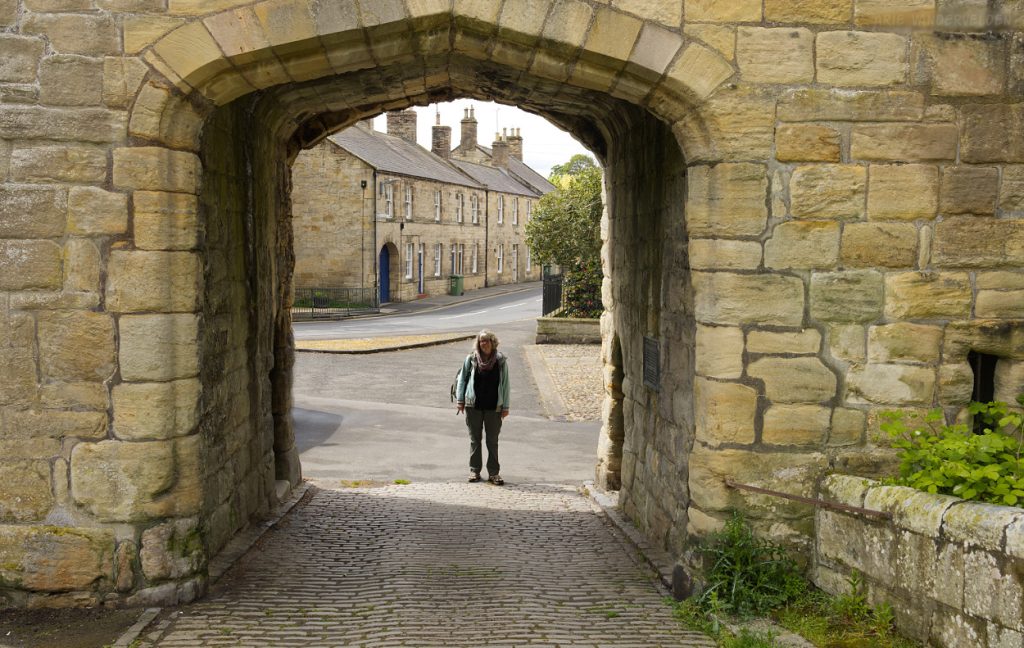
A gate leads to the center of Warkworth. As you can see in the background, Warkworth has a fine collection of Georgian houses.
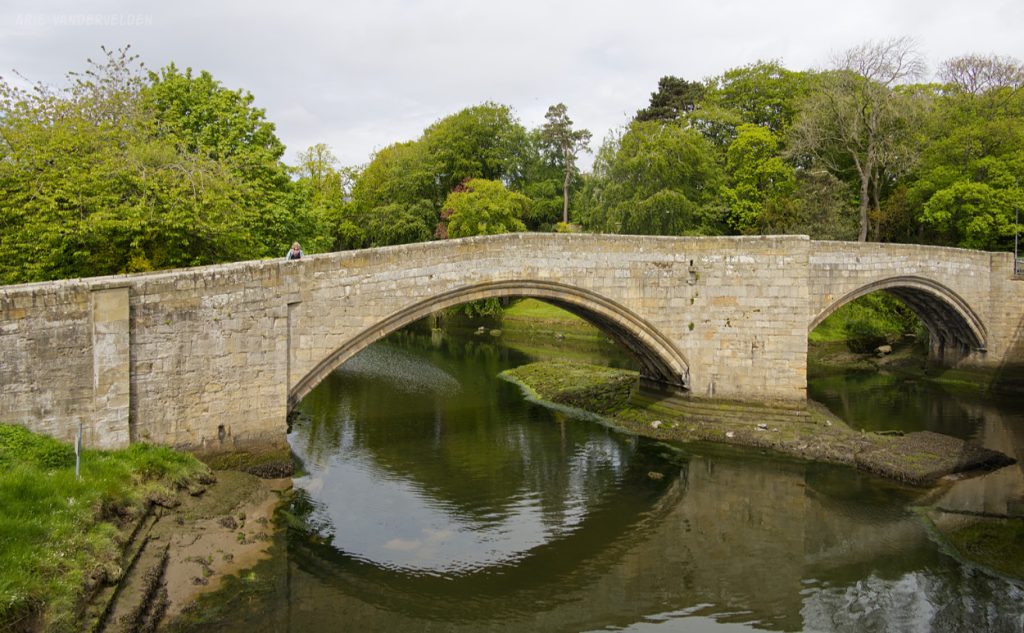
The bridge in Warkworth is the earliest opportunity to cross the Coquet River.
Past the bridge, a trail leads to Warkworth Beach.
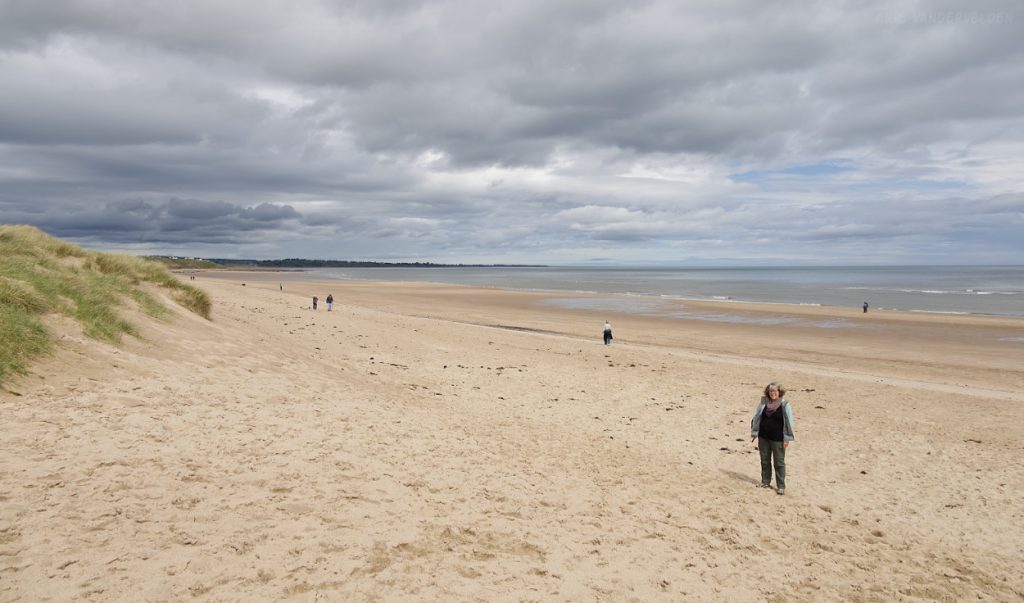
Hiking the dunes along Warkworth Beach.


Warkworth Beach is bounded by two estuaries: the Coquet River estuary in the south, and the Aln River estuary in the north. Hiking around the Aln estuary took a frustratingly long time. Given that it was low tide, we probably could have taken a shortcut across the mudflats.
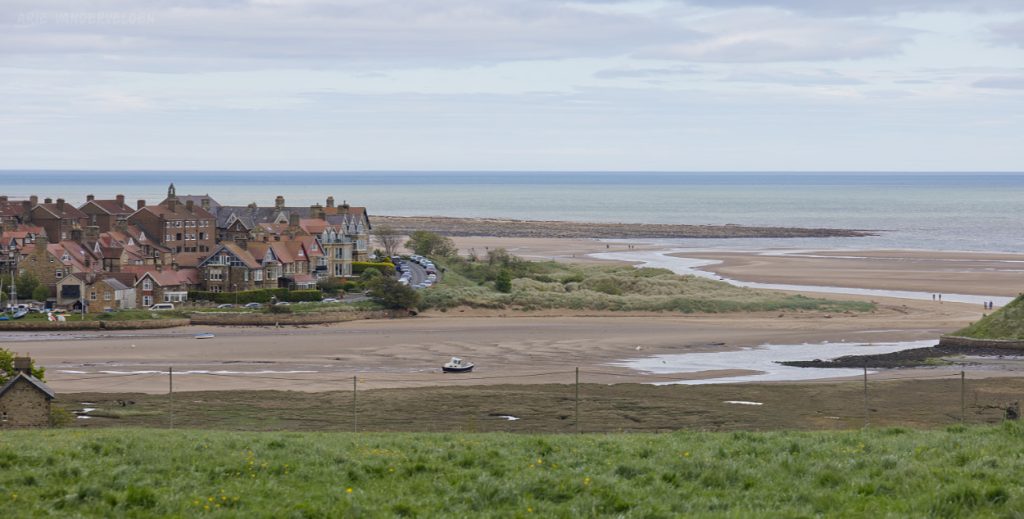
Chilling on a bench in Alnmouth.

Alnwick
Before continuing north along the coast, let’s take a detour inland, to the market town of Alnwick (pronounced Annick by locals). All bus service to the north requires connecting in Alnwick, so we had a few opportunities to have look around. Here I am in the town square on market day.

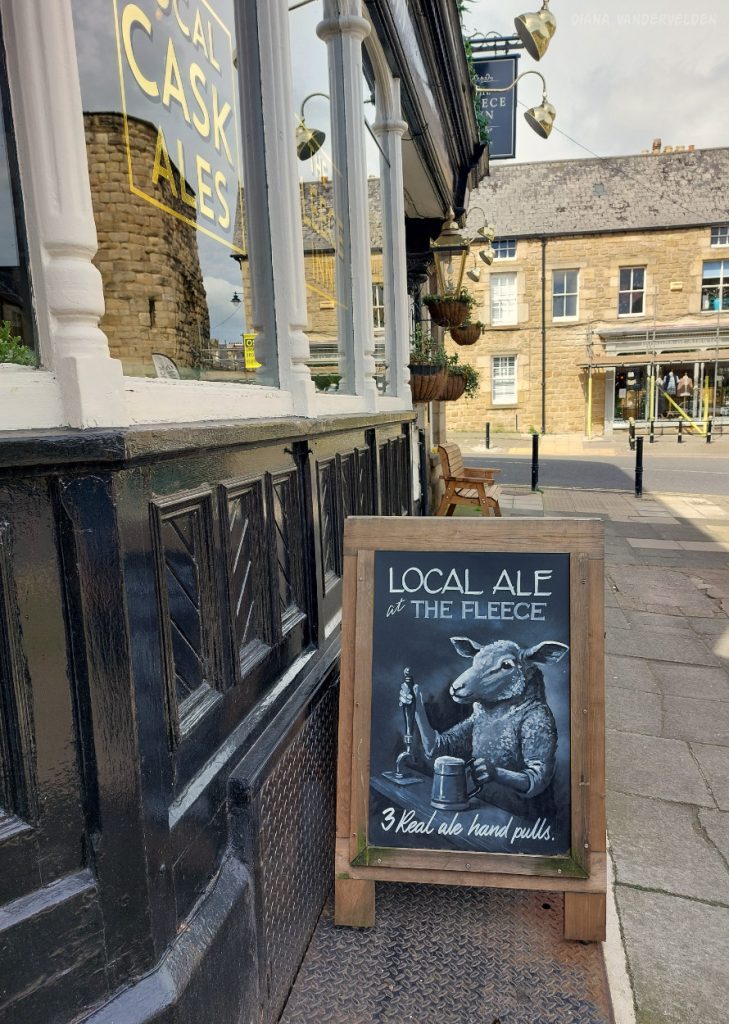
The Fleece – one of Alnwick’s many pubs.
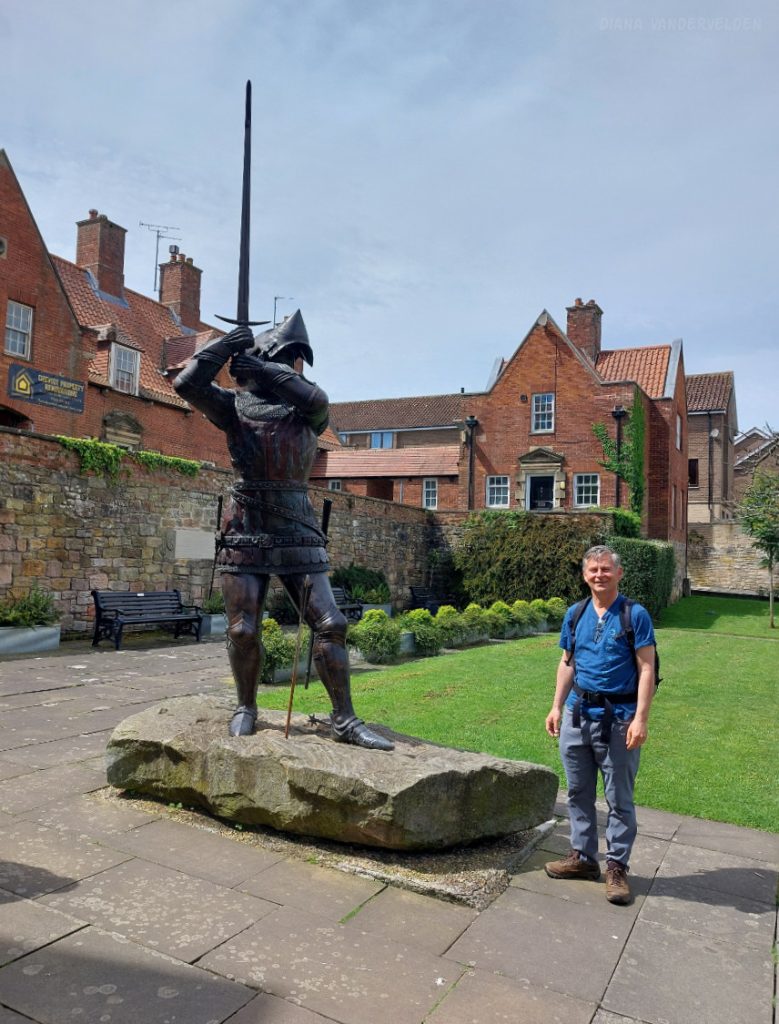
There is a statue in Alnwick of Henry “Hotspur” Percy. Percy was a military man who fought many battles against the Scots. In fact, the Scots were the ones who bestowed upon him the moniker “Hotspur” for his speed and readiness to attack. The plaque beside the statue talked about a battle where Percy’s forces managed to breech a castle wall. Then, heroically, Hotspur leaped through the hole, in full armour, sword drawn, shouting the family motto in Latin. Quite the story. Hotspur Percy was richly rewarded by the English crown for his bravery and success in battle. Ultimately, though, the Percys had a falling-out with the crown, and in 1403 they marched southwards to fight the English. Hotspur Percy and his forces met the English at Shrewsbury, where they fought a bloody battle in which Hotspur Percy was killed. The king had Percy’s head removed from his body and had it impaled on Micklegate Bar in York, one of York’s city gates. And that was the end of Hotspur Percy. William Shakespeare wrote about Hotspur in his play Henry IV.
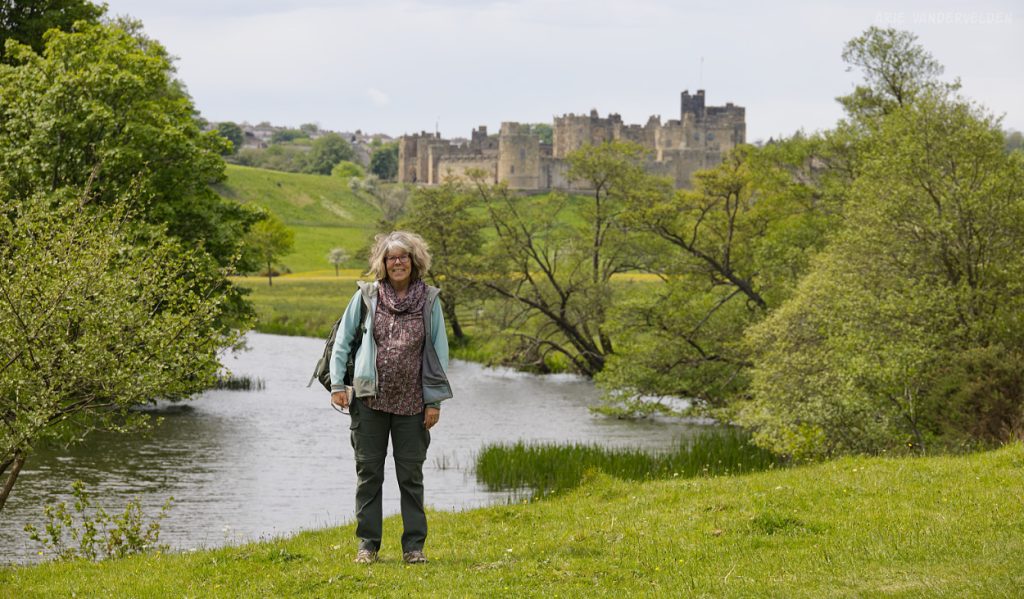
The town of Alnwick is dominated by Alnwick Castle, seat of the Percy family to this day.
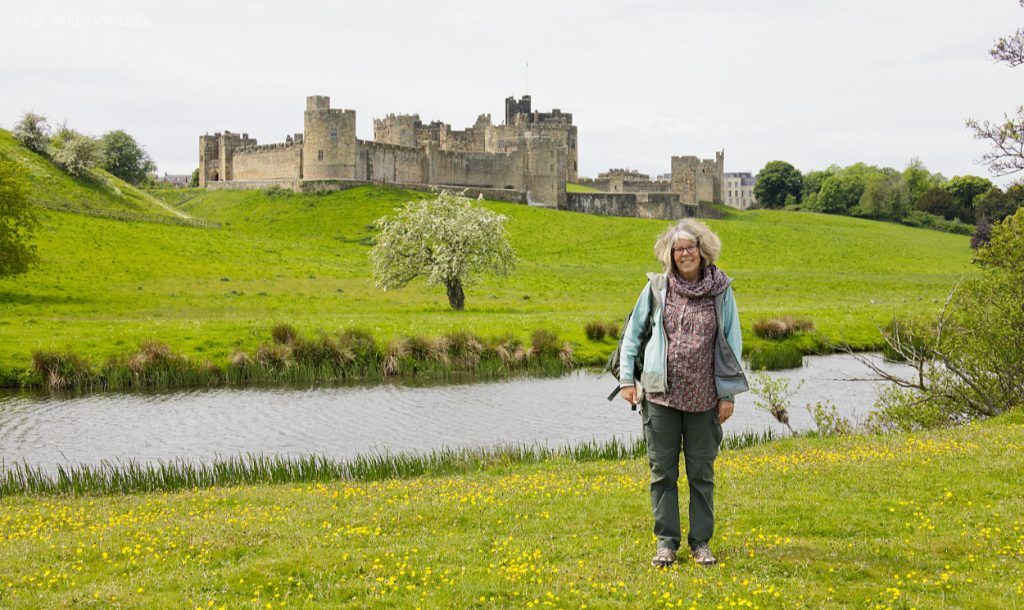
Alnwick Castle is gigantic. It is featured prominently in several Harry Potter movies. A number of scenes in Downton Abbey were also filmed here.
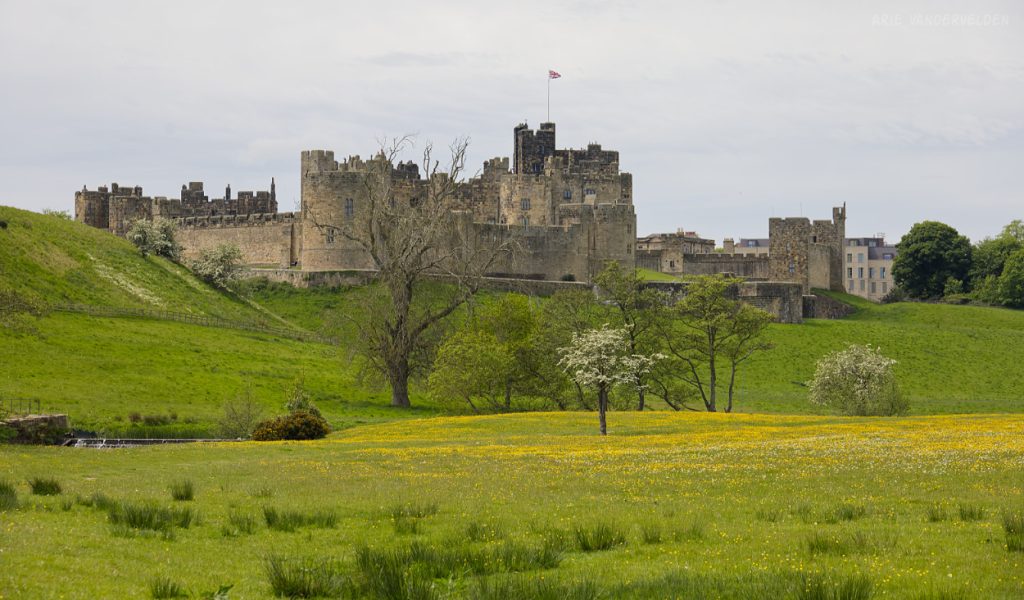
Hiking near Alnwick.
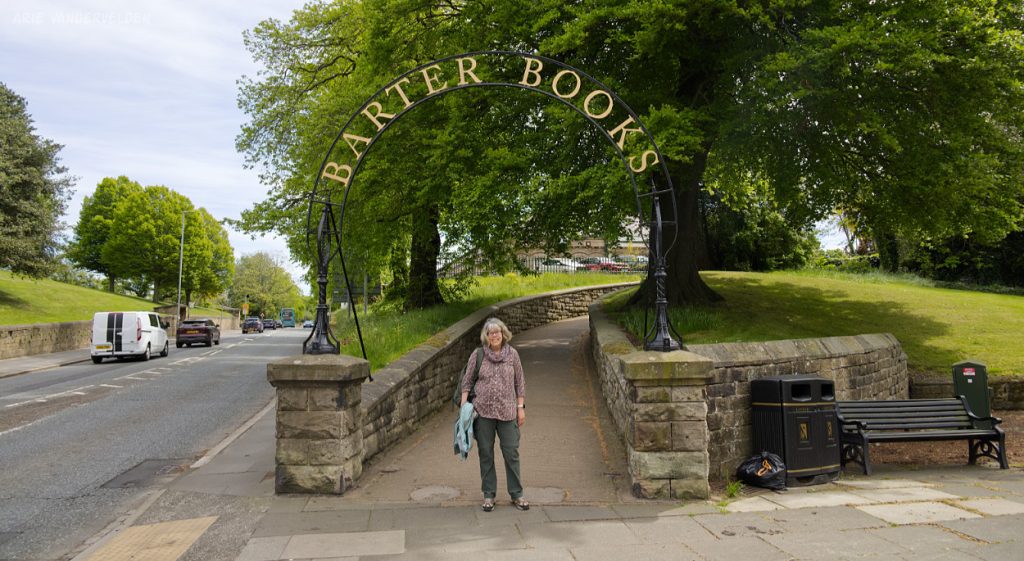
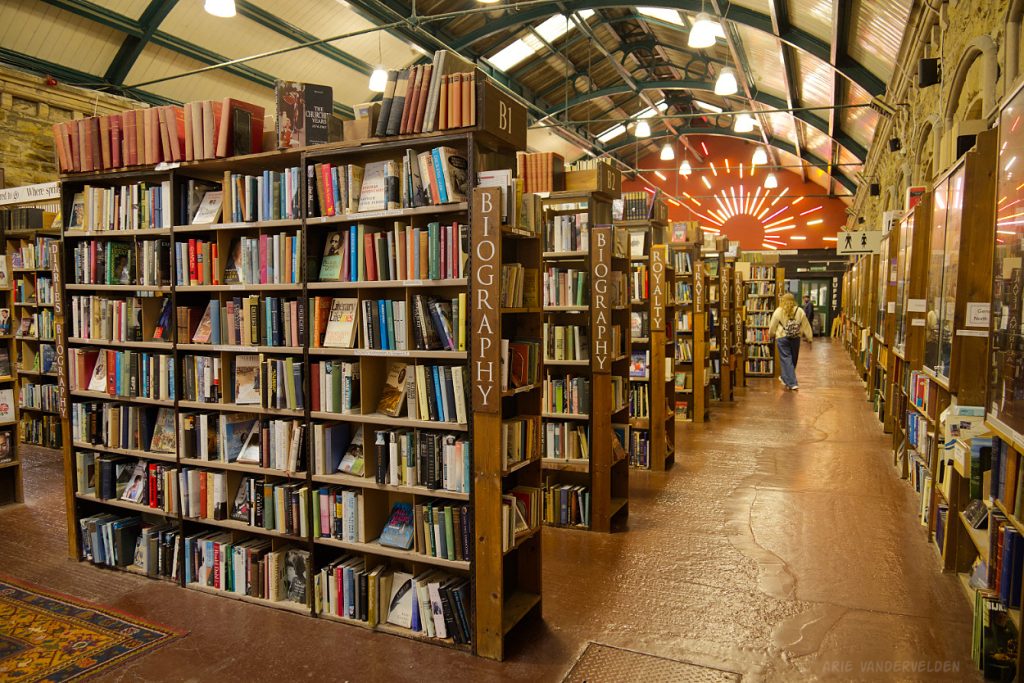
Another big attraction in Alnwick is Barter Books, a huge second-hand book shop. The book shop occupies a disused Victorian-age railway station.
Go to part two of our Northumberland coastal hike.
Logistics
Northumberland is England’s northernmost county.
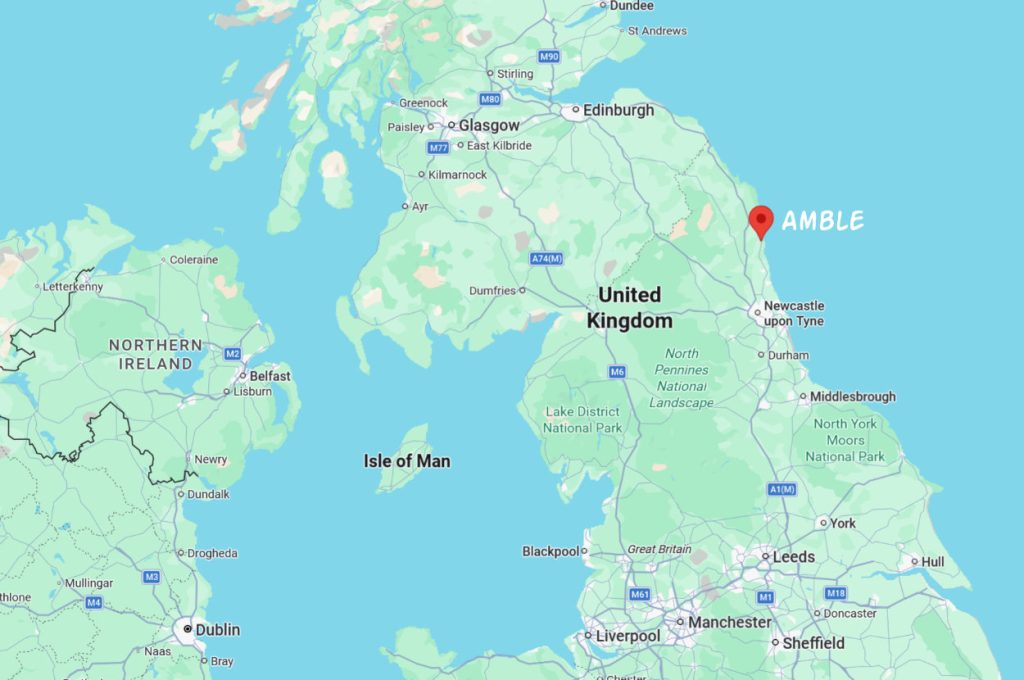
We took a train to Alnmouth Station, which is served by the intercity LNER and Crosscountry trains. Now, Almouth station is not in Almouth; rather, it is in Hipsburn some distance inland. There is bus service from the train station to Alnmouth, Amble, and Alnwick.
We stayed in Amble, which is a pleasant coastal town. However, as I mentioned at the start of this post, Alnwick would be a more strategic location for this type of hiking even though it is not on the coast. From Amble, reaching any destination to the north by bus requires a connection in Alnwick, and the bus times don’t always mash, leading to long stopovers. A base in Alnwick would simplify things.
Buses X18 and 418 serve destinations north of Alnwick, and bus X20 serves destinations to the south including Alnmouth and Amble. Buses are infrequent so it pays to plan ahead.
