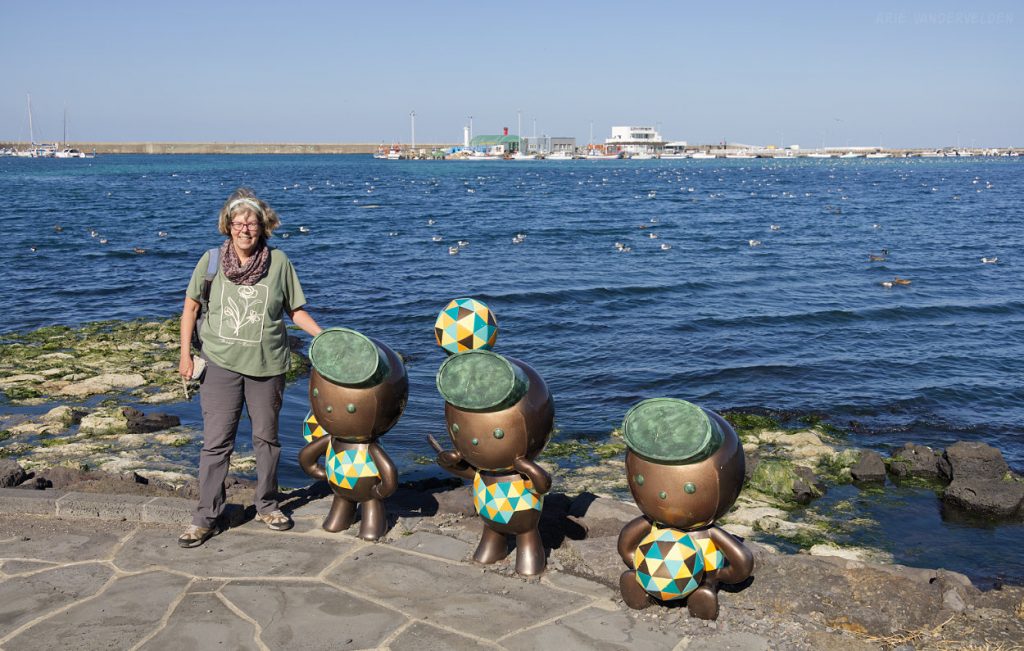
This is part four of our hike around Jeju Island. Go back to part 1, part 2, or part 3.
Olle 18
Olle 18 leads from downtown Jeju City to its outermost suburbs. Or, since we hiked it the other way around, from the suburbs to downtown. Now, “subsurbs of Jeju City” may conjure up mental images of endless rows of drab apartment blocks, and those are indeed there. However, along the waterfront are historic villages with simple fisherman’s houses, and that’s where the Olle trail goes. As such, Olle 18 was much nicer than we expected.
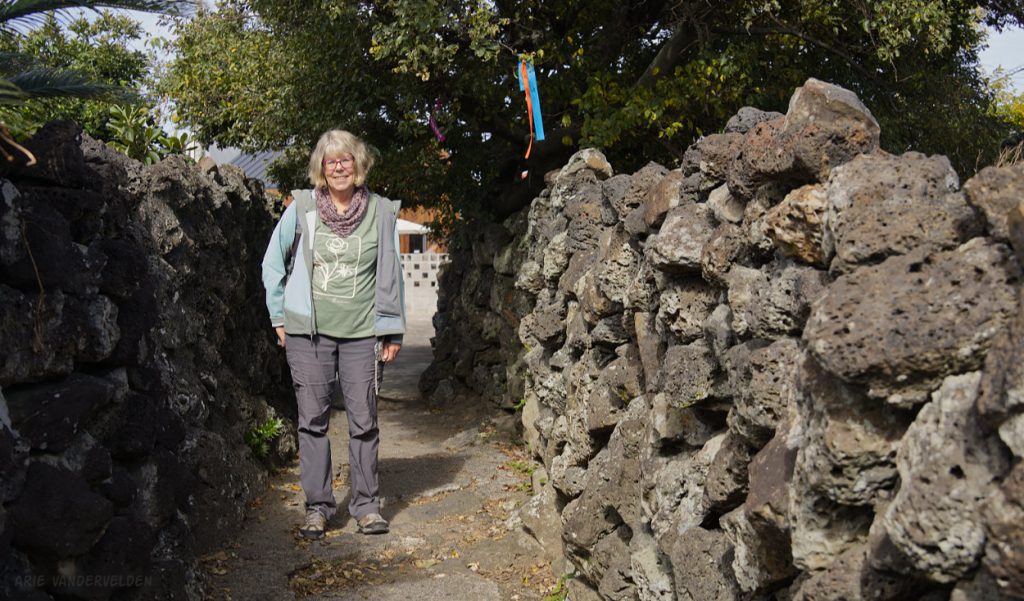
Haenyeo diver mural.
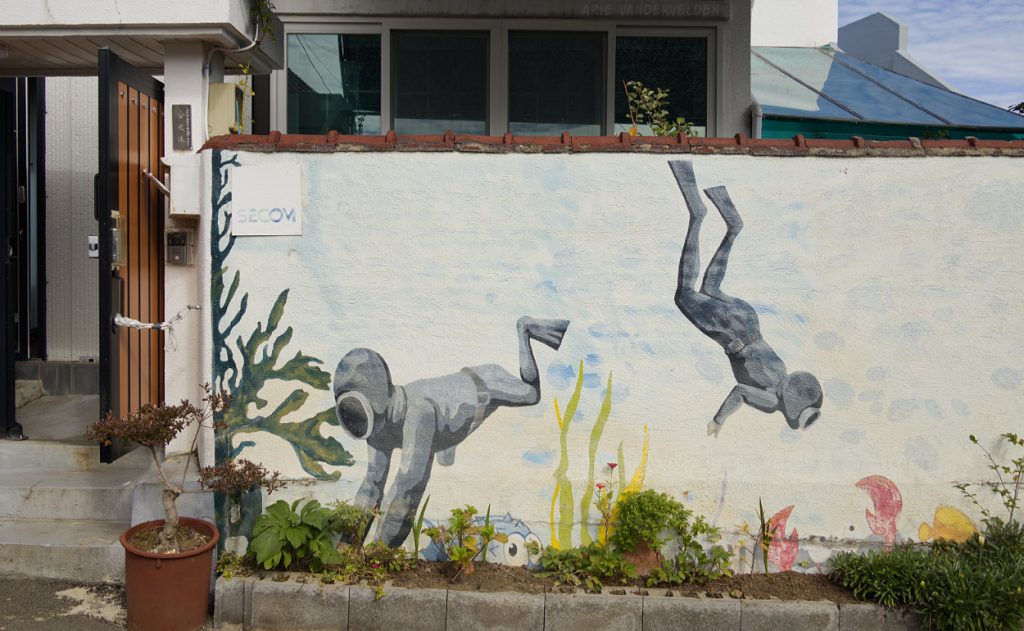
Garden tools in a back yard.
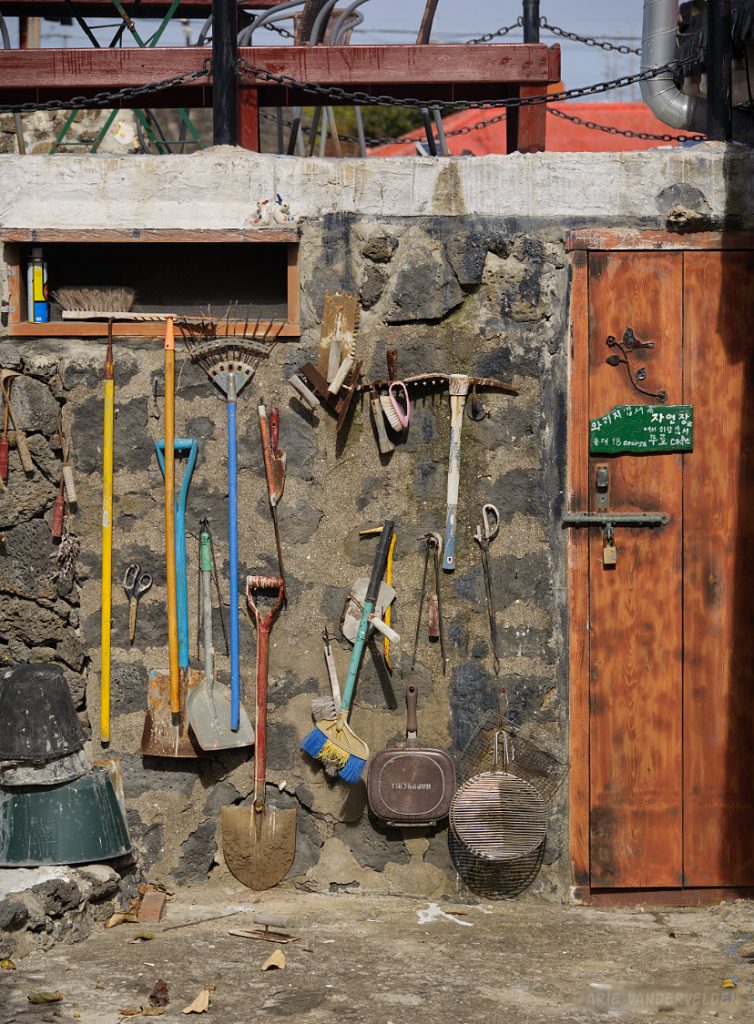
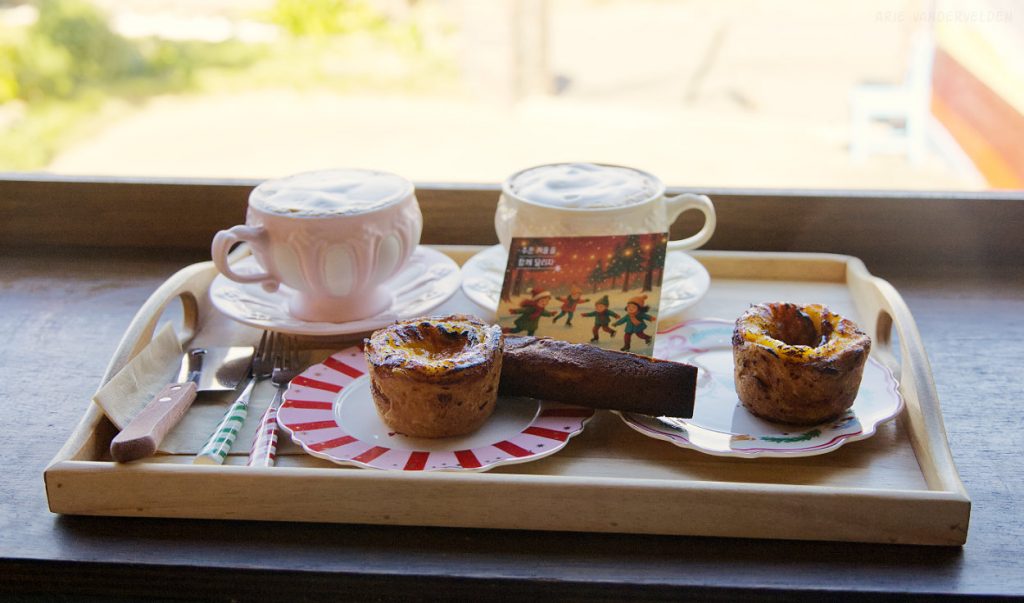
We stopped at a cafe that had the best eggs tarts we’ve ever tasted.
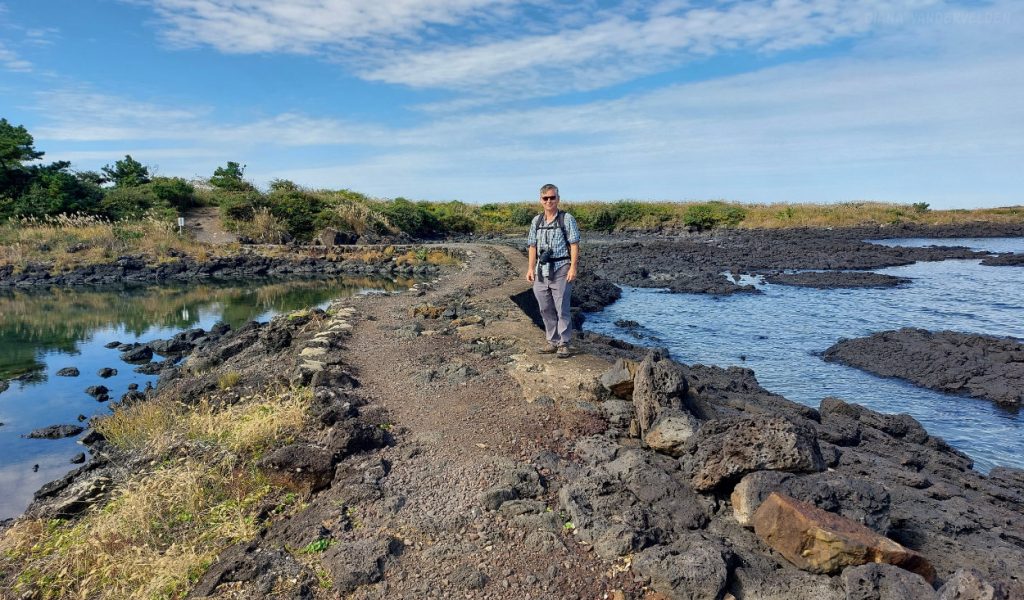
Between the villages were some wetlands.
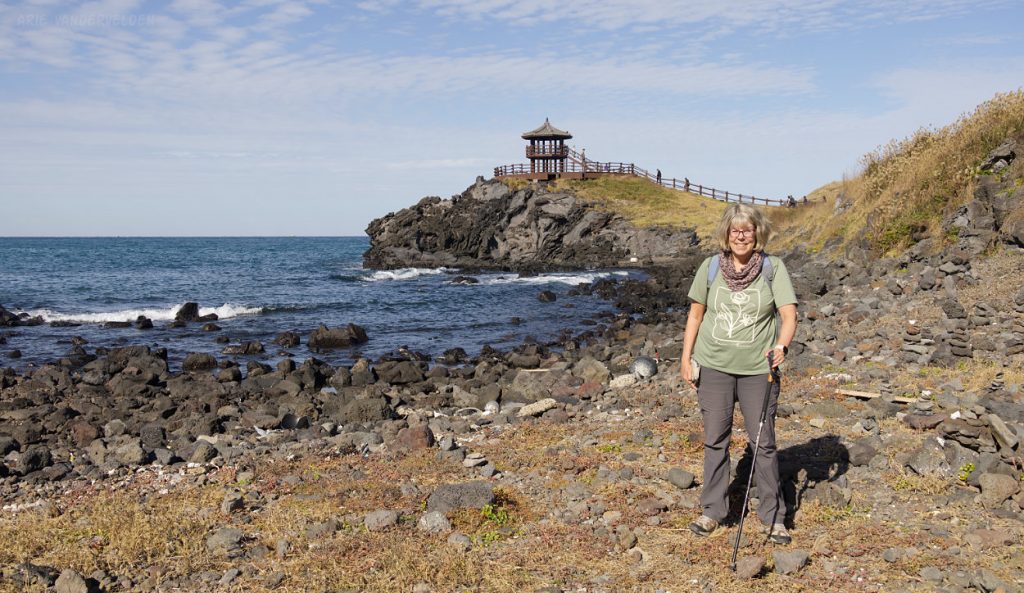
This gazebo marks a stretch of natural trail along the coast.
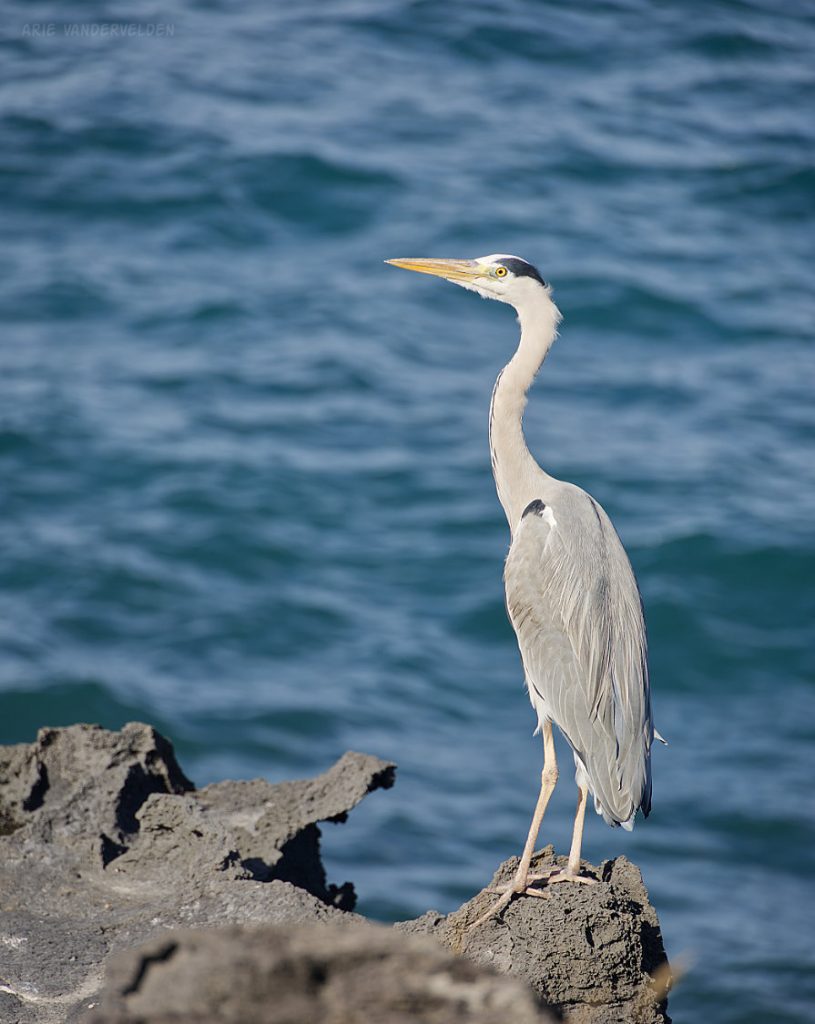
Heron along the shore.
We ended our day of hiking at Samyang Beach, a more urban area. Local people were wading barefoot in the sea.
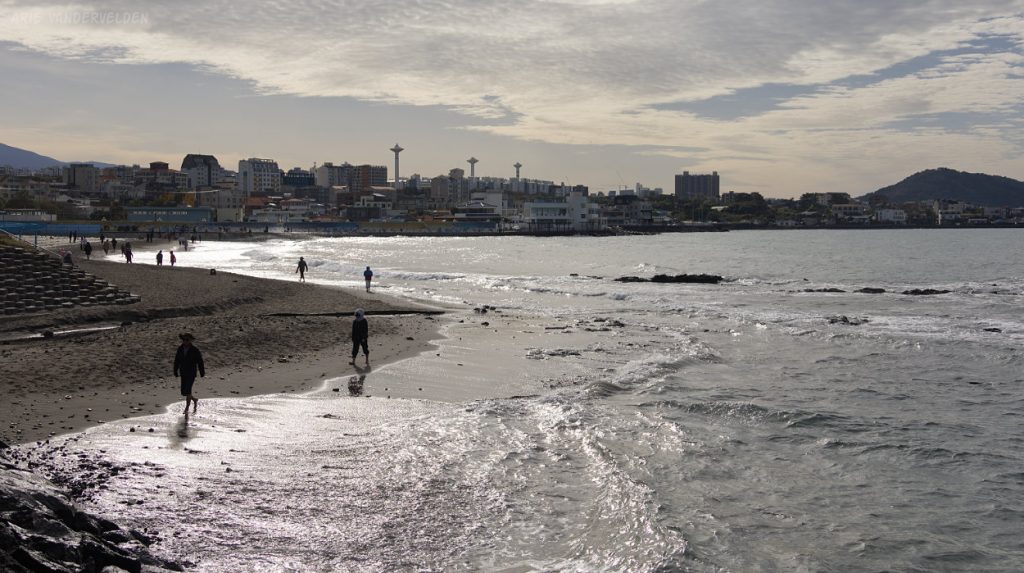
We came back to Samyang Beach another day to finish Olle 18.
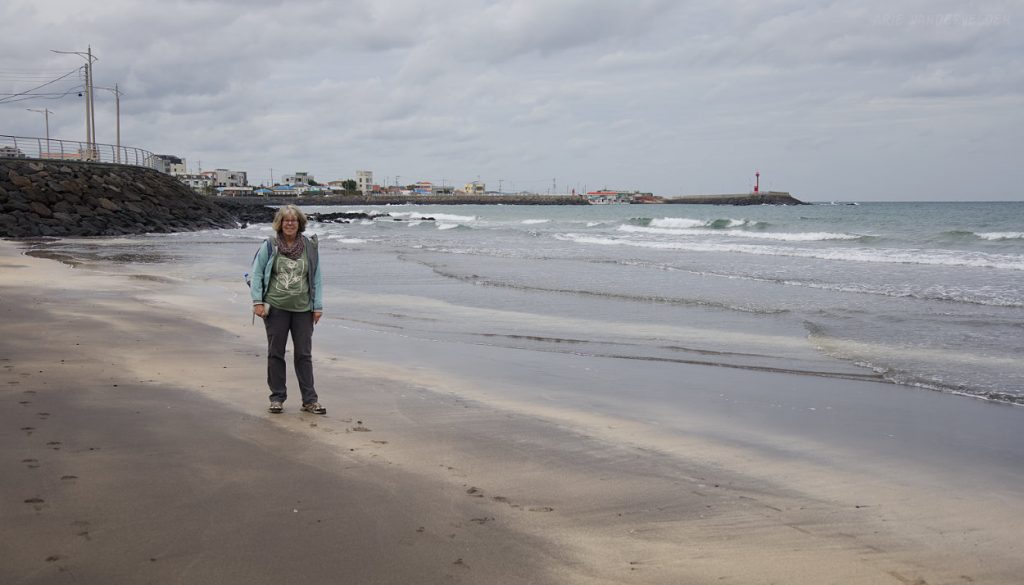
Contrary to our expectations, the rural nature of the hike soon resumed.
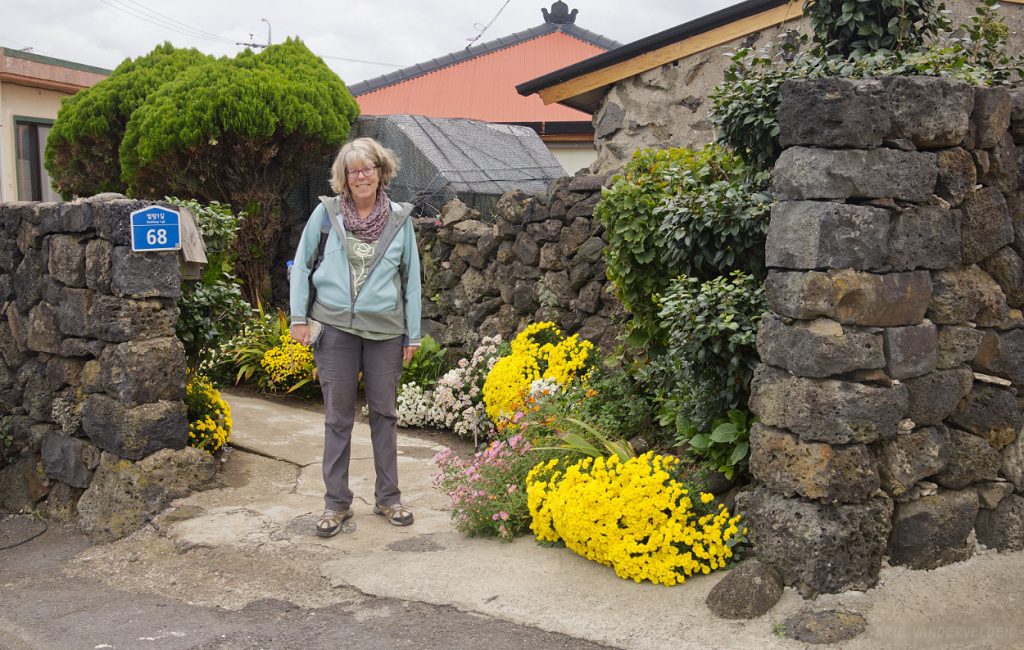
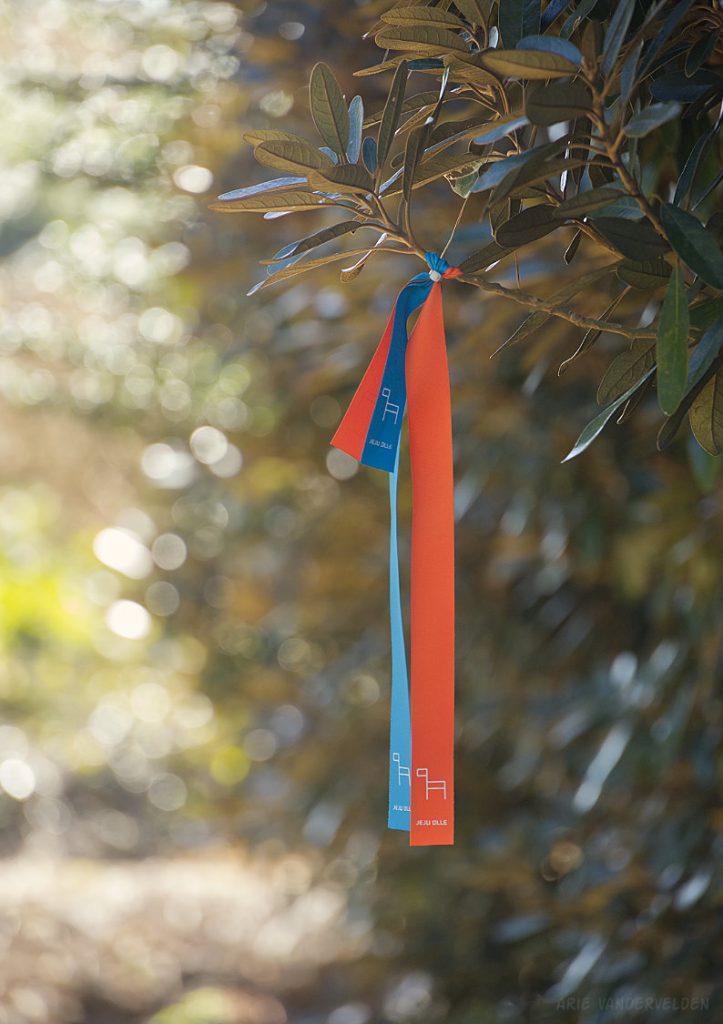
Note the three types of Olle signage: the ribbons, the arrow (orange, top left) and the ganse (Olle horse).
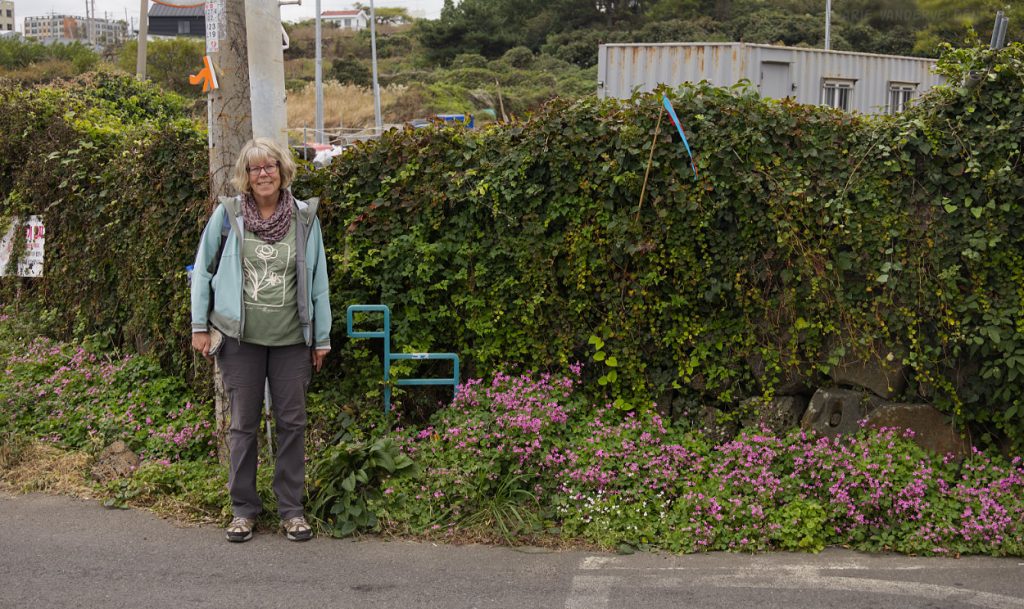
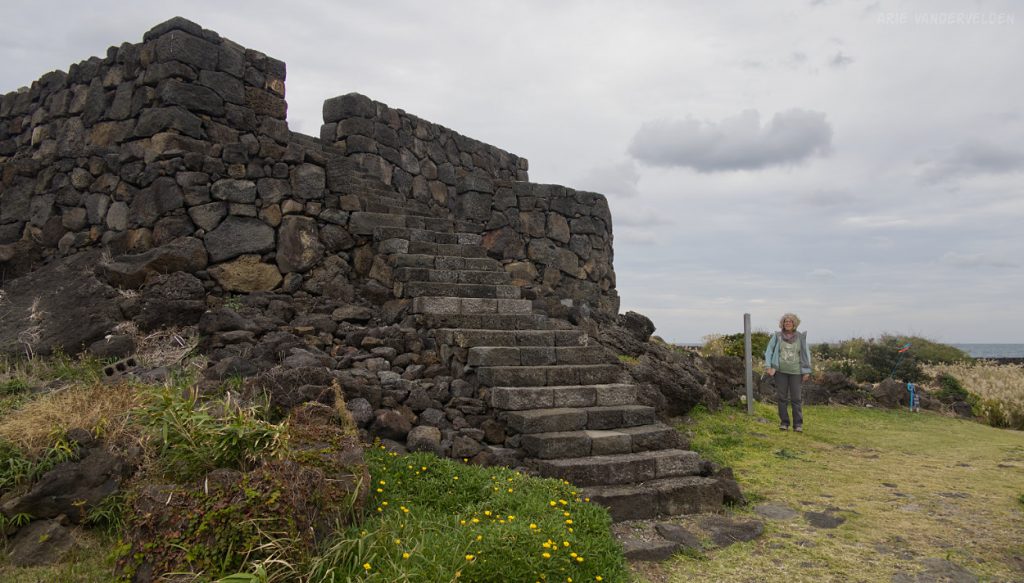
Ancient guard tower. Smoke signals were once sent from towers like this to warn of danger.
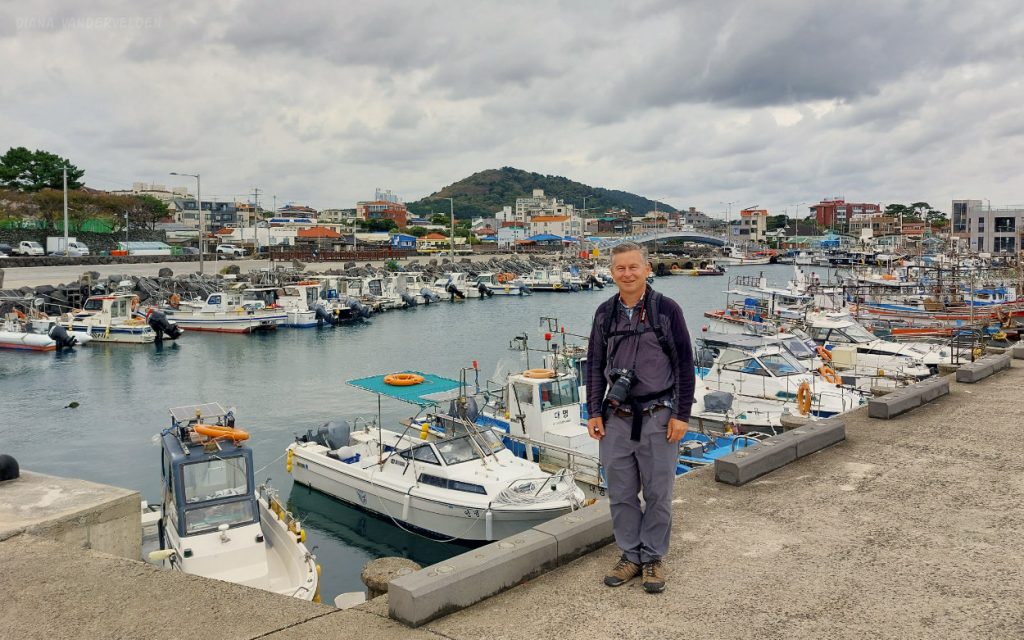
Hwabukpogu Harbour. Note the oreum (volcanic cone) in the distance. This is Sarabong Peak, a park, and crossing it led to downtown Jeju City.
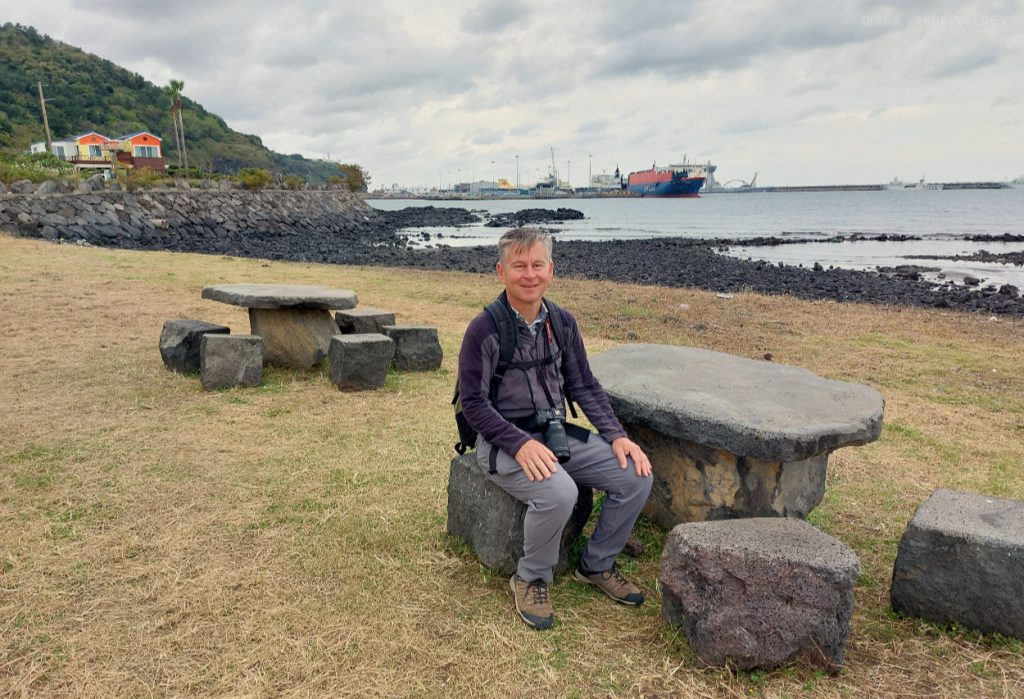
Park at the foot of Sarabong Peak.
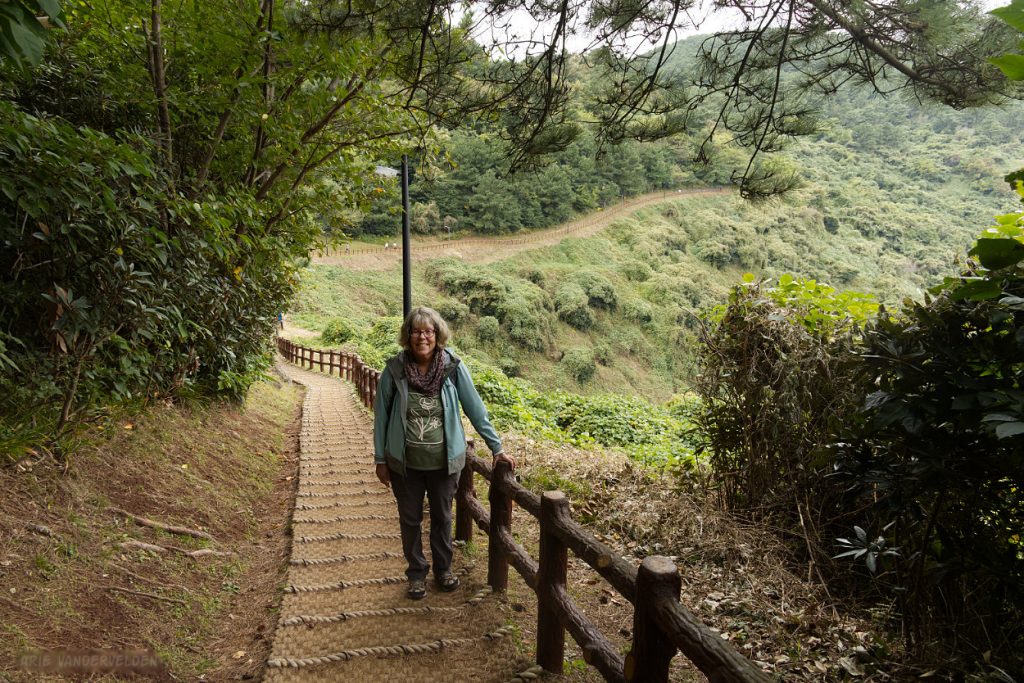
Crossing Sarabong Peak.
On the other side of Sarabong Peak was Jeju City. There were nice murals on some of the houses. This is real art.
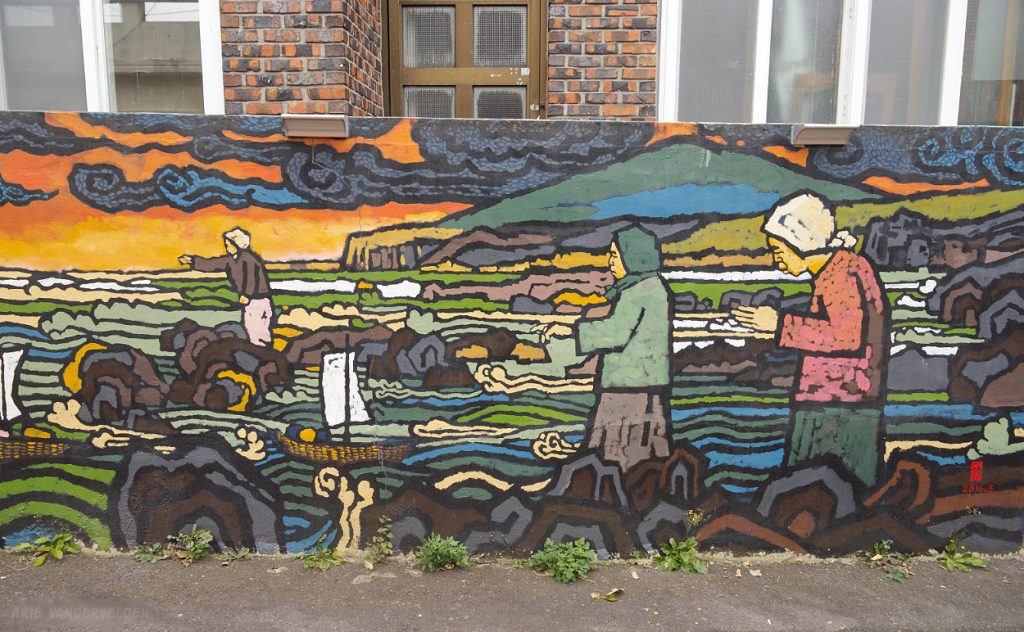
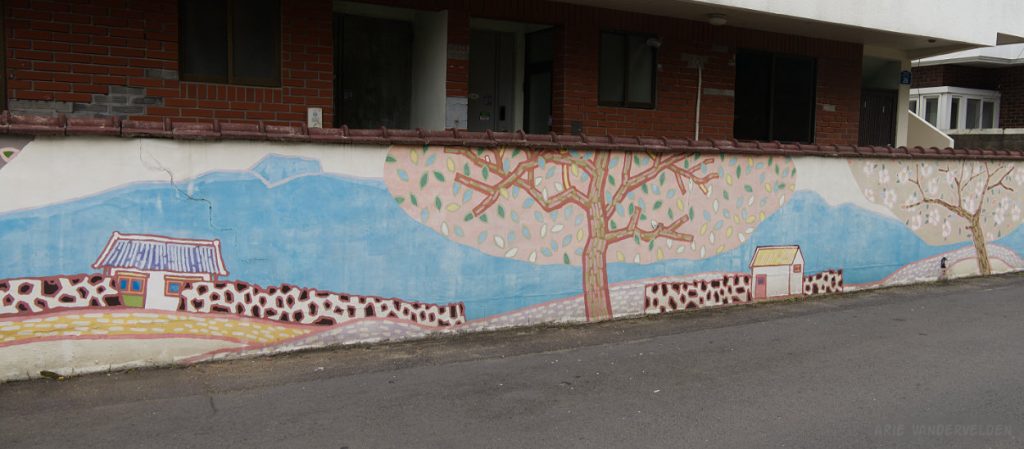
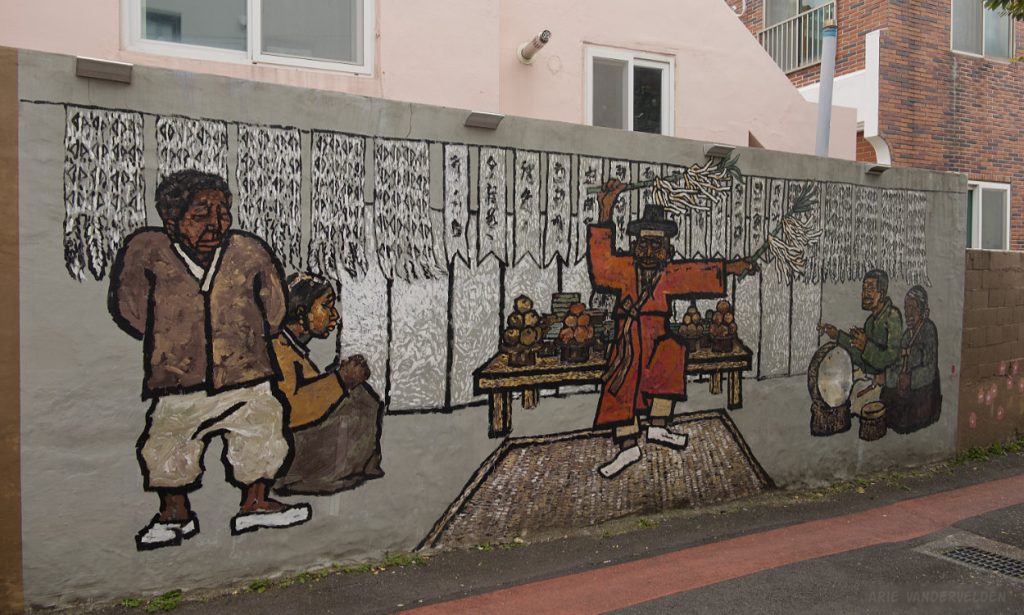
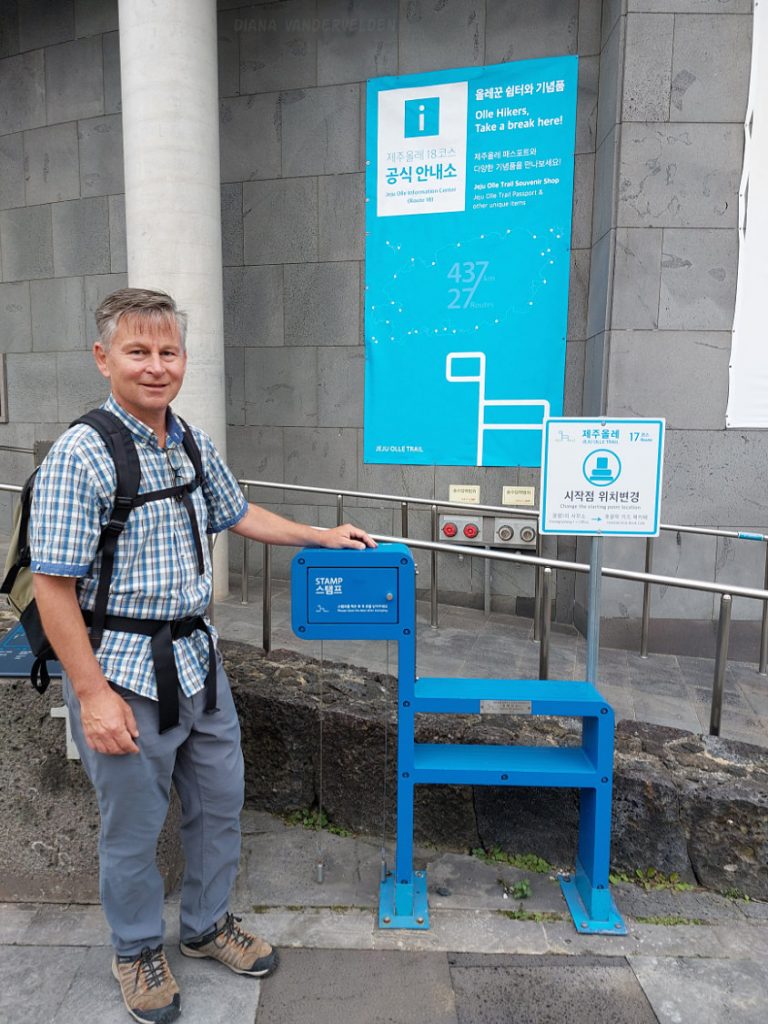
Stamping station outside of the Olle office.
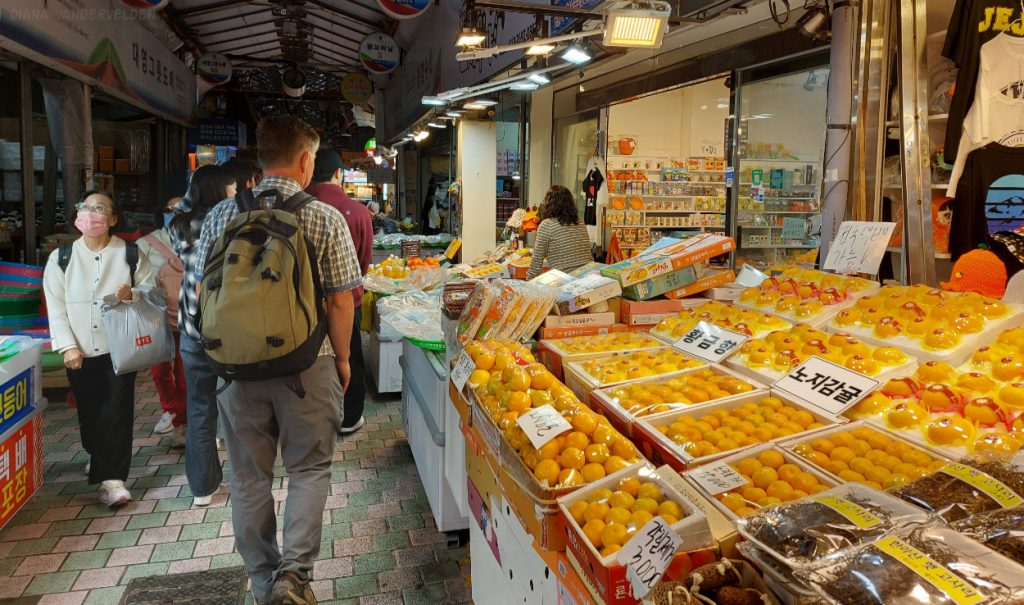
We ended our day at Dongmun Market – a market aimed at Korean mainland tourists. There were a lot of oranges for sale.
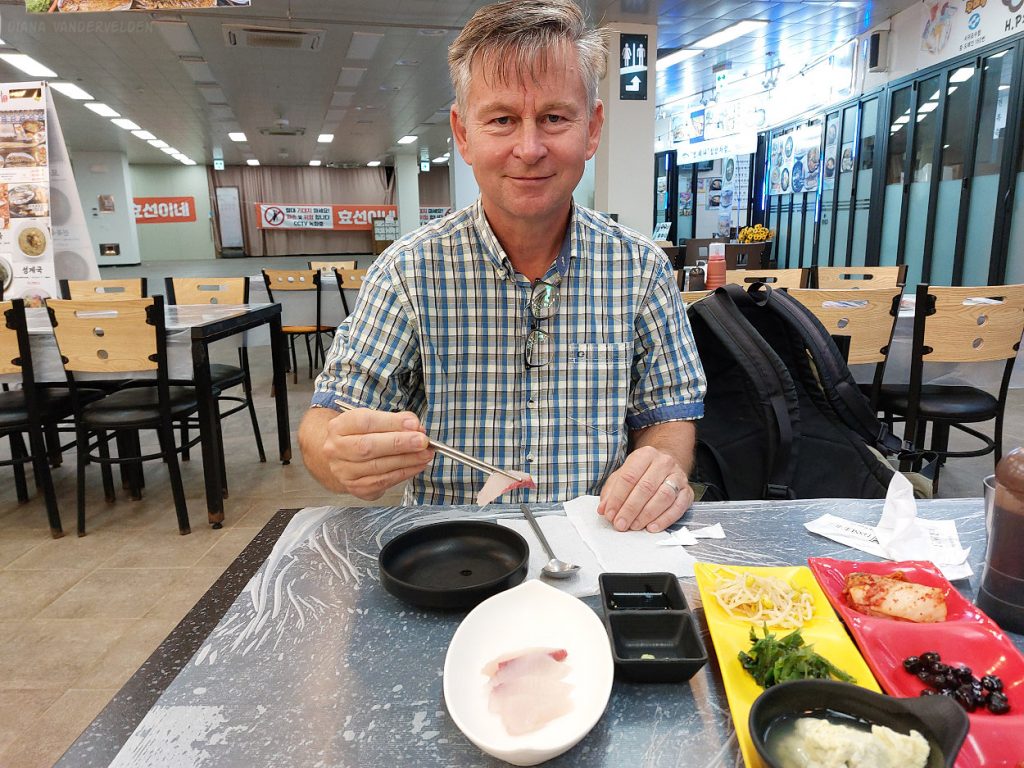
We had a late lunch in the bowels of the market. Here I am enjoying our sashimi appetizer.
Olle 19
We hiked Olle 18, 19, and the first half of Olle 20 from hotel Sweetcastle just outside of Hamdeok.
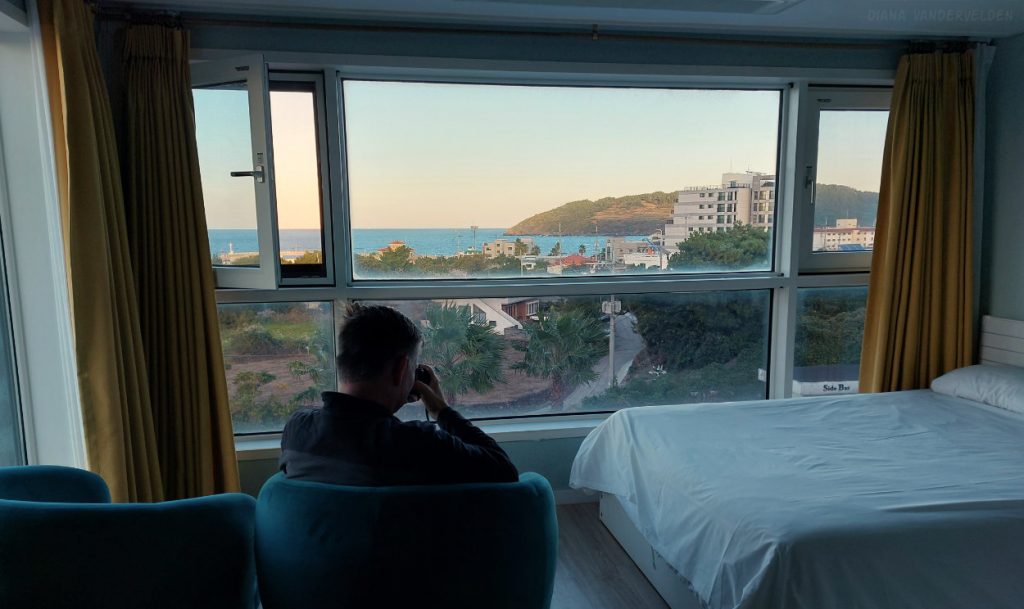
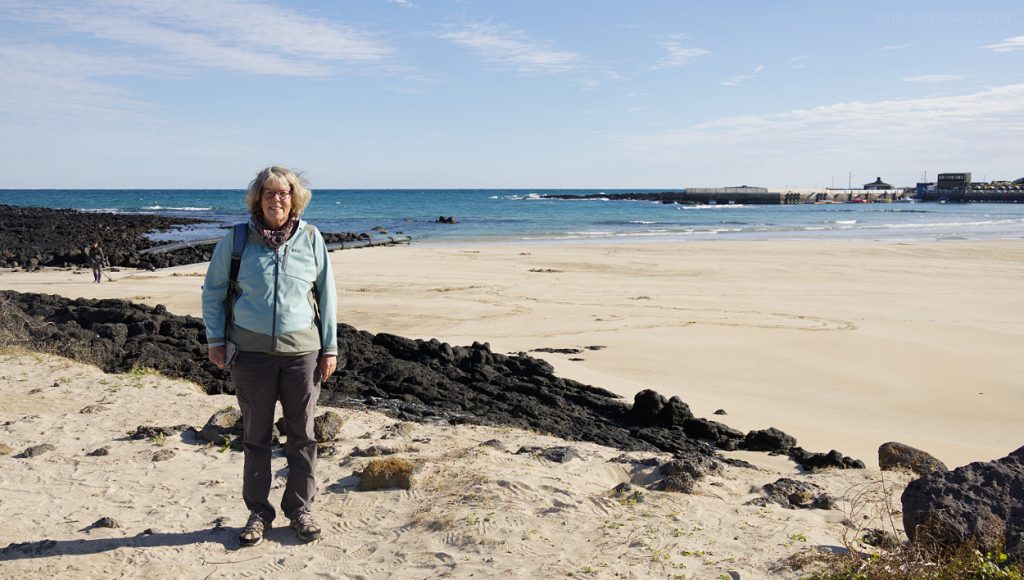
Olle 19 runs along the coast a short distance in front of the hotel. We began by hiking towards the west, towards Jeju City. The first point of interest was pretty Sinheung Beach.
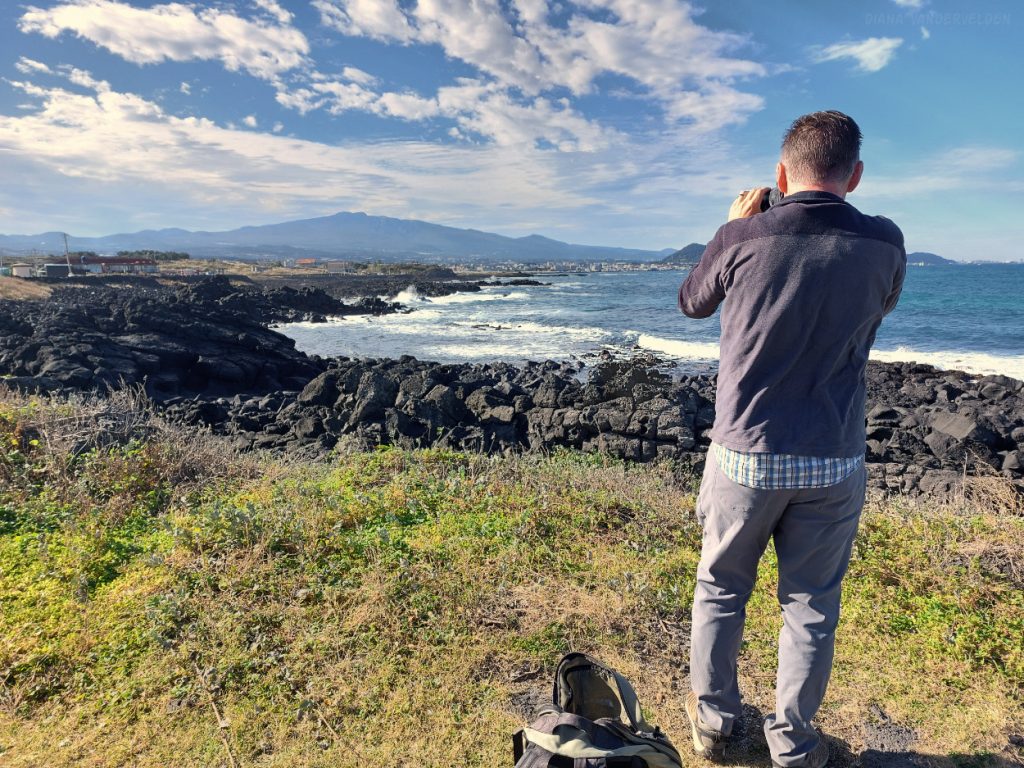
Here I am photographing the coastline towards the west.
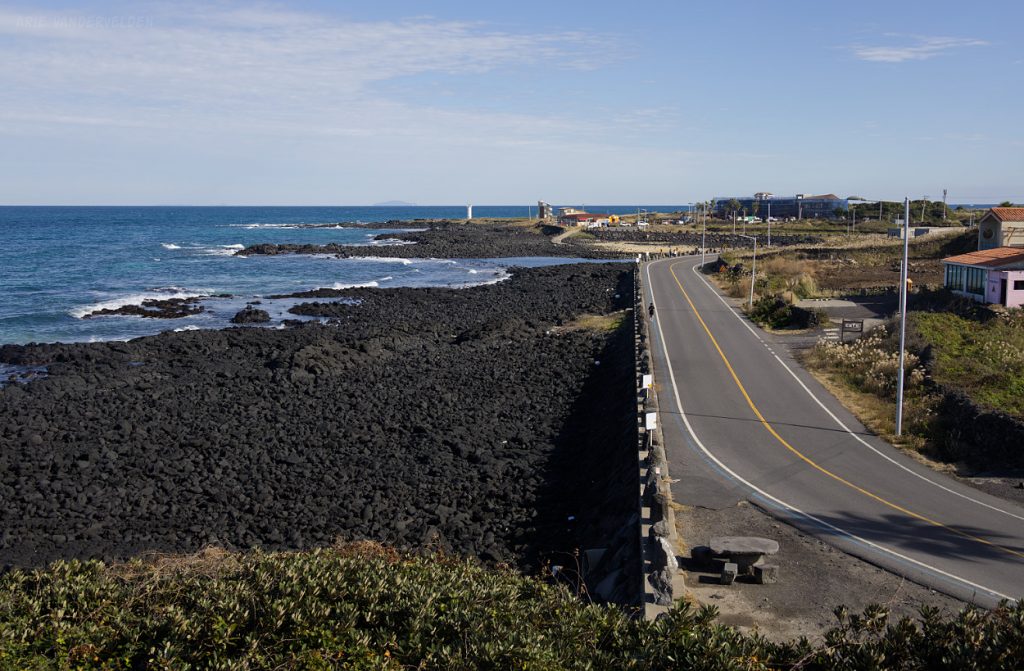
View towards the east.
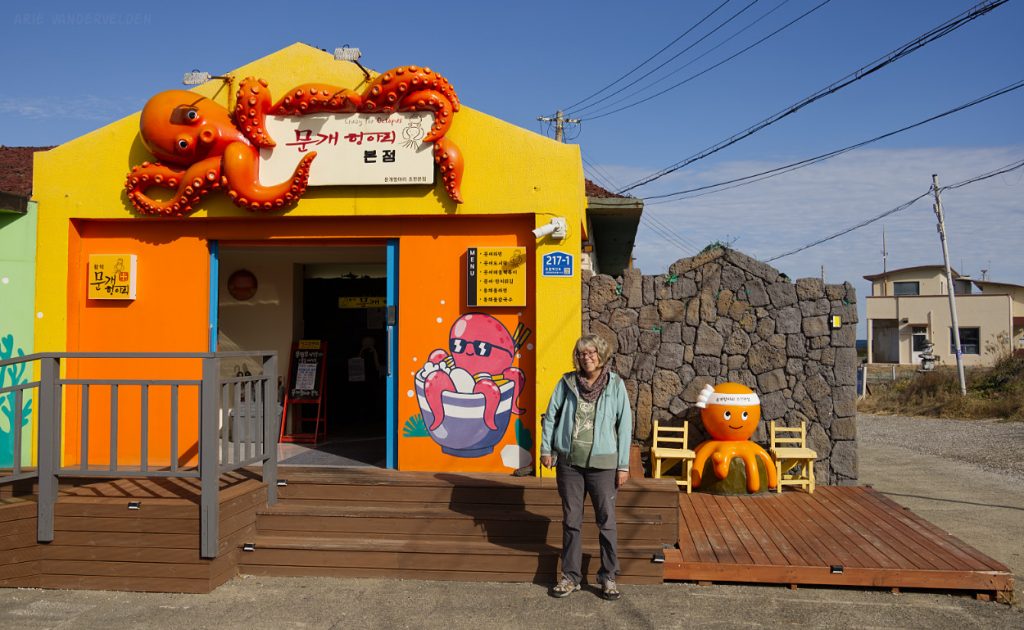
This brightly colored restaurant seemed to be specializing in octopus.
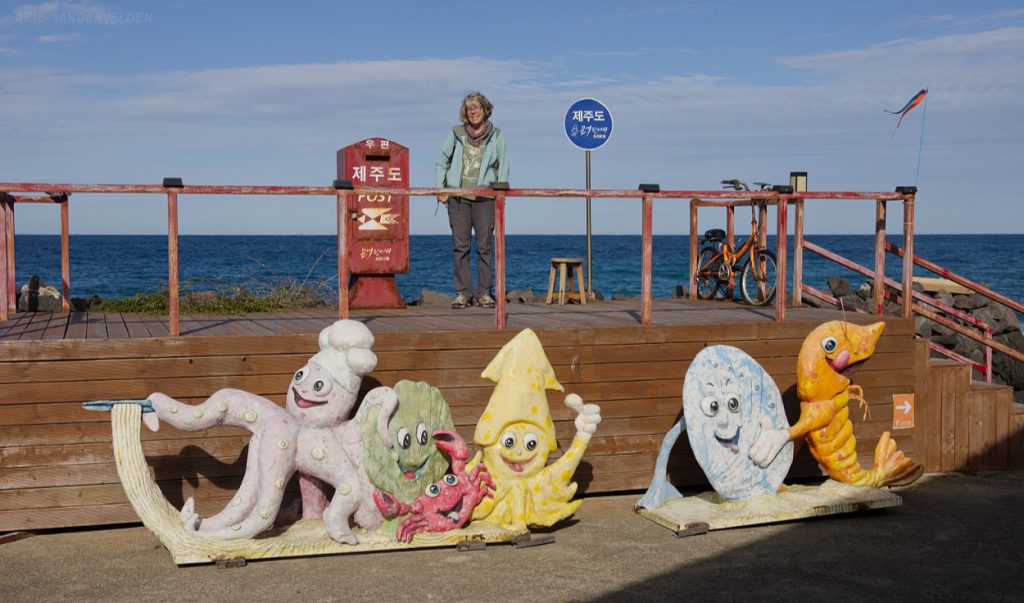
When the various shellfish are licking their chops, the food must be good.
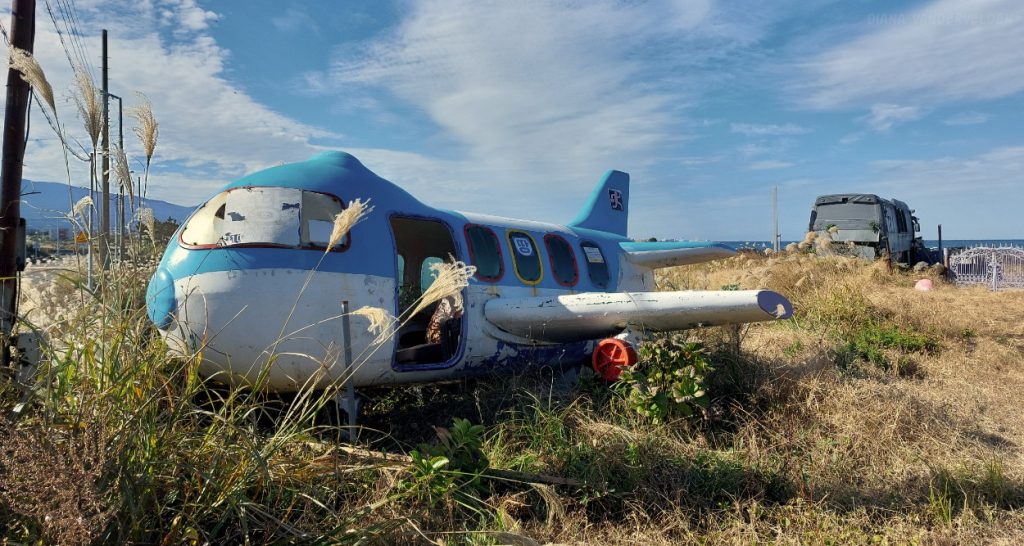
There were lots of quirky sights along this Olle. Here is an abandoned fairground ride.
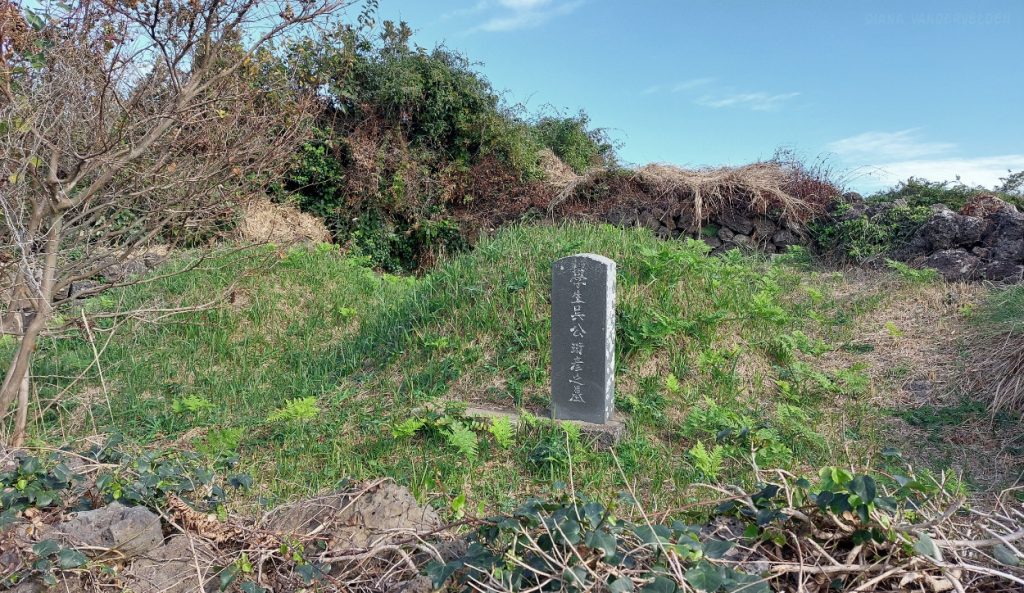
As we hiked on, the Olle took on a more sombre character. The trail led past graves. Lots of graves. We assumed that these must be casualties from the Japanese occupation.
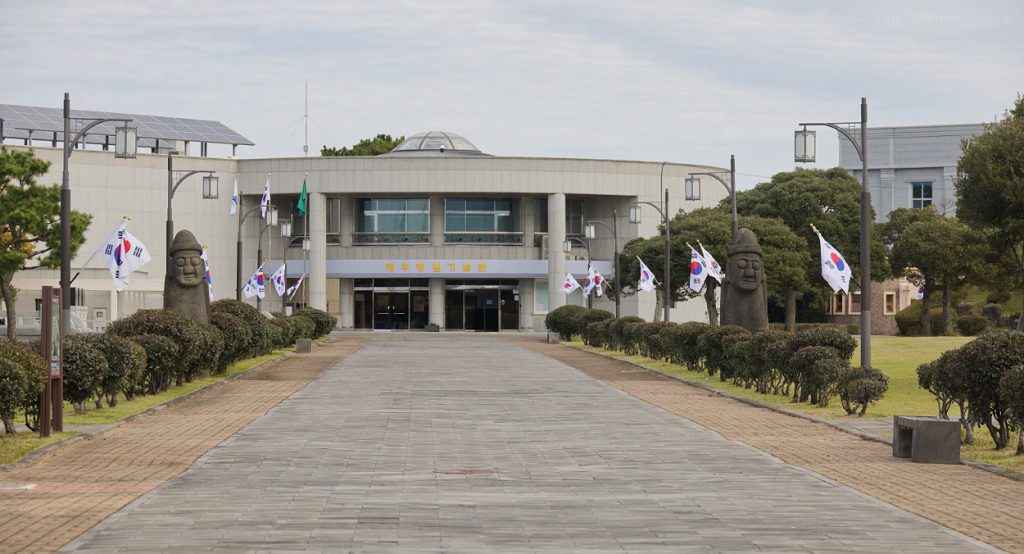
The Olle ended at the Jeju Hangil Memorial Hall, a museum dedicated to documenting Japanese atrocities and to celebrating Korea’s independence. Inside, we learned that oppression by the Japanese had led to widespread poverty and starvation, and any protest was mercilessly put down. Even in the face of this, an underground resistance was formed by the youth, scholars, Buddhist monks, Christian priests, and the haenyeo women divers. The day we visited was was 9/11, Remembrance Day, and it seemed fitting to learn about this dark piece of Korea’s history.
Note the Dol Hareubang standing guard along the entranceway to the museum.
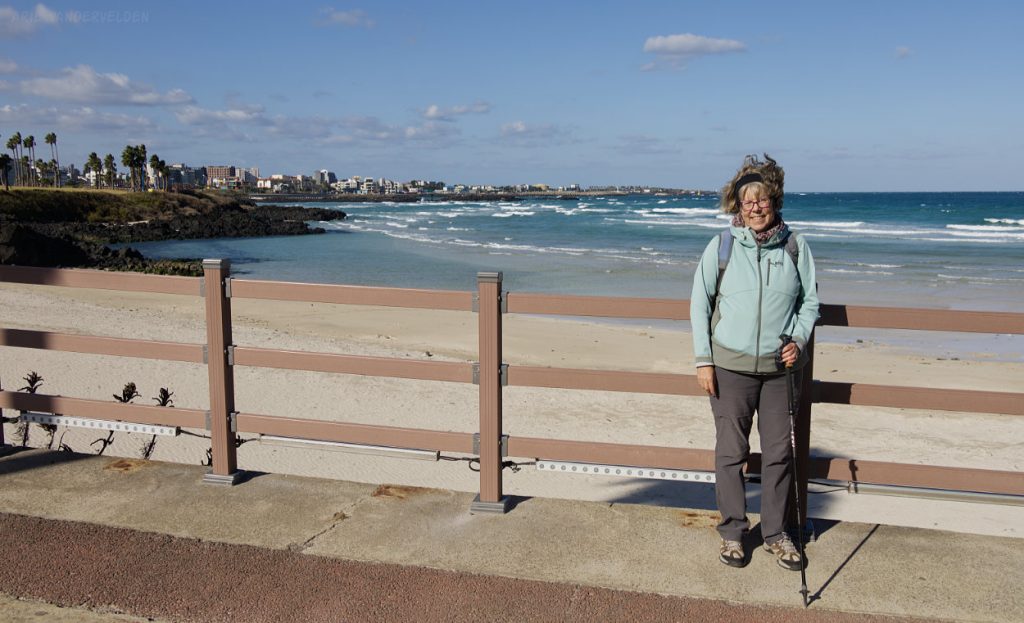
Another day we left our hotel and turned east, towards Hamdeok Beach. The main part of Hamdeok Beach is backed by highrise hotels. Here I am walking along the waterfront while an Olle trail marker ribbon flutters in the wind.
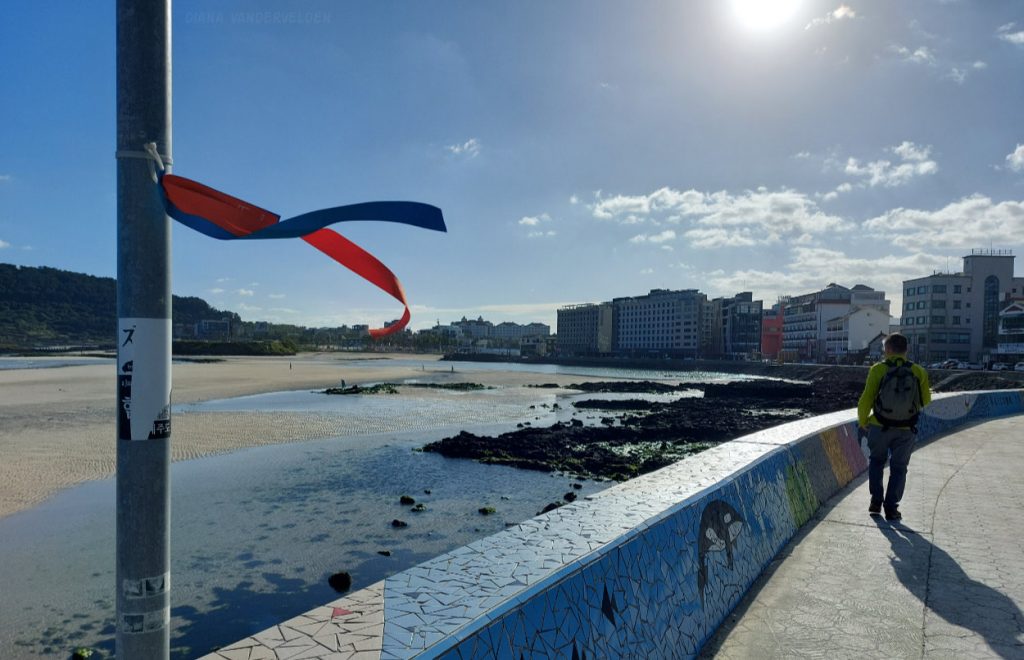
Hamdeok Beach.
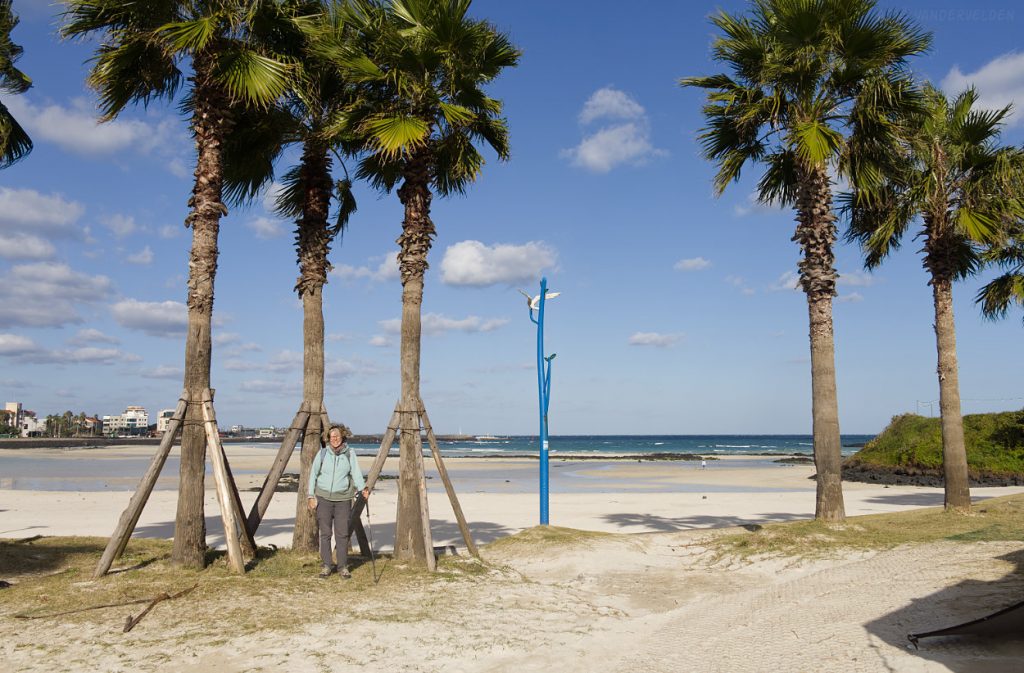
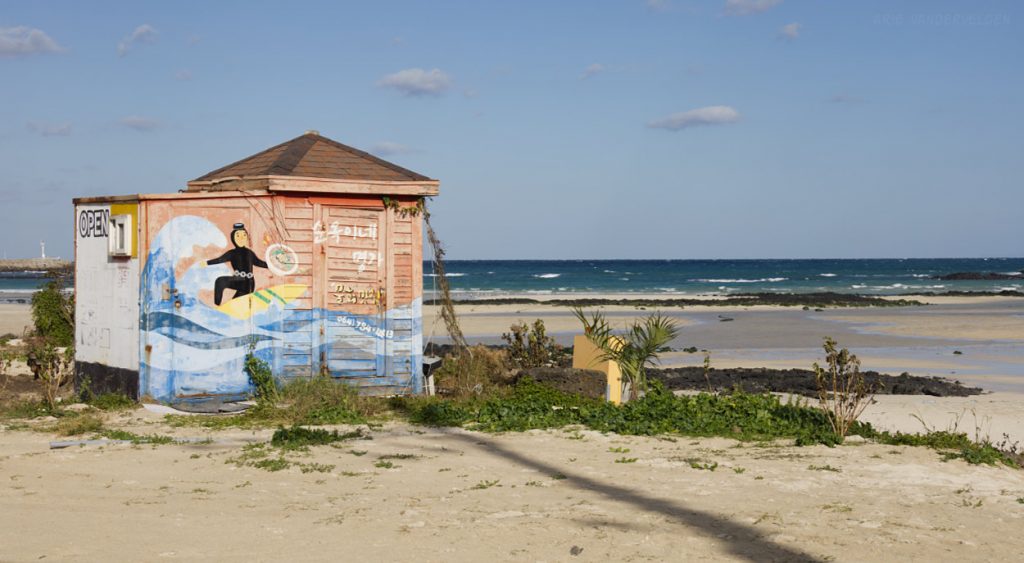
Surf shack, Hamdeok Beach.
Hamdeok Beach ends where an oreum, a volcanic cone, projects into the sea.
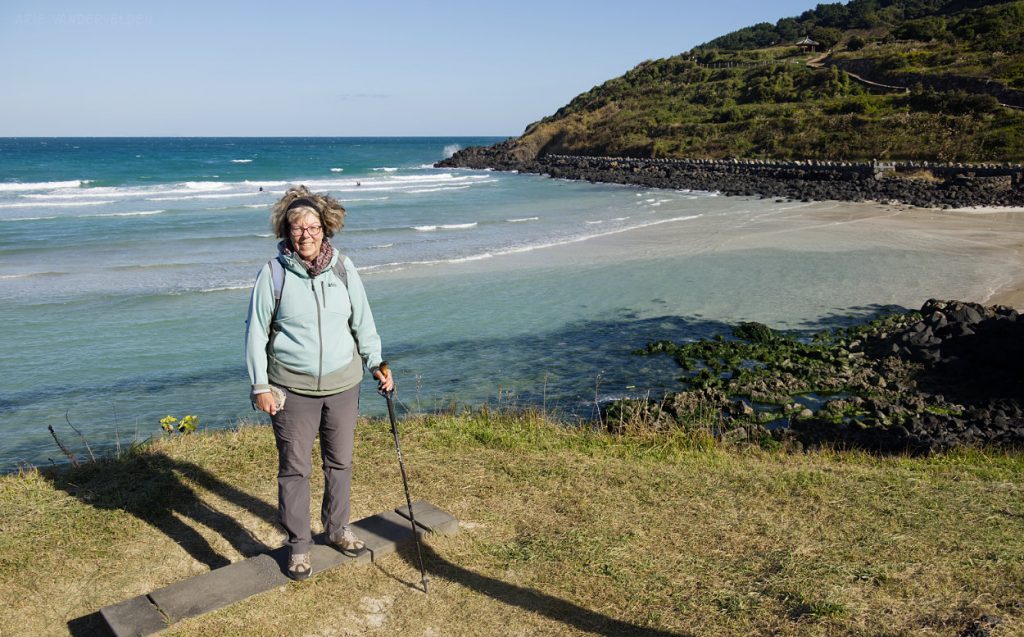
The oreum is called Seoubong Peak, and the Olle trail went straight up towards the top. Here, Diana is talking to some local hikers. Inevitably, they ask us where we are from. When we answer: Canada, the response is always positive.
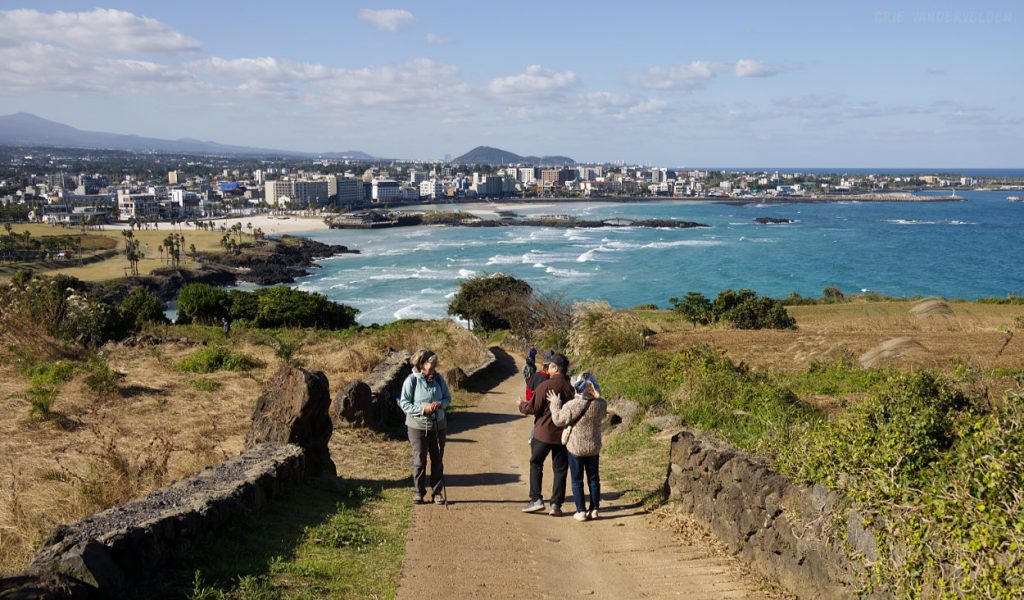
The trail went into a forest.
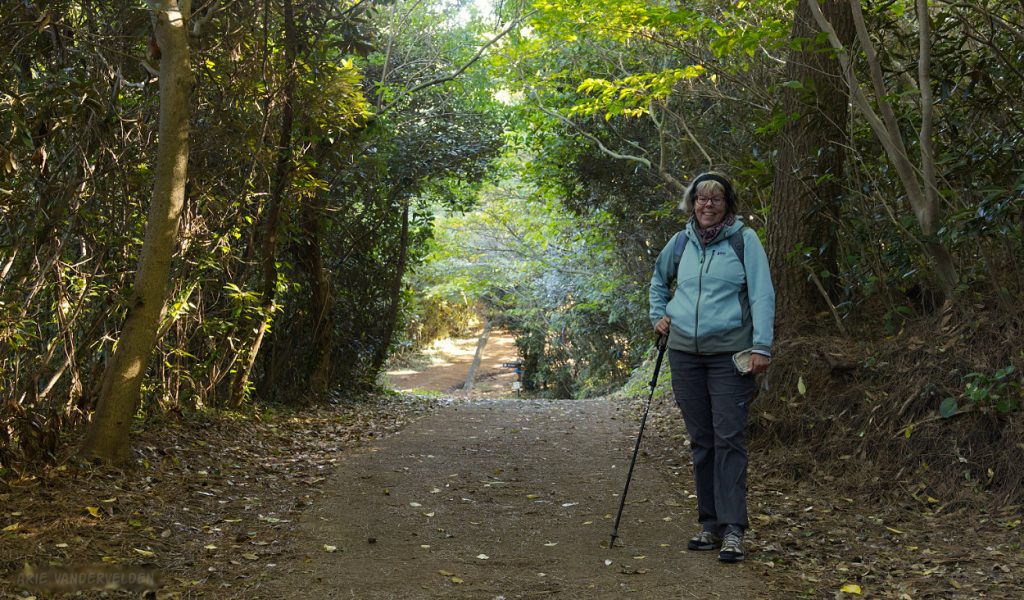
Follow the ribbons.
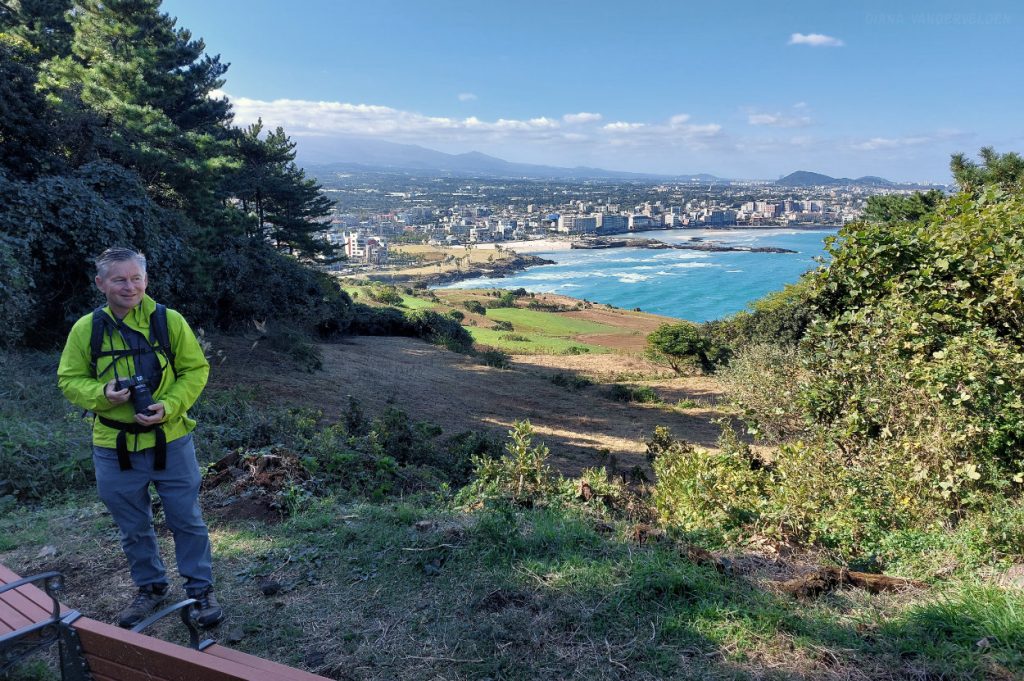
There was a clearing in the forest with excellent views down the coast. We took turns taking each other’s pictures.
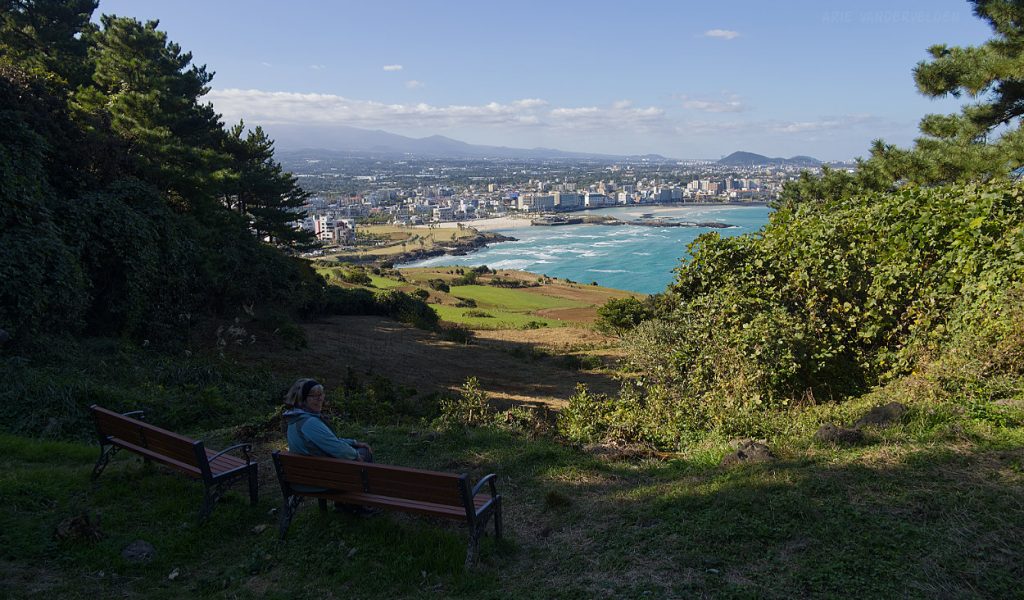
On the other side of the oreum are more coastal villages.
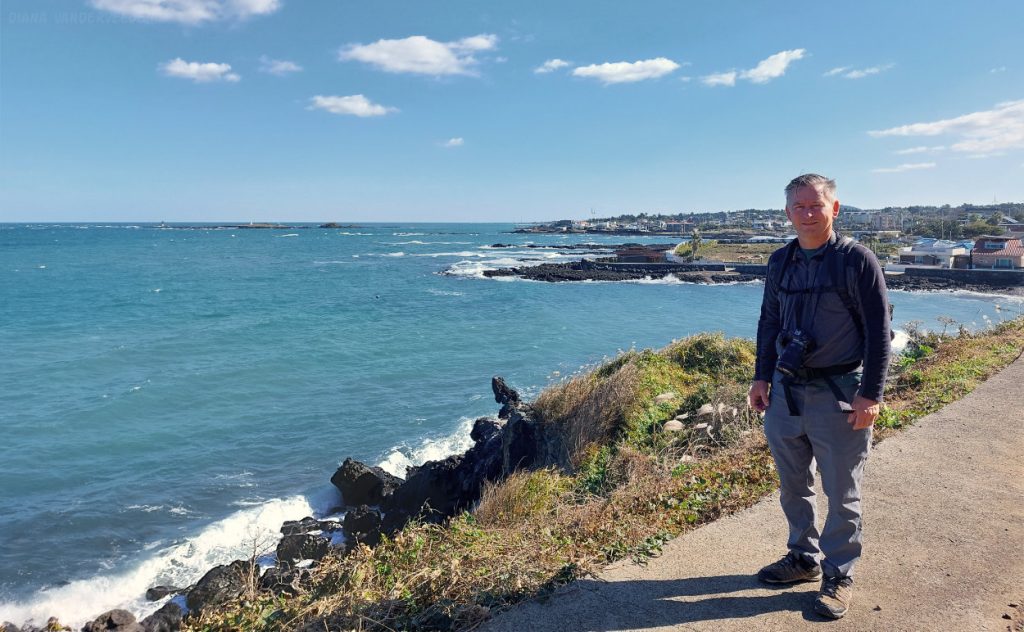
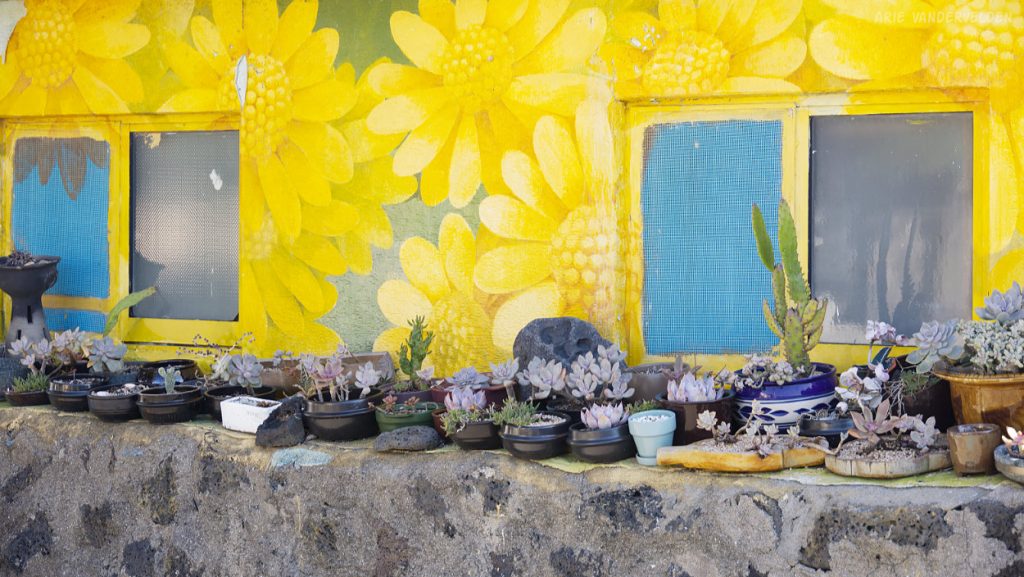
We enjoyed wandering through the villages. Here is a collection of succulents on a ledge.
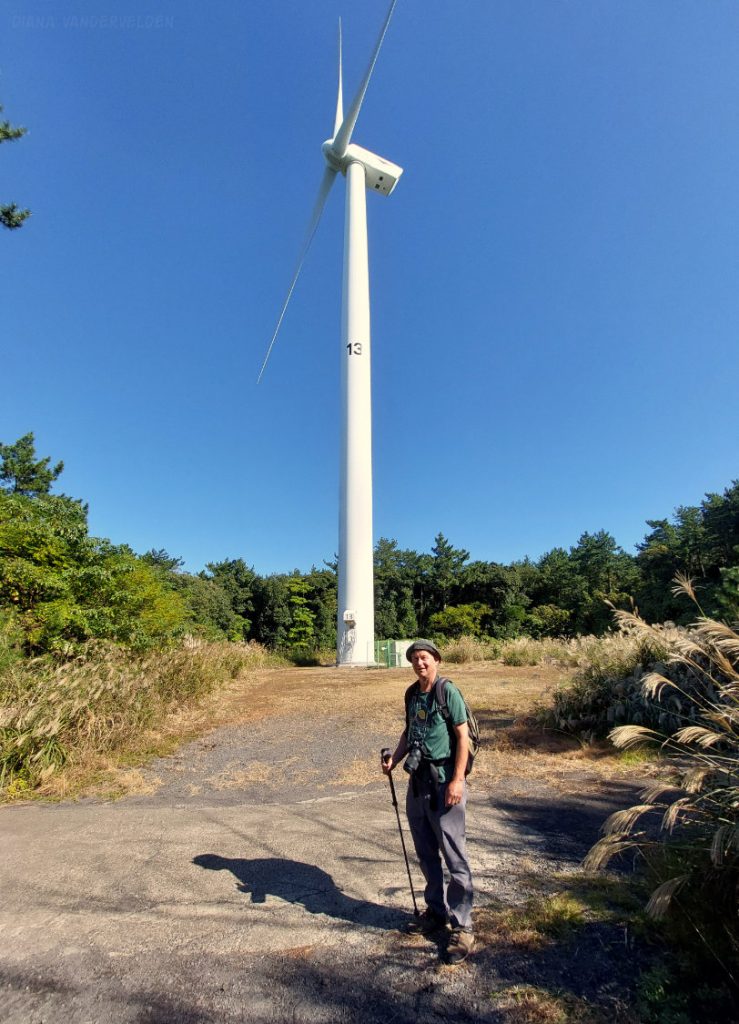
After a while the Olle trail turned inland and went through a forest. Towering above the forest were giant wind turbines, and on the ground we could hear the swhoosh of the blades and the whir of the gear boxes. The forest canopy hid the turbines from view, for the most part.
Hiking through the forest was pleasant, but there was not a lot to look at. Eventually the trail entered some scenic farmland.
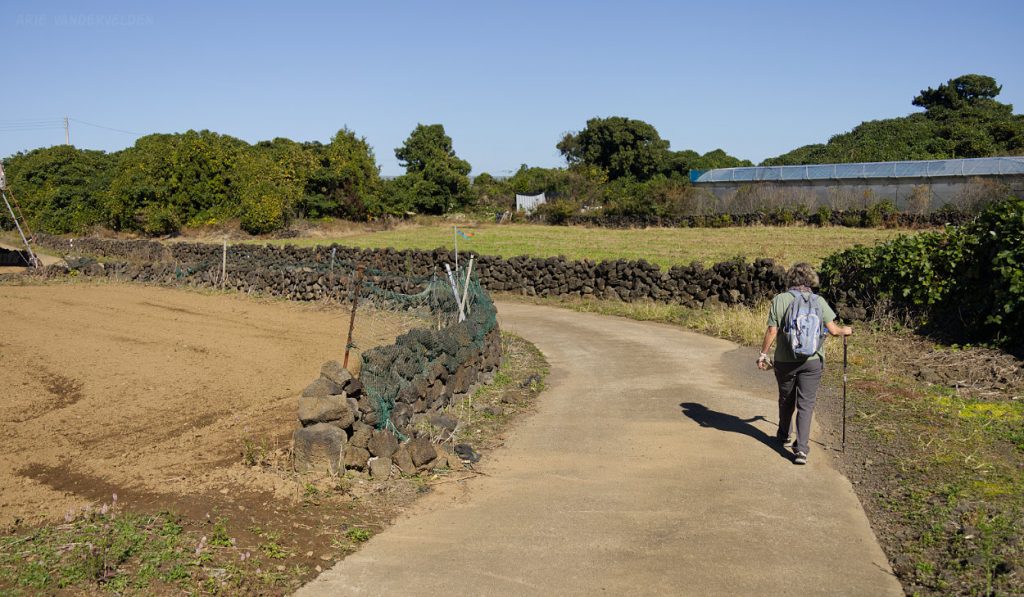
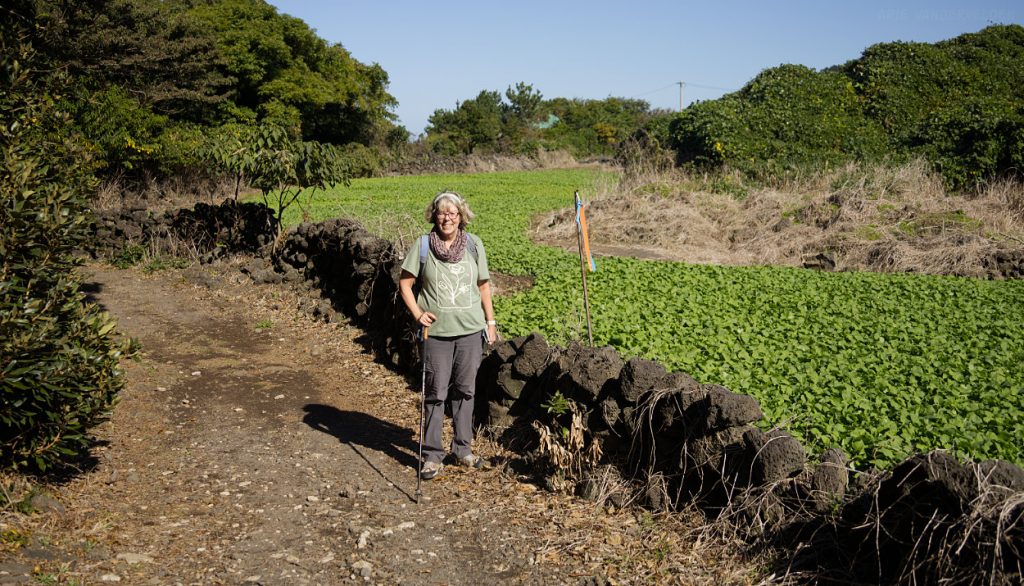
Radishes were being grown here.
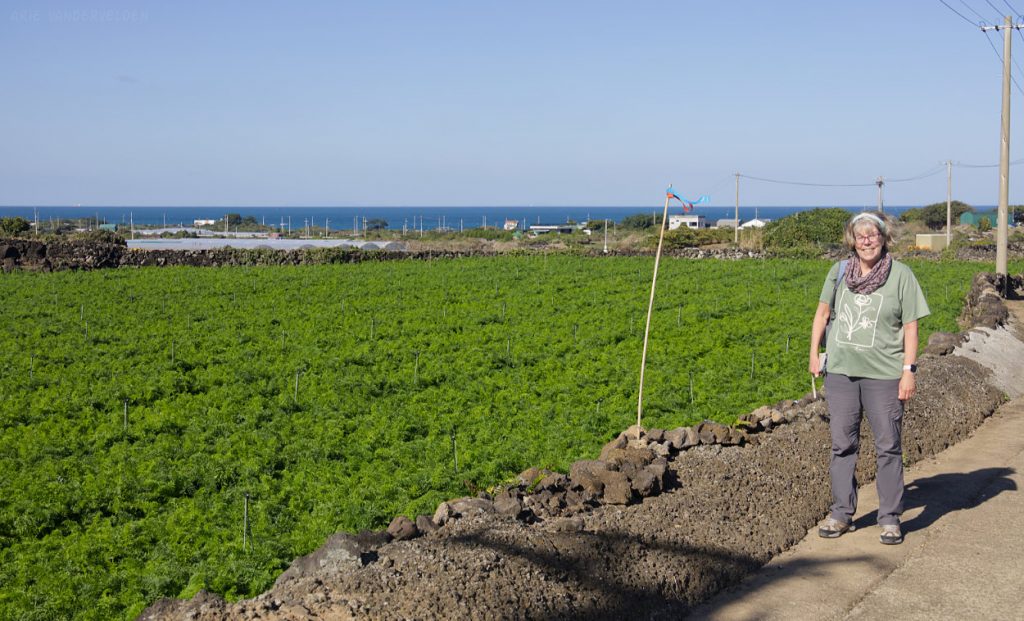
The trail turned towards the coast, where there were fields full of carrots.
The Olle ended at a fishing village called Gimnyeong. Here are some haenyeo statues at the harbour.