
The Yamanobe-no-Michi trail (山辺の道 in Japanese) is said to be the oldest road/trail in Japan. Its roots date back to the 7th century. Today, it mainly serves as a walking destination for day-tripping Japanese people from Osaka, Kyoto and Nara. I stumbled upon this trail while looking for things to do in the Nara area. We first hiked this trail in December of 2024, but with a crack-of-noon start and short daylight hours we were only able to complete a short section of it. We really liked the trail, and we returned in December of 2025 to spend more time exploring this area.
Tenri to Sakurai
We began our hike in Tenri, a 15-minute ride on a local train from Nara. There is a map posted of the trail outside of Tenri’s train station. I took a picture of it, and this ended up being quite helpful.
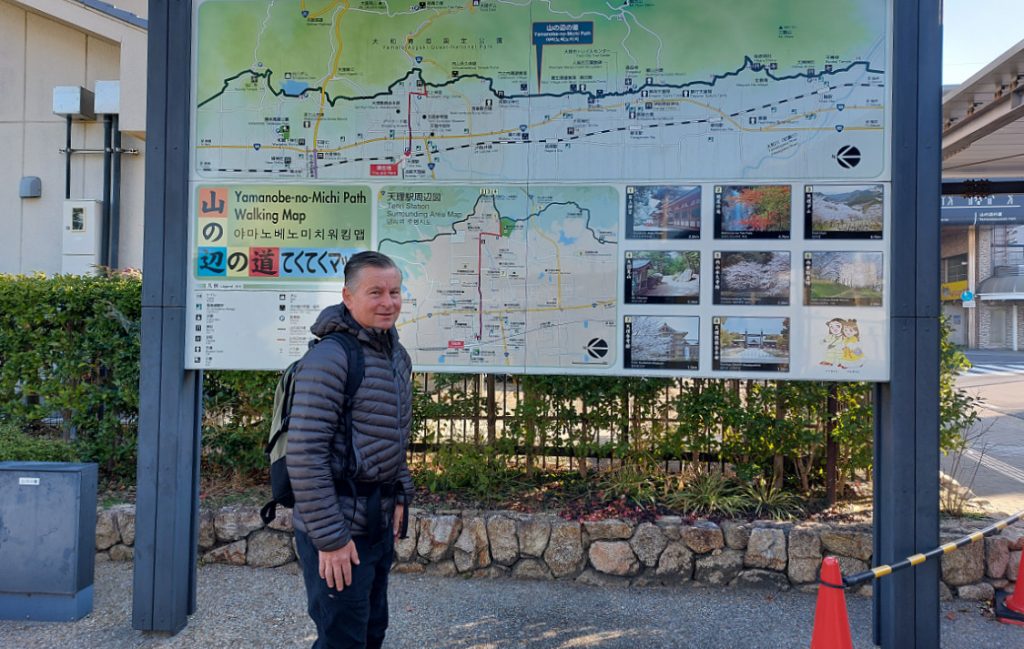
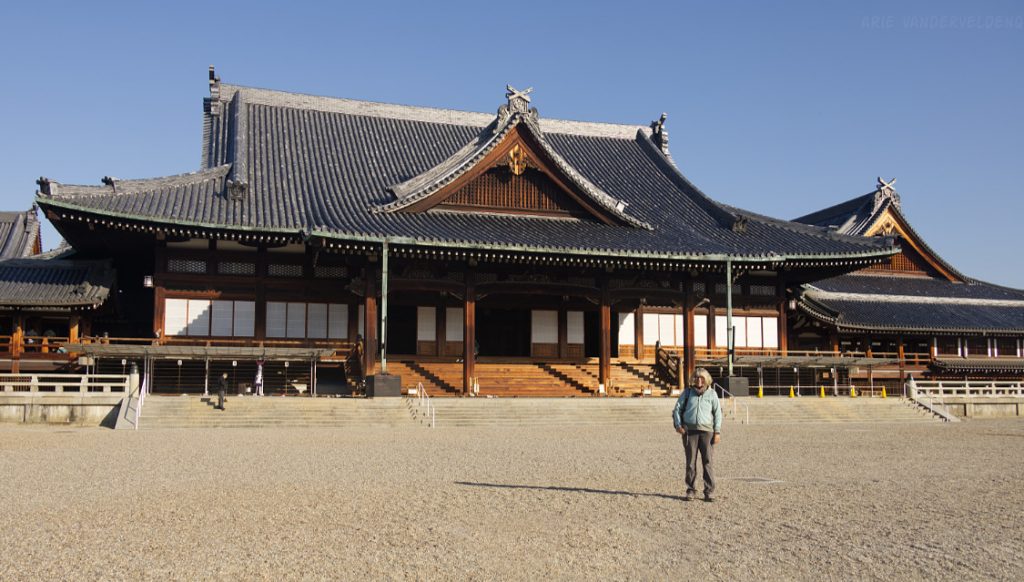
The Yamanobe-no-Michi trail is about 2.3 km east of the train station. From the station, we headed through a long shopping arcade. At the far end of the shopping arcade is a huge modern temple complex. This is the headquarters of the Tenrikyo Sect.
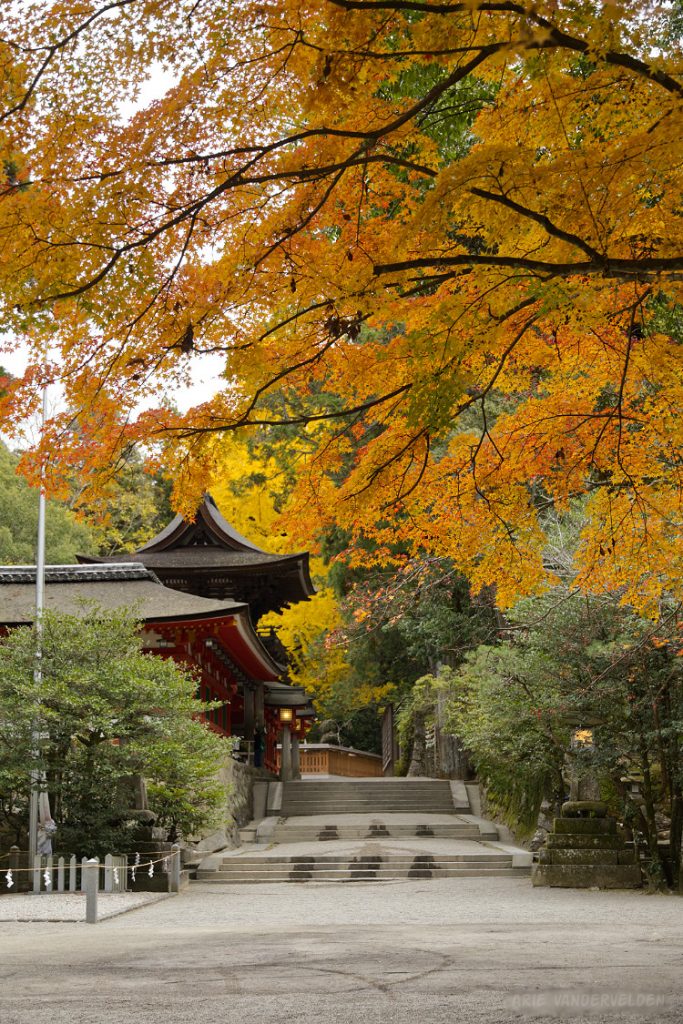
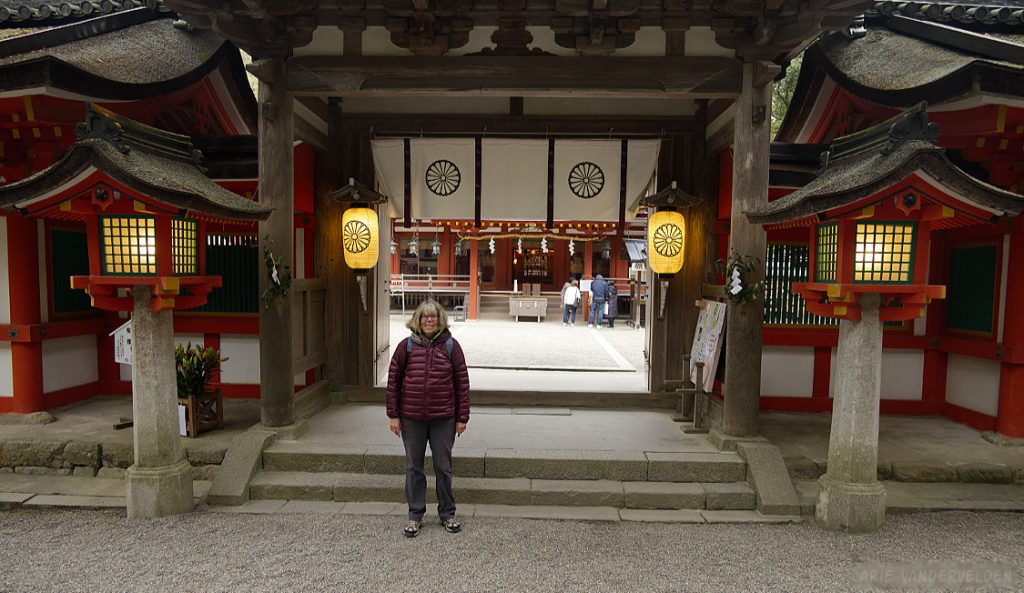
We continued walking to the east, to Isonokami Jingu Shrine. This shrine is thought to be one of the oldest in Japan. Like the Yamanobe-no-Michi trail, it can be traced back to the 7th century. Some say the temple even older than that – at least 2000 years old.
Chickens roam freely around the temple grounds. They are said to be messengers of the gods.
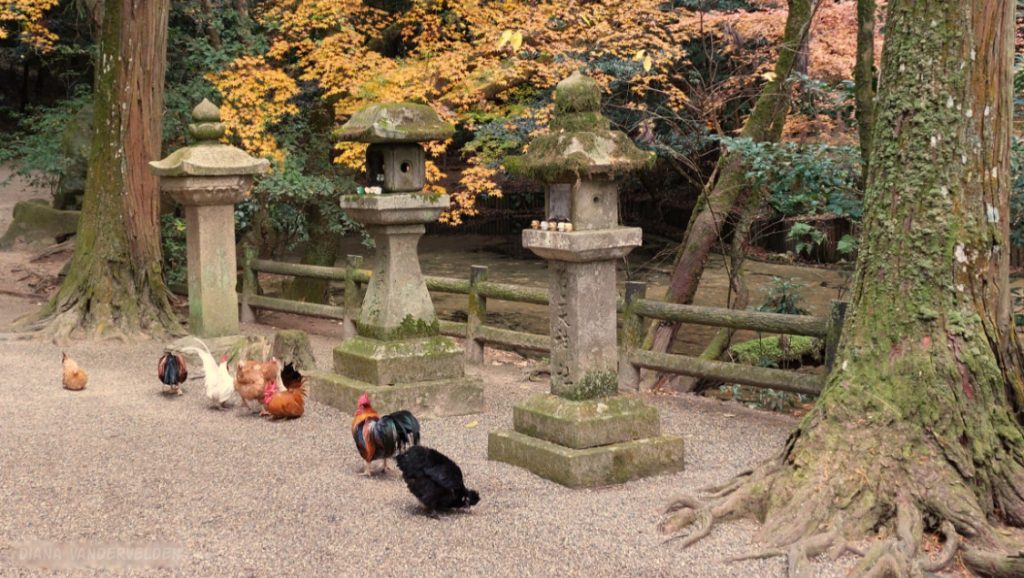
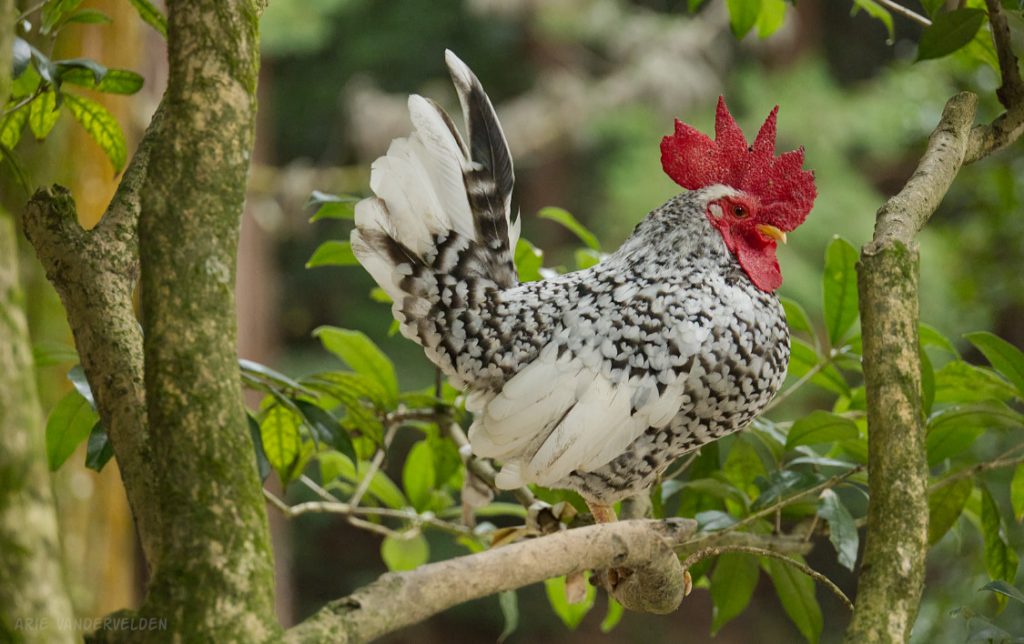
The Yamanobe-no-Michi trail runs through the temple grounds. We headed south along it. It was a clear, crisp fall day. There had been a touch of frost overnight, and we could see our breath.
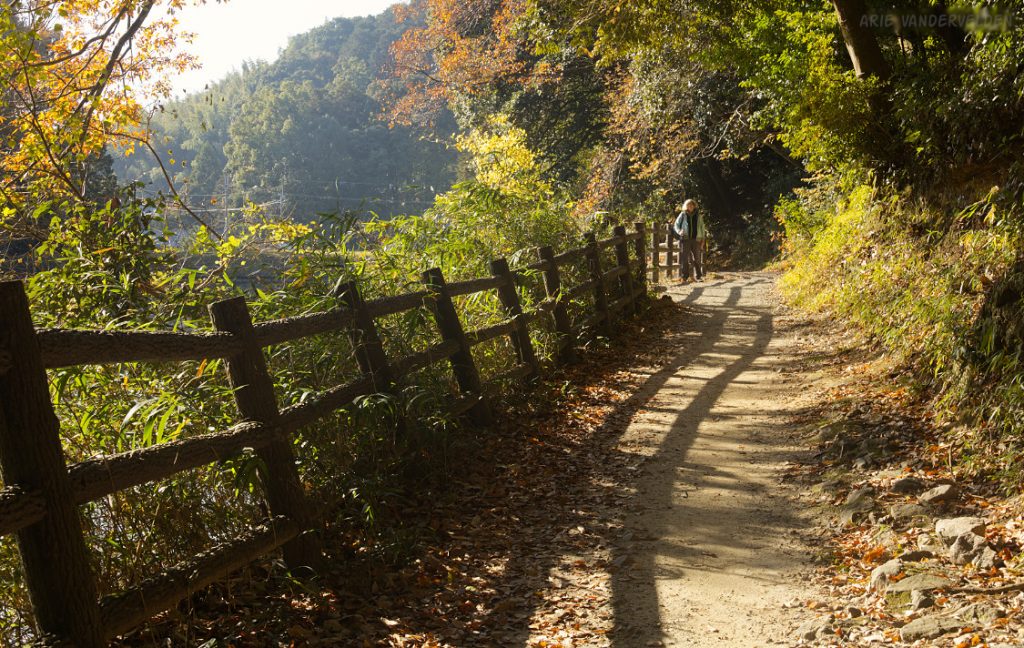
The trail led uphill, past a bamboo forest and a persimmon orchard.
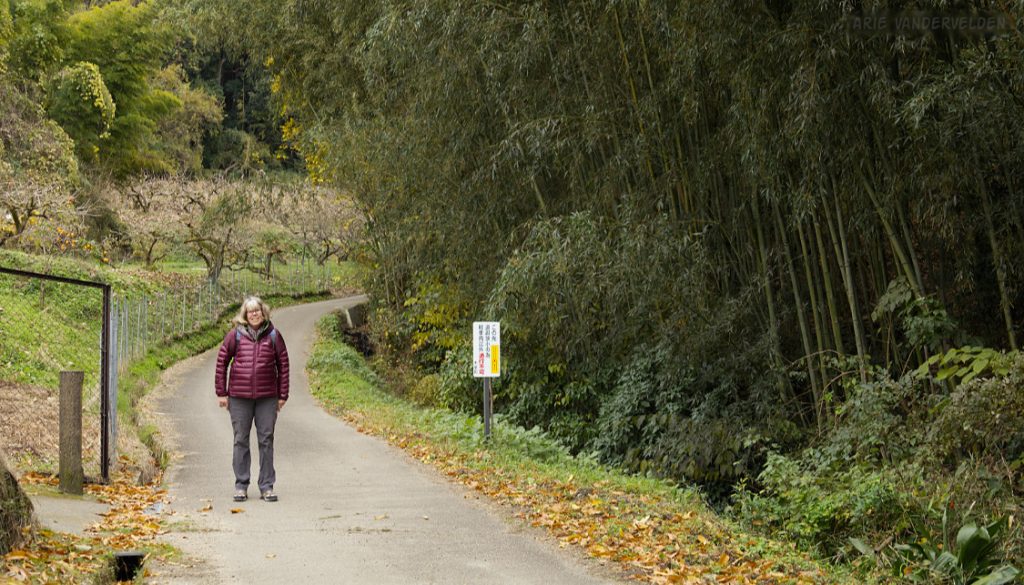
On the other side of the hill were small farms. This set the theme for the hike: rural agricultural Japan.
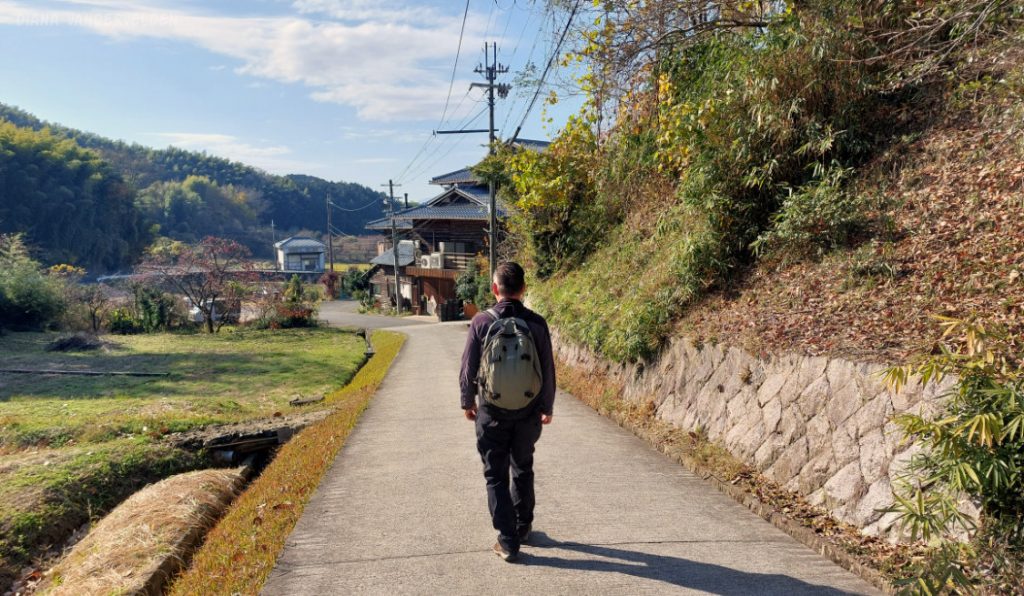
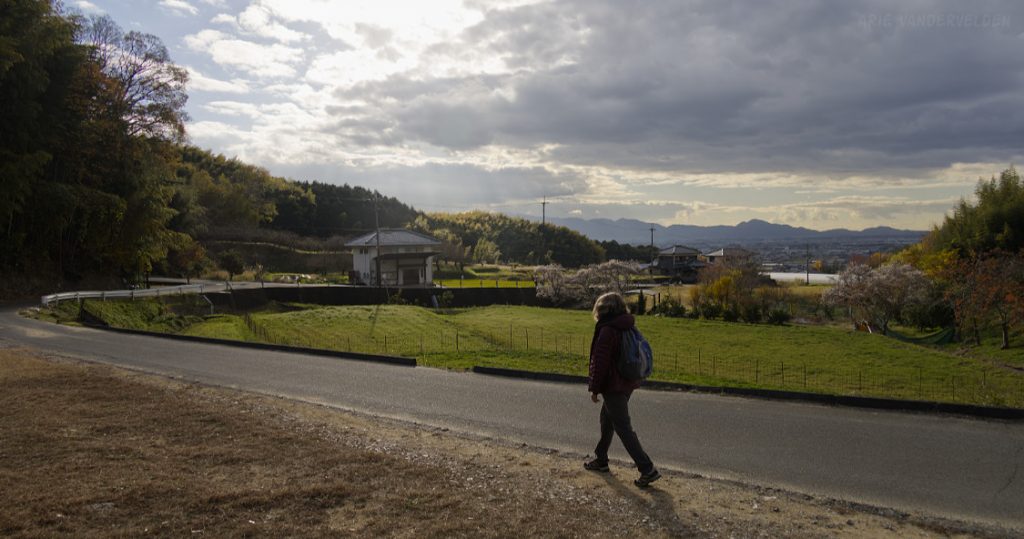
We saw some flowering cherry trees. Apparently, some varieties do flower in the fall as well as the spring.
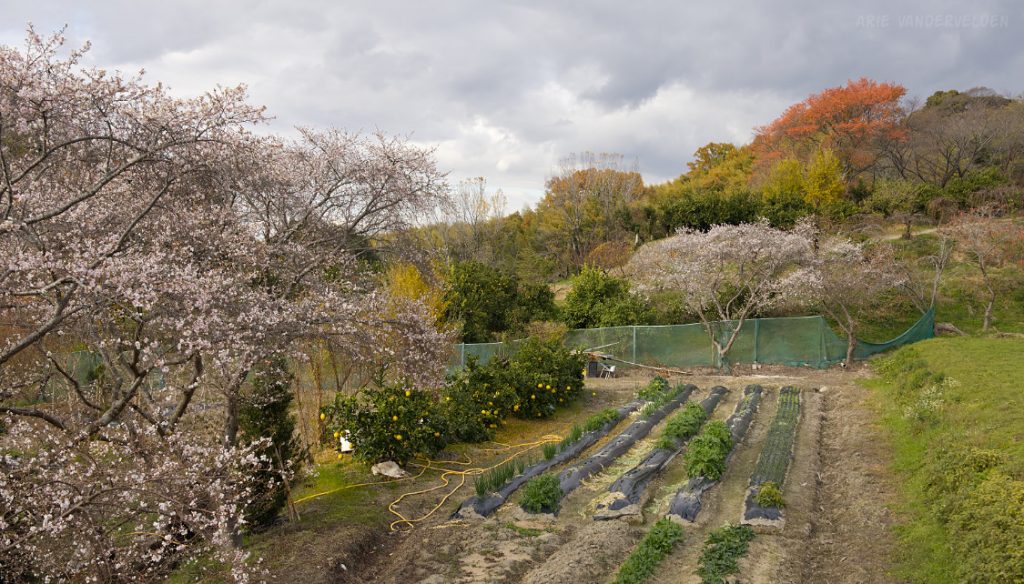
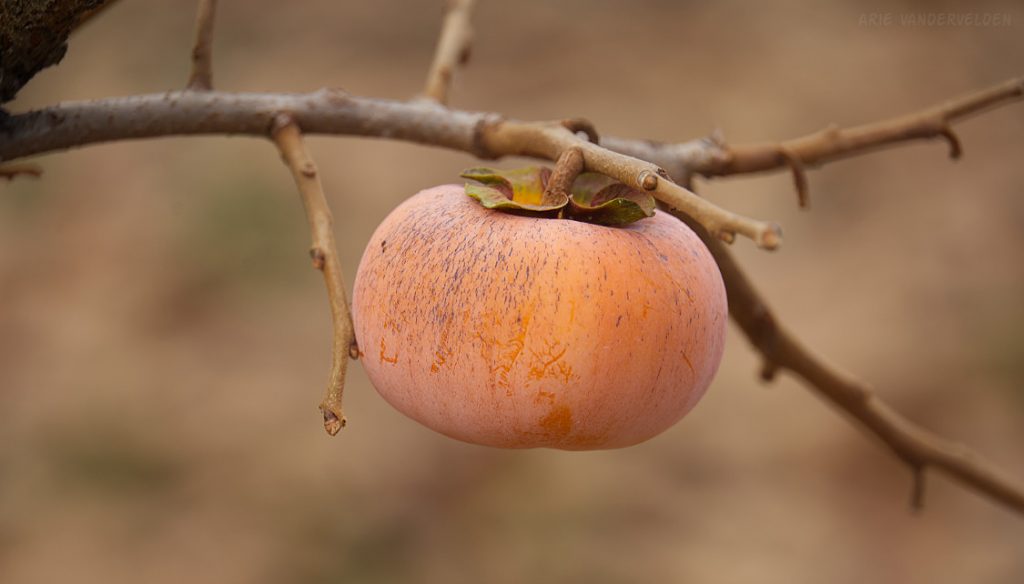
There were rice paddies and persimmon orchards.
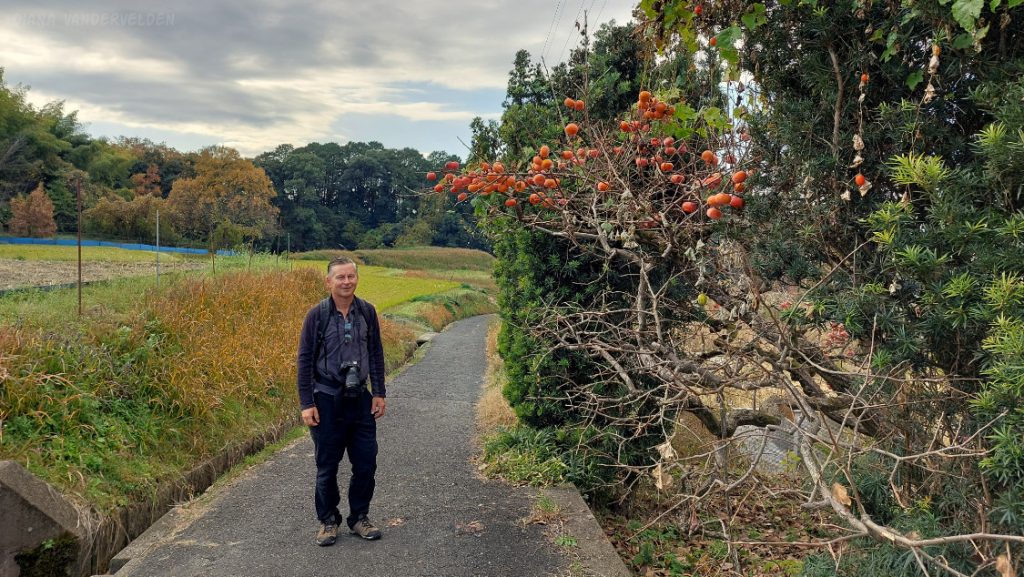
We’ve come to like persimmons. They are tasty.
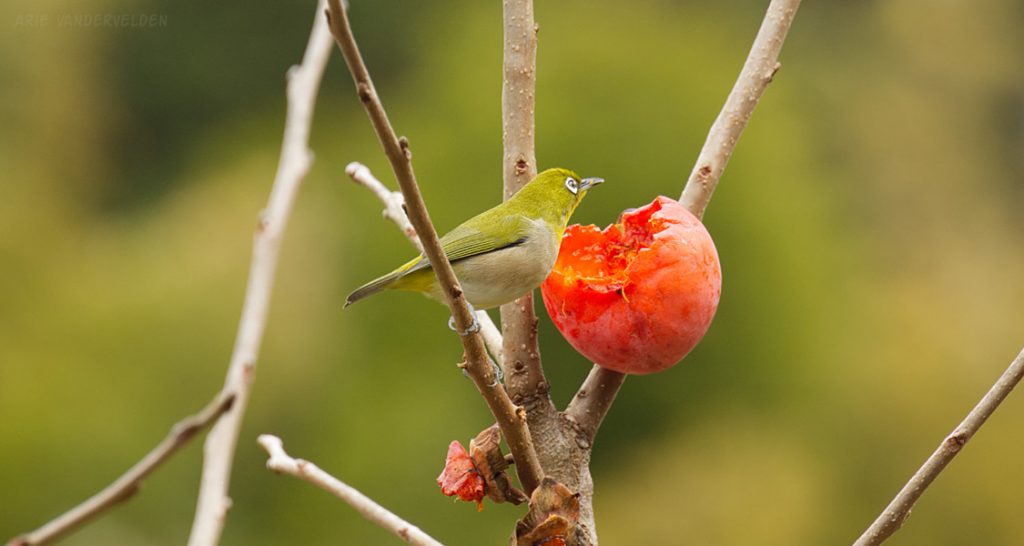
Here is a warbling white-eye snacking on unpicked fruit.
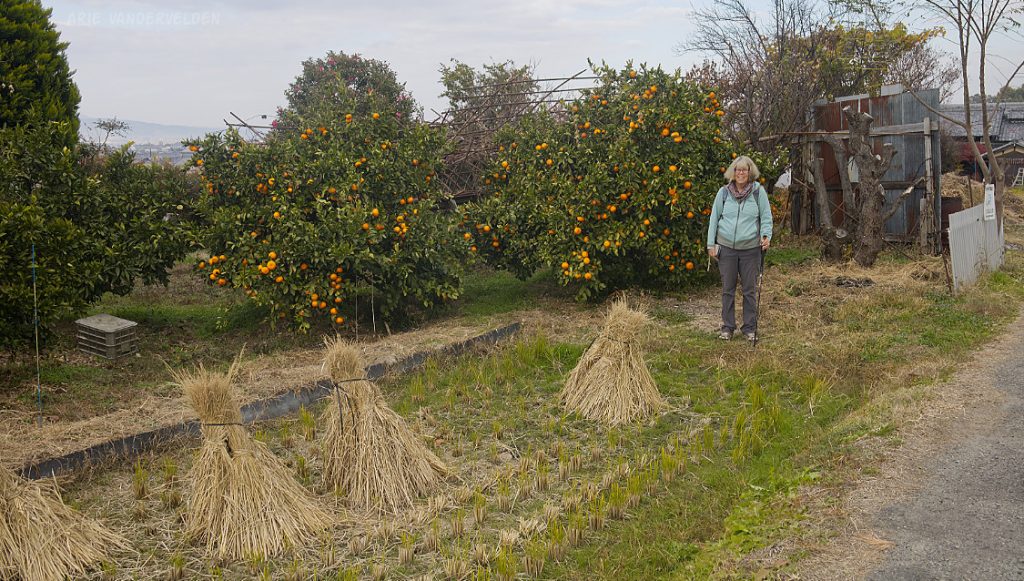
In addition to rice paddies and persimmon orchards, there were orange groves as well.
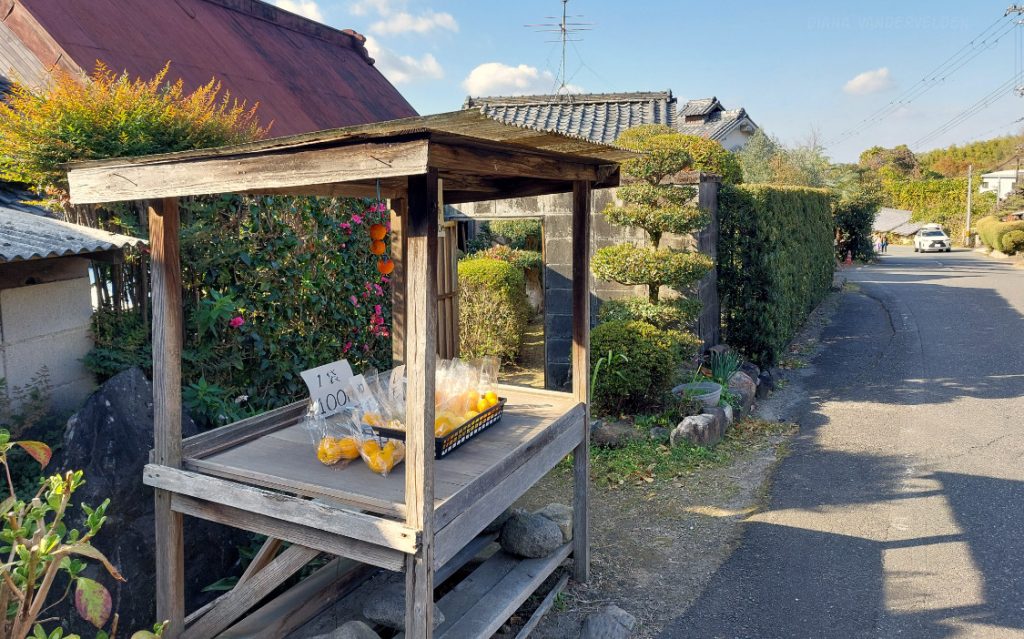
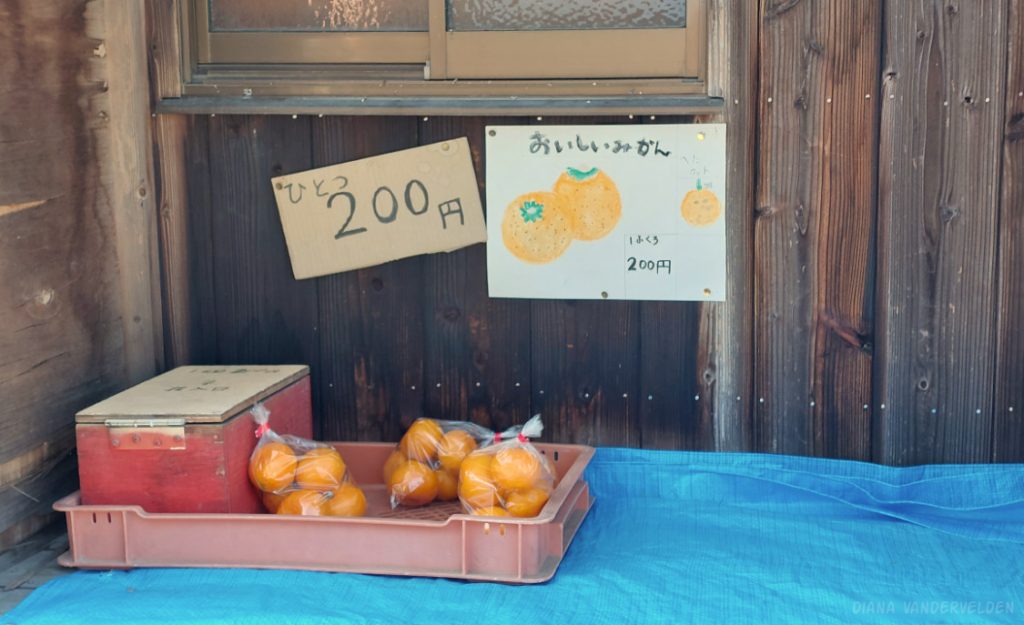
There were a lot of honesty boxes along the trail selling produce. I bought some delicious oranges and persimmons from two toothless old ladies. We watched other hikers go from booth to booth, like bees go from flower to flower, to check to see what was on offer, taking a bag and putting a coin in the can.
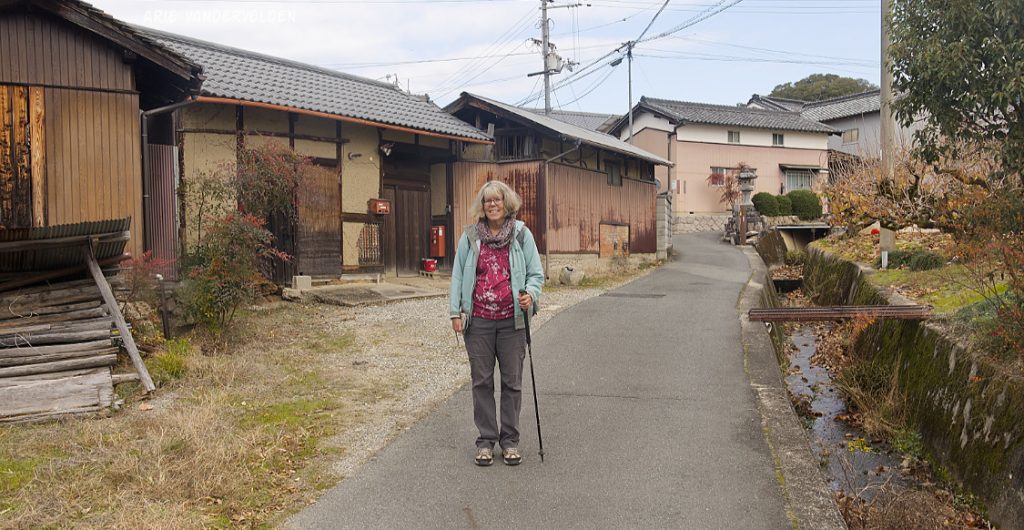
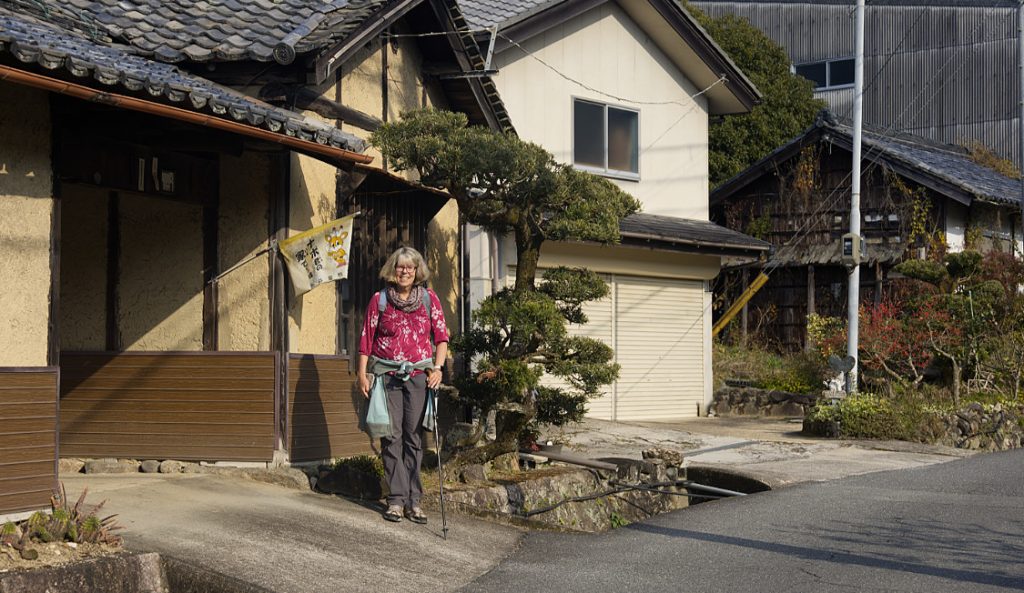
We walked through traditional farming villages.
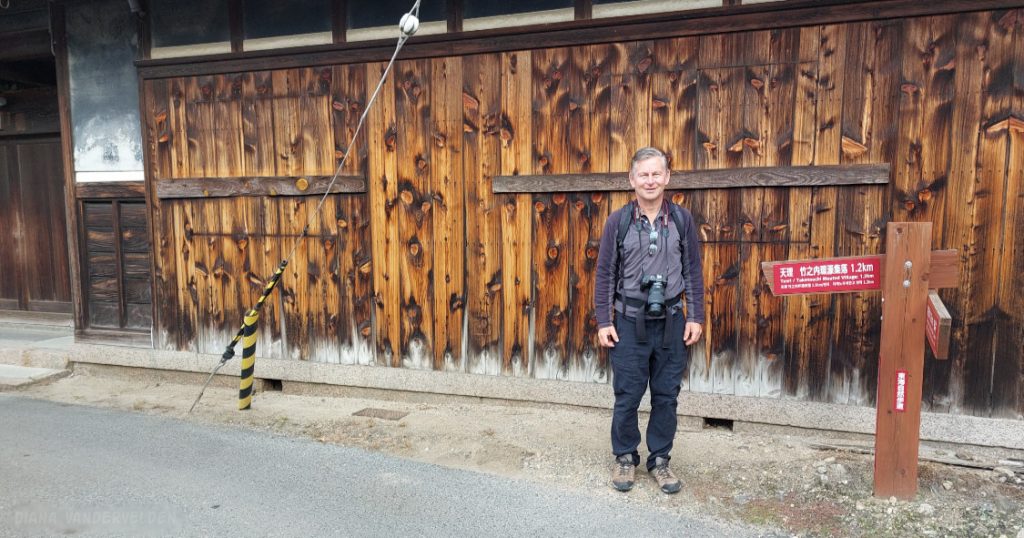
Finding our way was easy. There were signposts at every junction.
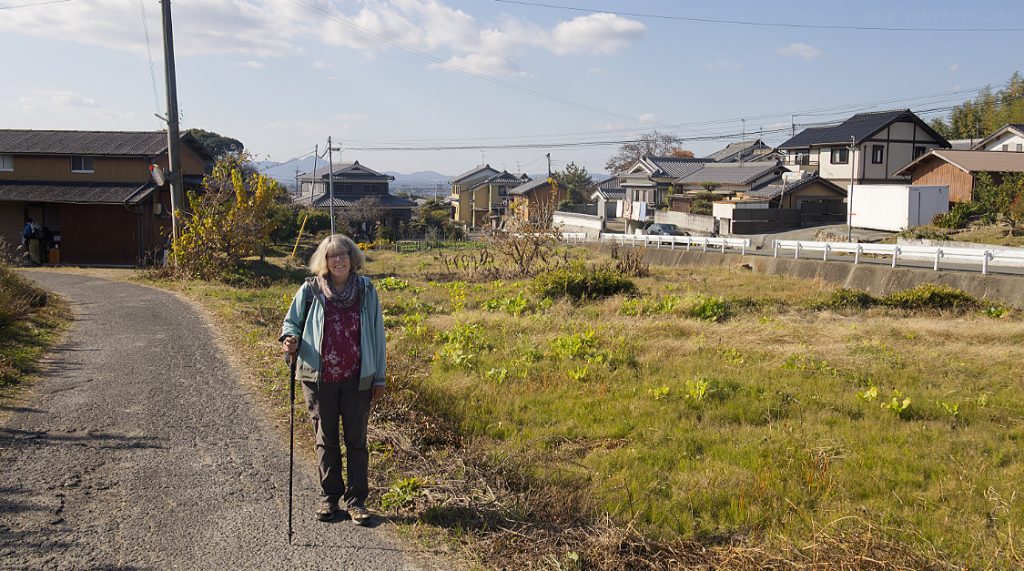
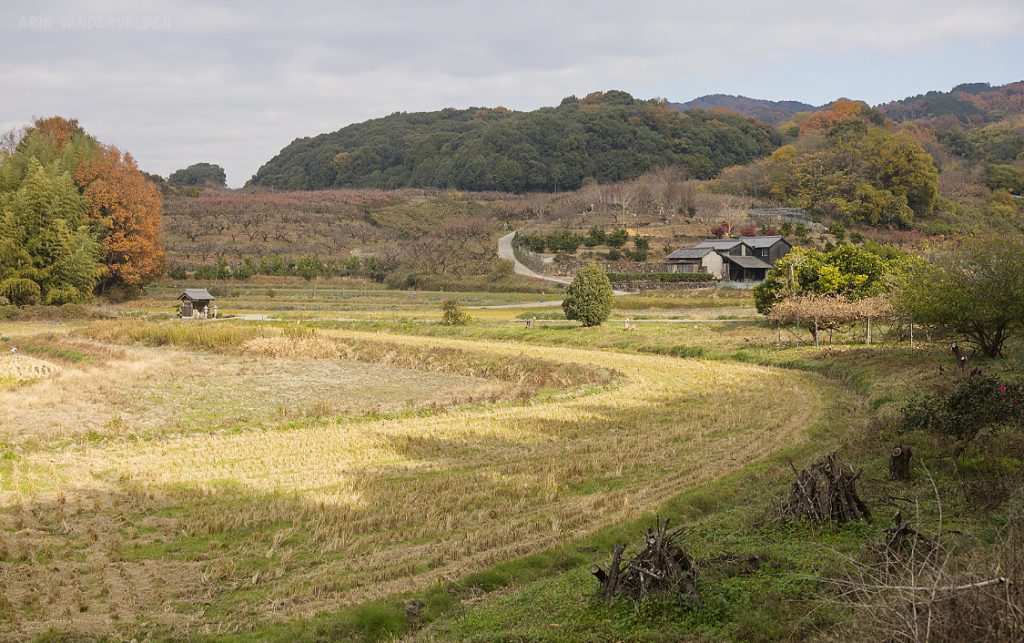
Farming villages alternated with open countryside.
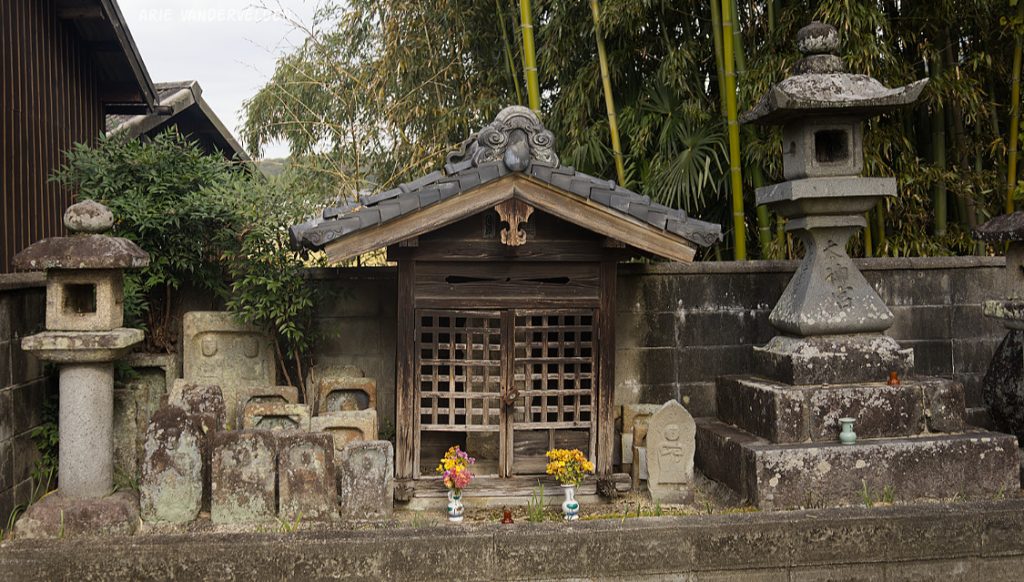
Memorial.
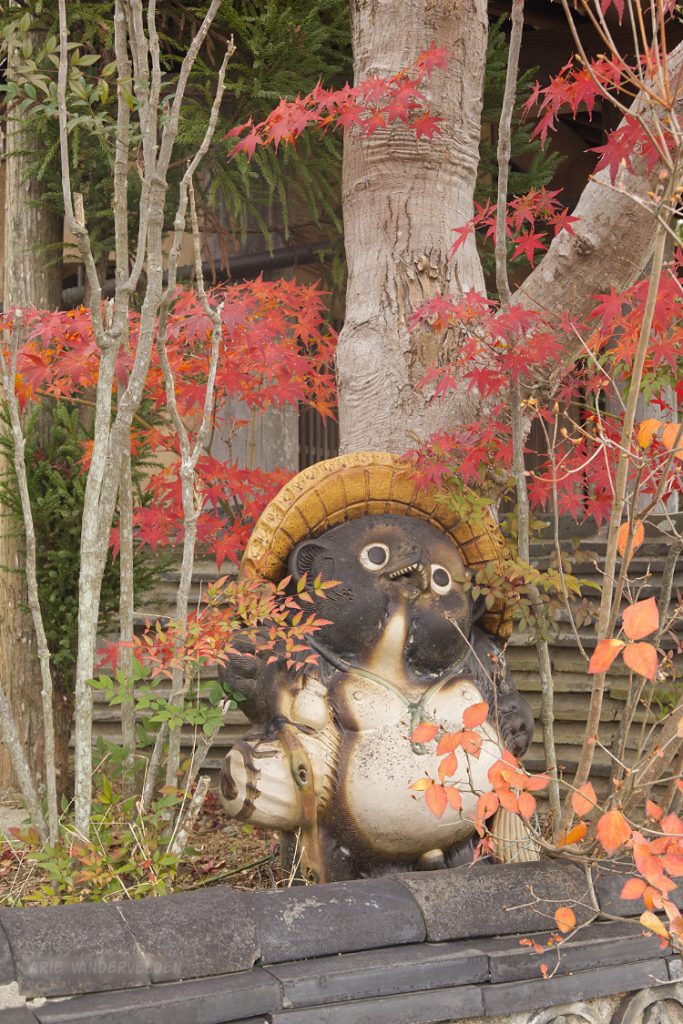
A tanuki statue. These are a very popular garden ornament in Japan. A tanuki is a raccoon-dog.
We really enjoyed walking through these traditional villages. By mid-afternoon it had warmed up substantially, and we shed our sweaters and jackets.
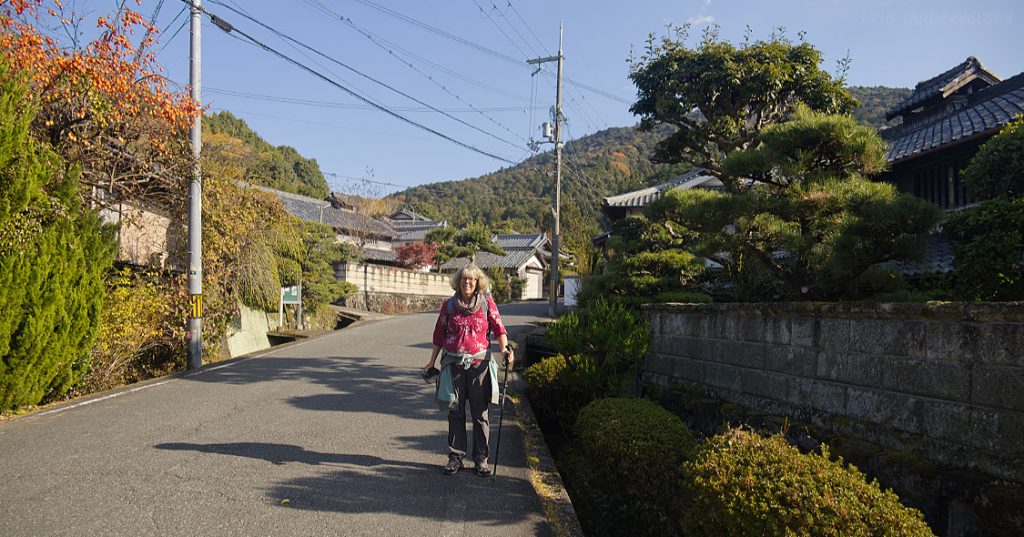
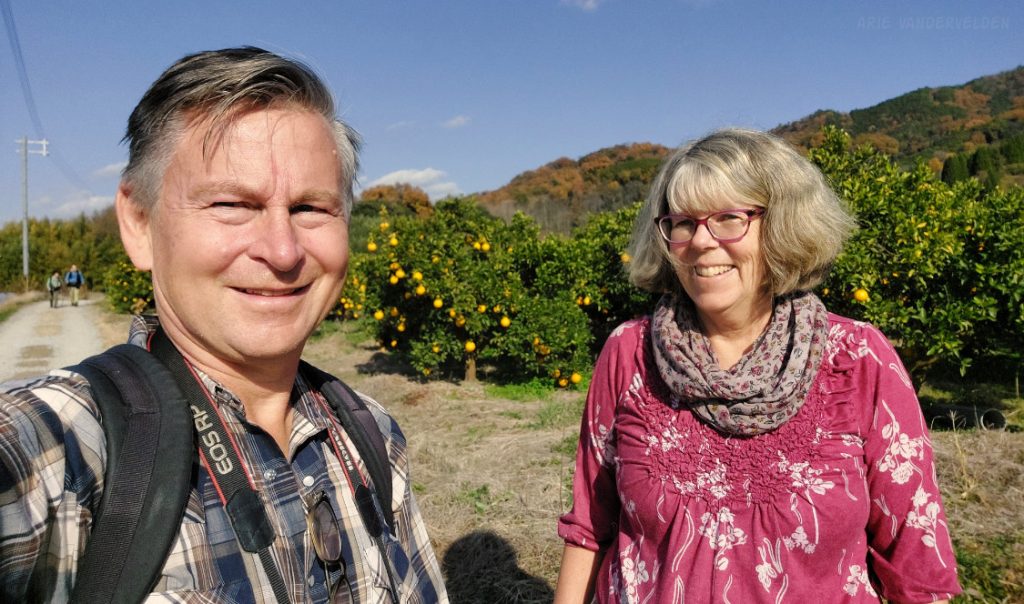
Selfie at an orange grove.
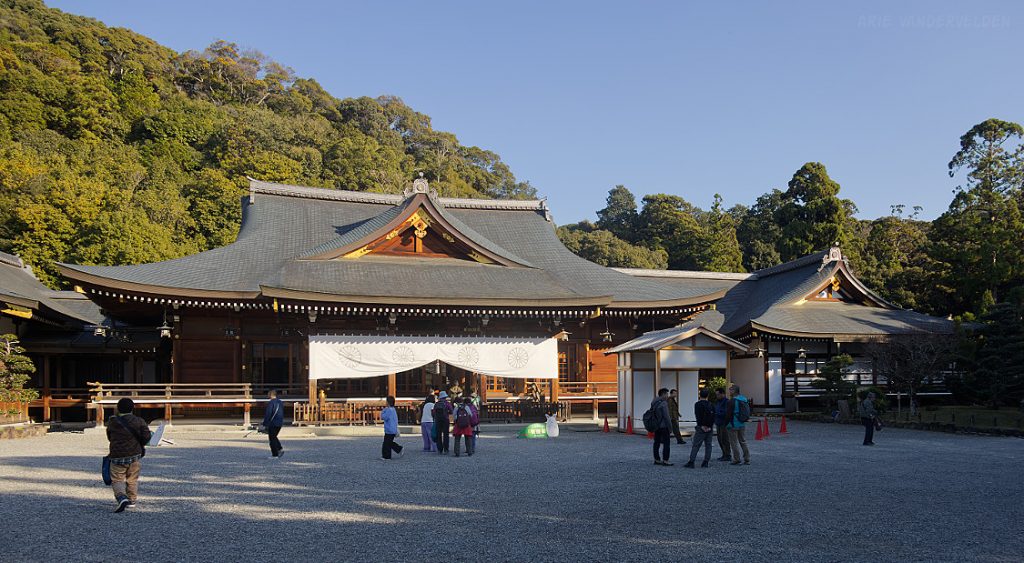
Eventually we arrived at Omiwa Jinja, a lively temple complex.
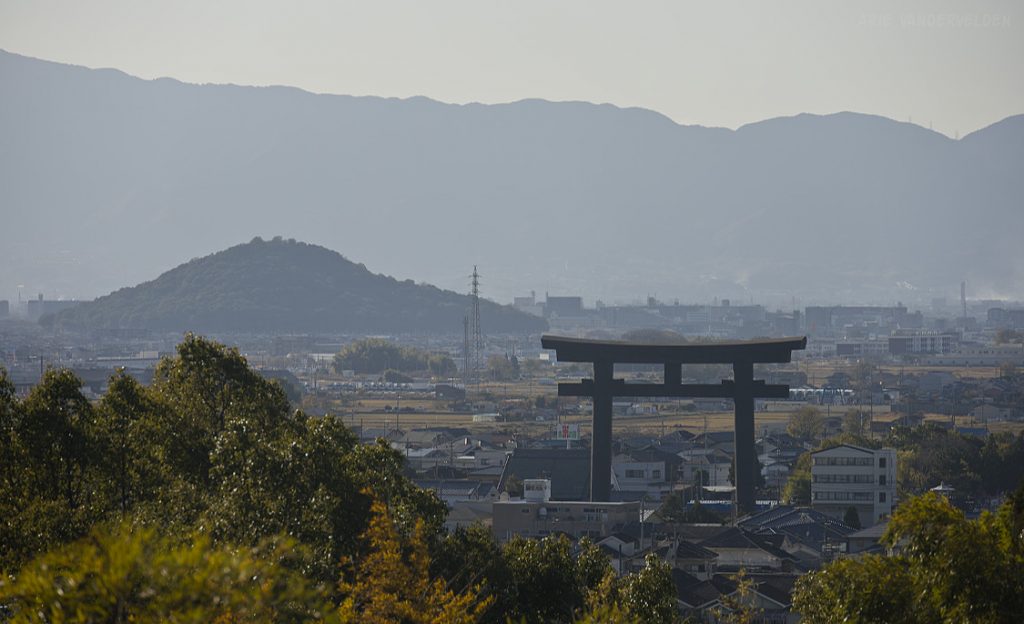
From this temple there is a view into the valley that reveals a huge torii gate. Many people hiking the Yamanobe-no-Michi hike towards the torii gate and then to Miwa train station.
We chose to hike a bit further along the Yamanobe-no-Michi. The trail took us to Byodo-ji shrine.
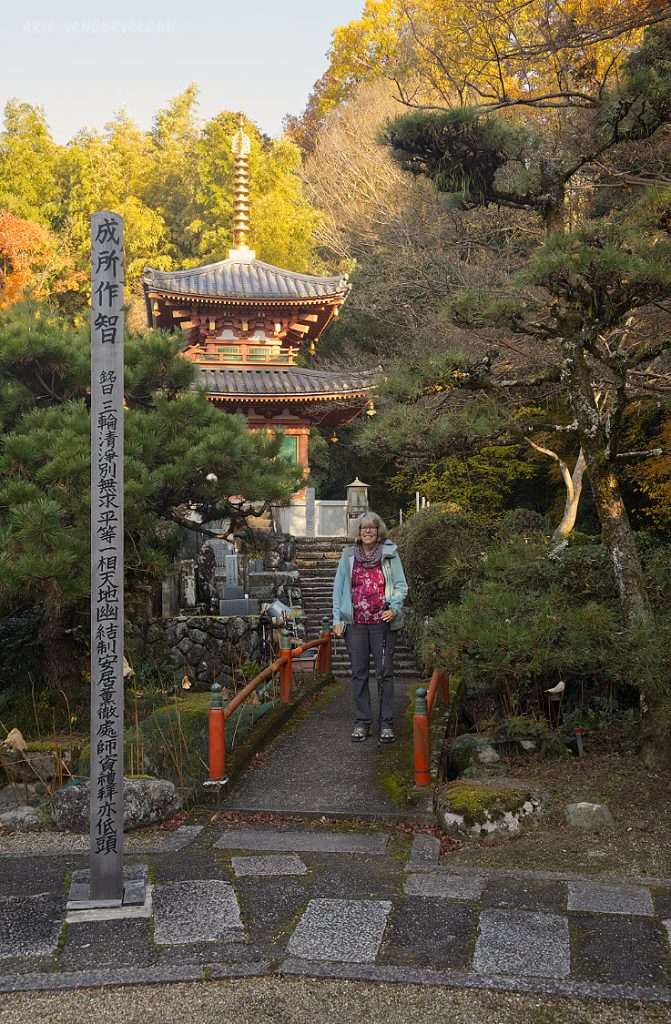
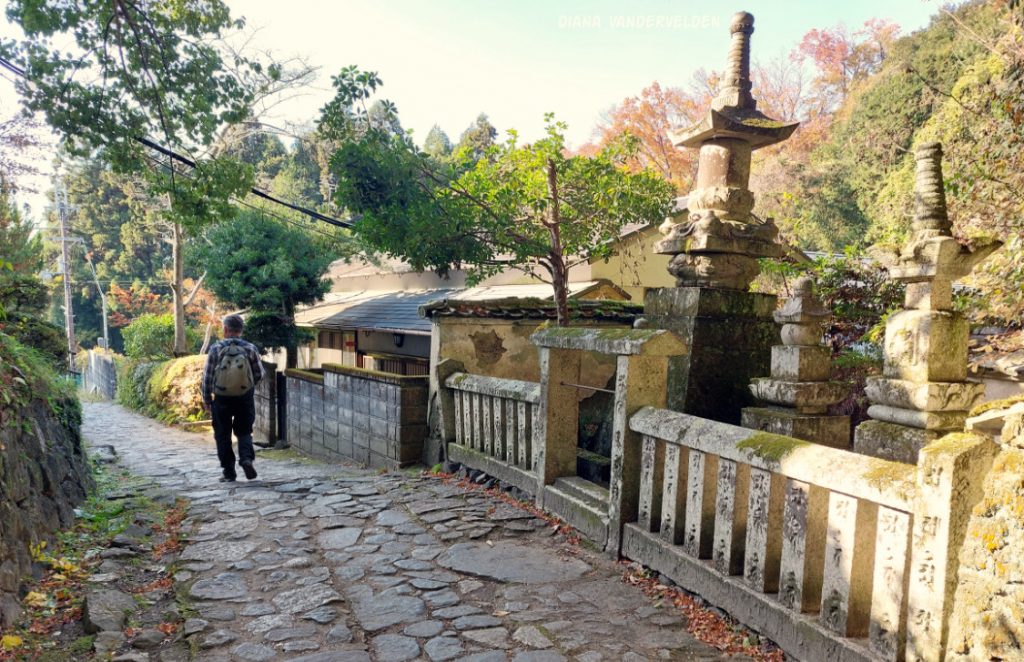
A hike through a pretty village, and then a suburban/industrial area, took us to Sakurai train station. We caught a train back to Nara.
Tenri to Obitoke
When we came to Tenri in 2024 and looked at the map outside of the train station, I noticed that the Yamanobe-no-Michi goes to the north as well as to the south. I tried to Google the north part but I came up with nothing. A quick check with Google Streetview confirmed that this route is signposted. So when we returned to the area in 2025, I was keen to spend a day exploring. It ended up being a very enjoyable day of hiking, with scenery very different than the more popular stretch to the south.
We began by hiking from Tenri Station to Isonokami Jingu.
Heading north on the Yamanobe-no-Michi, we followed an irrigation canal that contoured above the town. Then, we followed signs pointing downhill, and we walked north along Route 51 for a bit. At a place called Toyodacho on Google Maps, we turned left up a little farm road heading up a valley. It was a pretty and quiet little glen – we did not see any one around. We stopped and had lunch beside an impressive stand of bamboo.
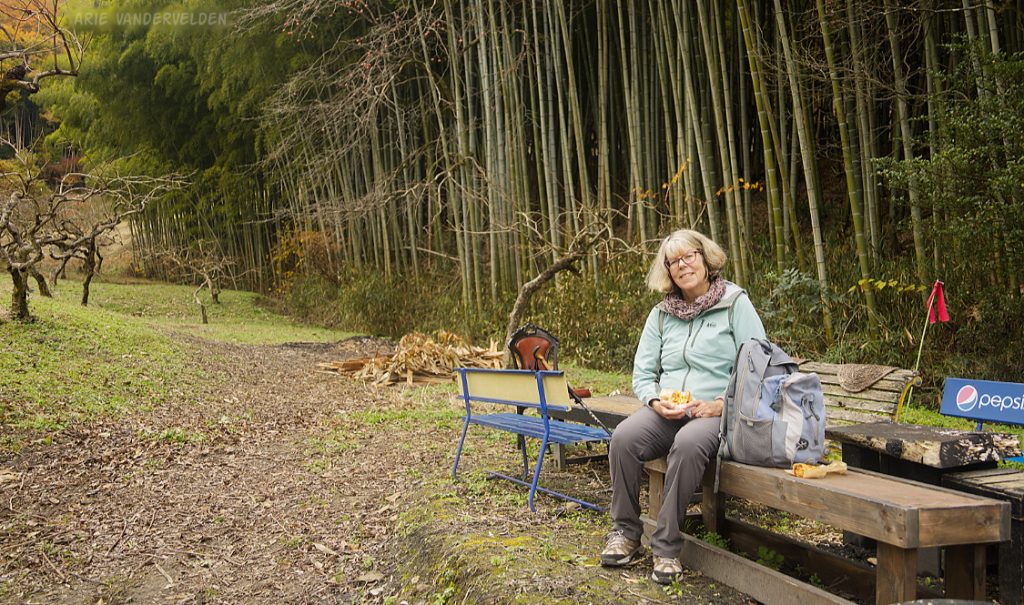
Ahead, the trail headed into a bamboo forest. It was probably the most impressive bamboo grove I’ve hiked. We were surrounded by a million shades of green.
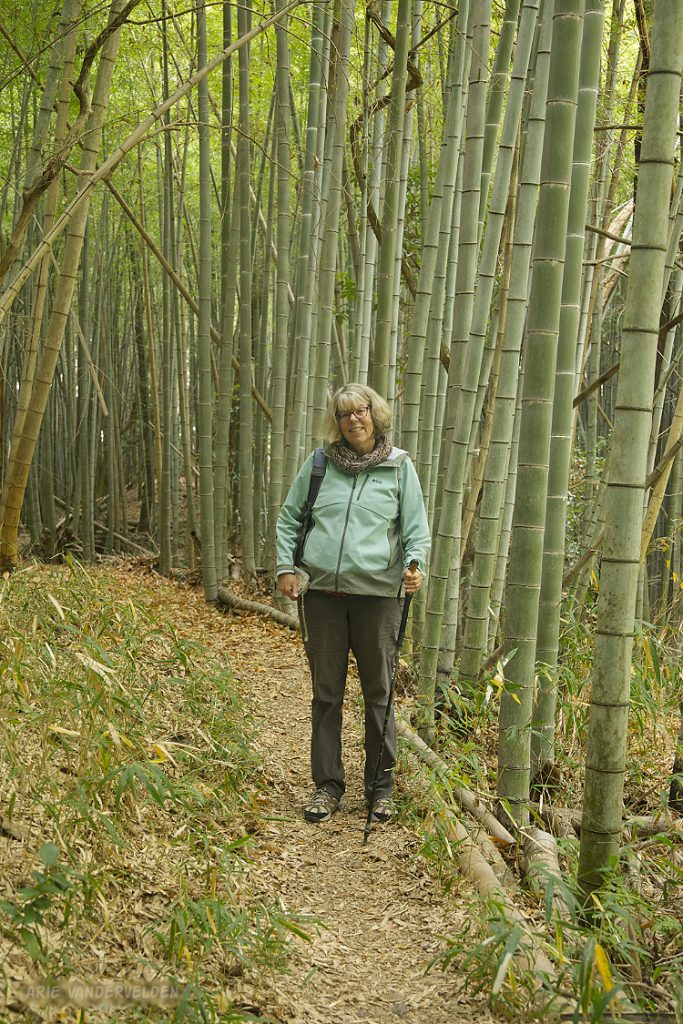
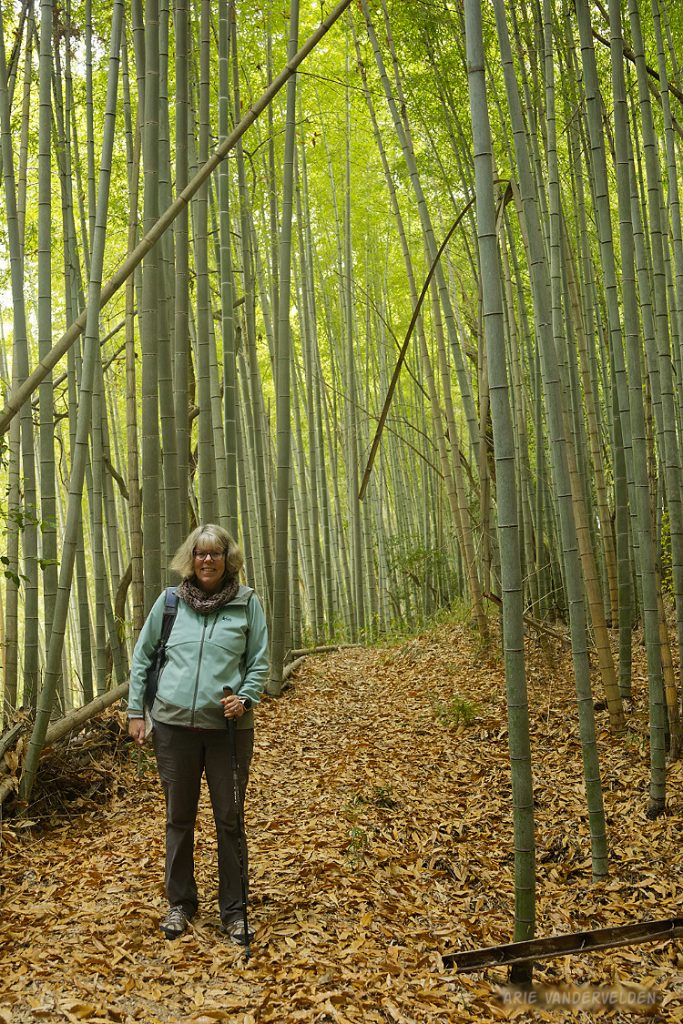
We emerged from the bamboo forest into an industrial valley with a freeway in the middle of it. There were big factories with the brand name Sanyo on them. We followed signs to an underpass beneath the highway and we continued north. Soon, all the hustle was left behind and we walked along Shirakawa Reservoir. The hills in the distance still had some fall colours, but this was the last of it.
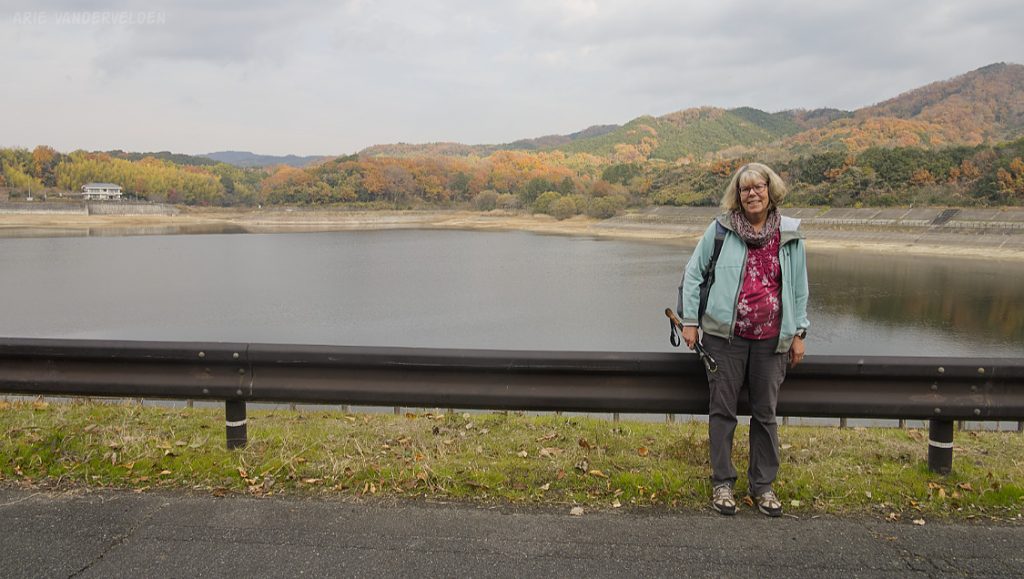
At the far end of the reservoir, the trail went northeast for a bit, and then led down a country road to the village of Kokuzocho.
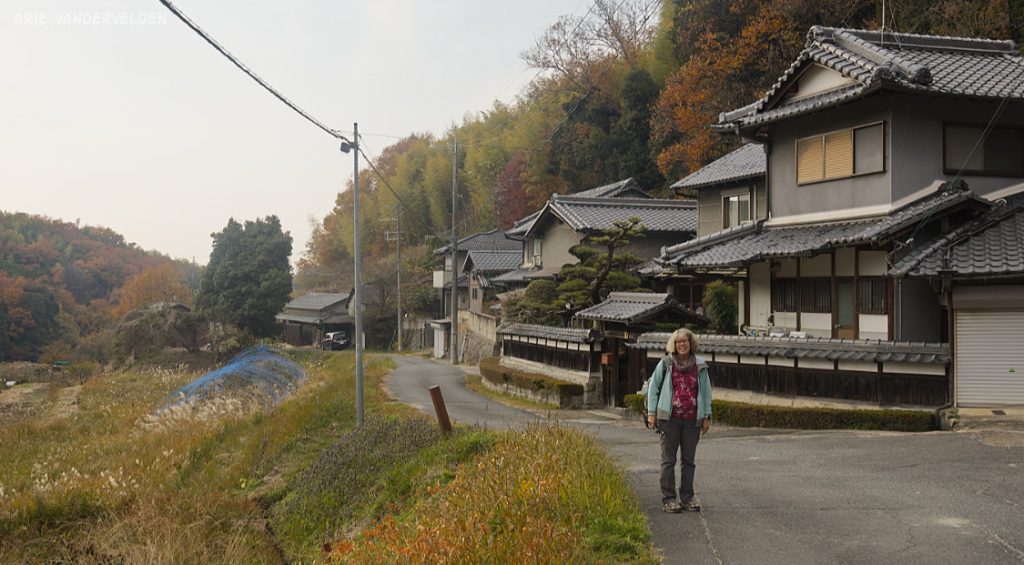
A sign pointed into a dark forest. The trail went up steeply, emerging at Koninji Temple.
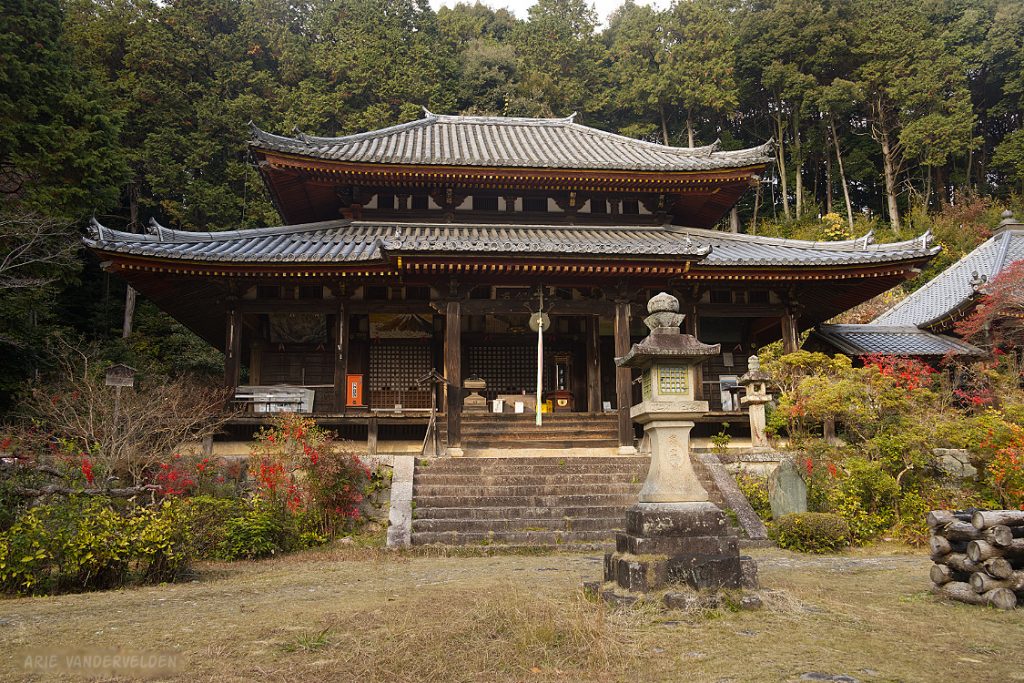
It was a peaceful spot. This temple had a certain serenity about it. We sat and contemplated life for a while, and I went up the altar and said some prayers.
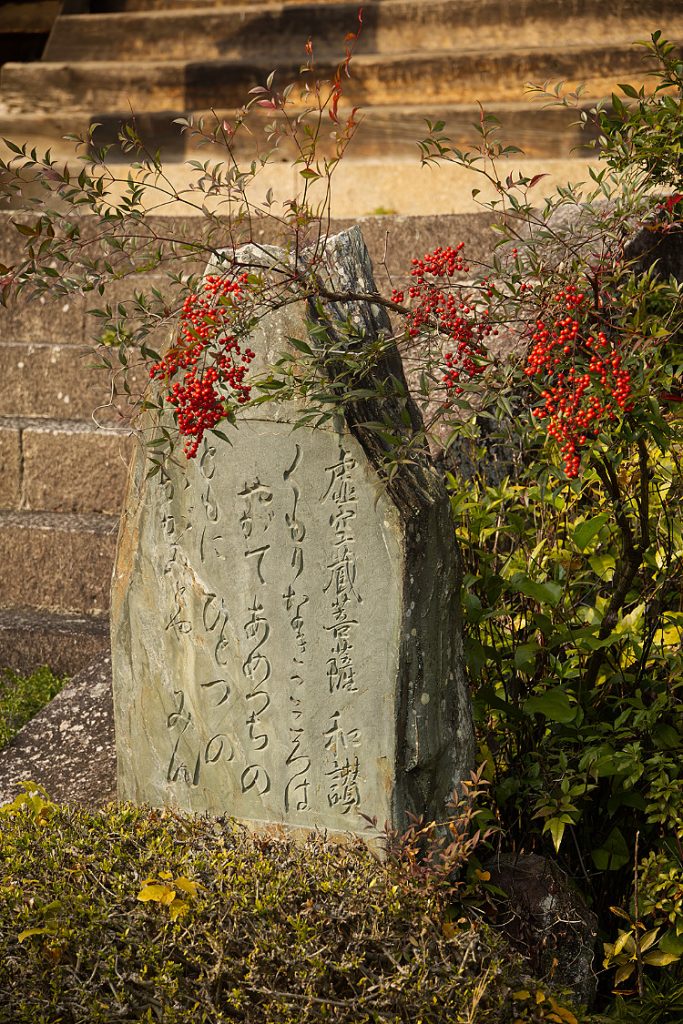
We continued hiking to the northwest, through a pretty village.
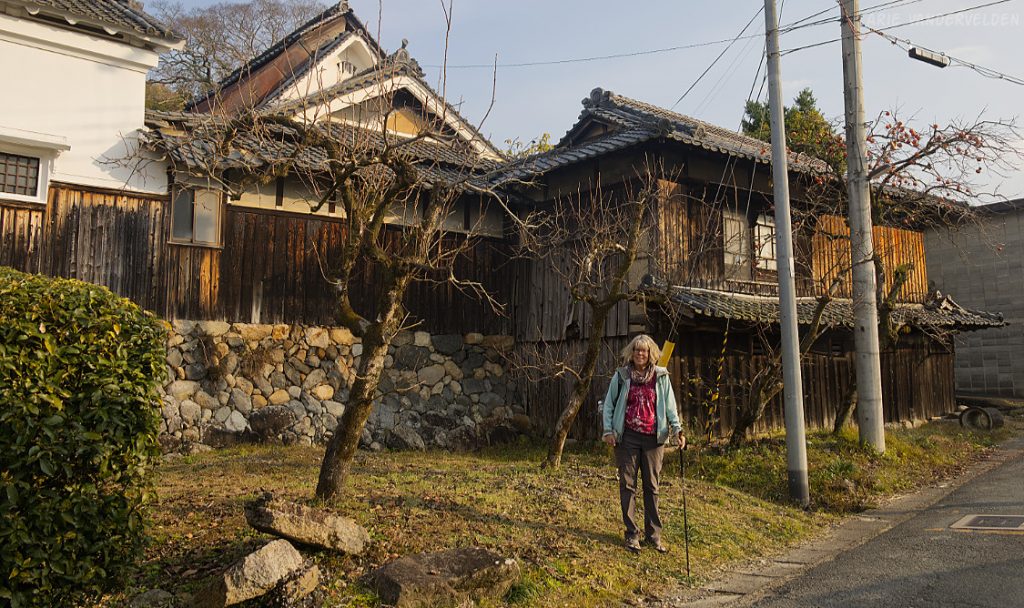
Eventually we came to a junction where signs pointed to the east, back into the hills. Here we left the Yamanobe-no-Michi and walked to the Obitoke train station, where we caught a train back to Nara.
Logistics
The valley south of Nara can be accessed with the Man-yo Mahoroba Line (the U line). The Yamanobe-no-Michi parallels this line. Trains depart from Nara station, platform one.
The Yamanobe-no-Michi is about 2 km east of Tenri. Most people hike to Miwa and then take a train back. This hike is described here.